


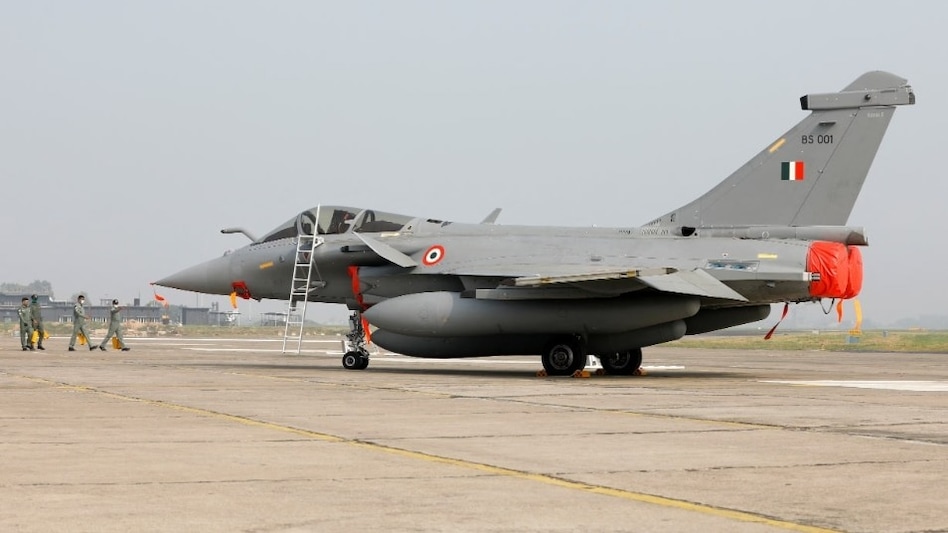
 This technological sleight of hand proved pivotal in Operation Sindoor.
 In May 2025, the Indian Air Force executed what defense analysts are hailing as a modern masterstroke in aerial warfare. Over four tense days, Operation Sindoor unfolded against Pakistan, revealing a glimpse of combat’s future: invisible, intelligent and cunningly deceptive.
At the center of the operation was the Rafale’s X-Guard, an AI-powered towed decoy system that helped foil Pakistan’s Chinese-made PL-15E missiles and J-10C fighters. “It’s the best spoofing and deception we’ve ever seen,” said Ryan Bodenheimer, a former US Air Force F-15E and F-16 pilot as reported by idrw.org. The technology, he noted, may have redefined the rules of electronic warfare.

 BT Big Story: How the FCNR(B) deluge has created two new problems for the RBI
  ‘I think the world of Chandra,’ says JPMorganChase Chairman Jamie Dimon amid reappointment row
 Tata Sons to be split into smaller entities instead of listing? Here’s what we know
 NSE IPO beats Hyundai, LIC, Paytm in subscription; how 5 largest issues fared
 'Upcoming superpower in Indo-Pacific': V4 countries back India’s UN Security Council bid
 R Veeramani POCSO Case Widens: Multiple Survivors Traced | India Today Investigation
 Tata Tussle Escalates: N Chandrasekaran Row | What Lies Ahead For Tata Group And Stocks?
 Burqa Ban In Italy? Meloni Pushes New Rules On Face Coverings
 Tata Trusts-Tata Sons Row: Harish Salve Explains RBI Rules, Singhvi Flags Shareholder Rights
 Top Legal Eagles Flock To Tata Sons & Tata Trusts As Boardroom Clash Heads To Court
 German Green Steel and Power IPO opens on Sept 25: Check price band, issue size & key details
 Embassy Developments shares rise 8% on 'largest single residential unit transaction'; check details
 NSE IPO sets retail allocation record at Rs 7,872 crore; key details
 Sterling and Wilson Renewable Energy shares gain 5% as firm wins orders worth Rs 985 crore
  Varmora Granito IPO opens today: Should you subscribe? Check price band, review, fresh GMP & more
 ED names EaseMyTrip co-founder Nishant Pitti in chargesheet on Mahadev betting app caseGerman Green Steel and Power IPO opens on Sept 25: Check price band, issue size & key detailsEmbassy Developments shares rise 8% on 'largest single residential unit transaction'; check detailsR Veeramani POCSO Case Widens: Multiple Survivors Traced | India Today InvestigationNSE IPO sets retail allocation record at Rs 7,872 crore; key details












