

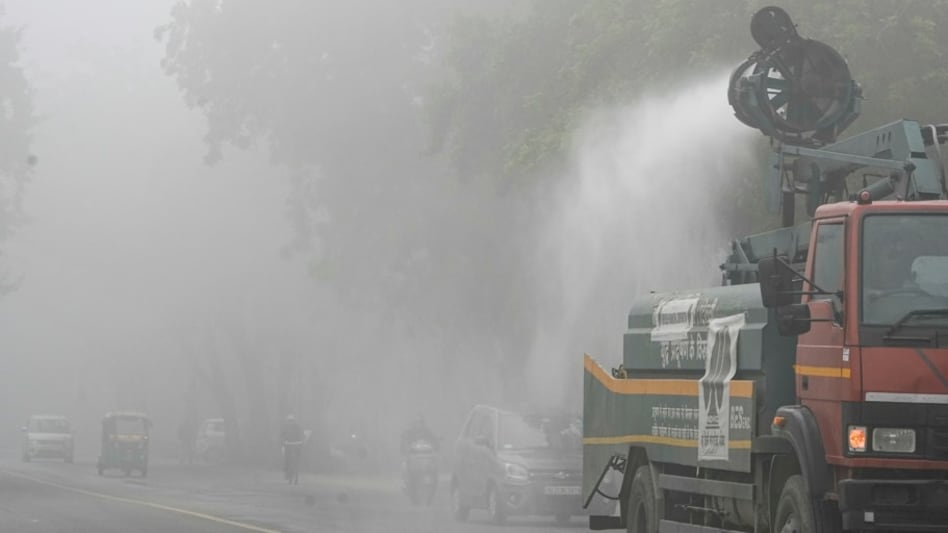
 Delhi’s Air Quality Index (AQI) remains dangerously high, with real-time readings at times exceeding 390-400, levels classified as Very Poor to Severe and Hazardous for human health.
 In an unprecedented move linking corporate leadership decisions to environmental health concerns, Mr. Rajkumar Bafna, President-Finance of Akums Drugs and Pharmaceuticals Ltd, has tendered his resignation, effective 31 December 2025, citing the ongoing Delhi pollution crisis as the primary reason. The company confirmed acceptance of his resignation and said Bafna will be formally relieved of his duties at the end of this year.
In a December 3 internal email — later shared with the company’s management — Bafna wrote that due to the persistently hazardous air quality in Delhi, he was stepping down from his role and requested an expedited transition. Akums responded with regret for losing an experienced finance leader, but acknowledged Bafna’s concerns, particularly around health risks associated with deteriorating air quality.
The regulatory filing submitted to the National Stock Exchange and BSE reaffirmed that Bafna’s resignation was due to personal reasons.
Delhi’s air pollution situation
At the time of publication, Delhi’s Air Quality Index (AQI) remains dangerously high, with real-time readings at times exceeding 390-400, levels classified as Very Poor to Severe and Hazardous for human health.
Dense smog continues to blanket the city, reducing visibility, worsening respiratory problems, and prompting authorities to maintain stringent Graded Response Action Plan (GRAP) measures. Neighboring parts of the NCR, including Ghaziabad and Noida, have also reported severe AQI levels above 400, underscoring that the pollution crisis extends beyond Delhi’s city limits.
Despite occasional short-term relief in some pockets, meteorologists and environment planners warn that the winter season, stagnant winds, crop-burning in surrounding states, and increased particulate matter all combine to keep pollution levels high well into early 2026.
What poor AQI does to your body
Air pollution is more than just a nuisance — it directly affects human health, especially when AQI breaches the “Unhealthy” threshold. According to global health data:
Experts also highlight emerging evidence showing pollution’s impact on immune function, cognitive health, and birth outcomes, further broadening the public health stakes tied to prolonged exposure.
Health warnings amid poor AQI
With AQI values frequently surpassing the 300 mark — a level at which serious health effects are common — health authorities advise the public to:
Medical professionals are particularly alarmed about days with “Very Poor” and “Severe” AQI, warning that even healthy individuals may begin to experience serious respiratory and cardiovascular symptoms. Short-term exposure can trigger asthma attacks, irregular heart rhythms, and increased hospital visits, while cumulative exposure over years compounds chronic disease risk.
This is one of the rare occasions in India’s corporate history where environmental conditions have directly influenced a key executive’s decision to step down, highlighting the gravity of the air pollution challenge confronting Delhi and its workforce. Bafna’s resignation serves as both a corporate milestone and a stark reminder: environmental degradation is no longer just a policy issue, but one with real personal and professional consequences.
 Exam reforms: Tech titan Nandan Nilekani picked by PM Modi to fix national public examination system
  'Tax officers struggled for own land': Nirmala Sitharaman slams laidback attitude of govt depts
 CBDT issues new crypto reporting guidance: No new tax, but exchanges must track and report all transactions
 Did Cockroach Janta Party's 'Chalo Sansad' 2.0 threat trigger Dharmendra Pradhan's resignation? What we know so far
 'Will discharge my responsibilities with complete humility': Pralhad Joshi after being appointed Education Minister
 AI Data Centers, Aerospace & Gas Turbines: What's Powering Indo-MIM's Future Growth?
 Best Healthcare Stocks: Gaurang Shah's Outlook On Apollo Hospitals, Fortis & The Manipal Health IPO
 Is Indo-MIM's IPO Valuation Justified? Here's Why The Company Sees Strong Growth Ahead
 Treasury Bills Explained: Why T-Bills Are One Of The Safest Short-Term Investment Options
 FDs vs Markets: Where Should You Keep Your Short-Term Money?
 Gland Pharma stock: Price target of Rs 3,250 likely in medium term, says analyst
  Metal recycling stocks to buy: Gravita, Pondy Oxides, Jain Resource among top picks
 TRIL shares: Should you average the falling stock? Here's 'fixed and final' stop loss
 Adani Power: 45 GW target, Rs 2 lakh crore capex plan among conference call highlights
  ITC Hotels, Chalet, Ventive, IHCL, SAMHI: Hotel stocks to buy despite travel disruptions
 Beyond mutual funds: Why analysts see SBI Funds' alternative asset business as a long-term growth engine
 'Ashamed of it...': Manoj Muntashir calls Adipurush his biggest mistake, seeks country's forgiveness Exam reforms: Tech titan Nandan Nilekani picked by PM Modi to fix national public examination system 'Tax officers struggled for own land': Nirmala Sitharaman slams laidback attitude of govt depts
 Delhi targets traffic bottlenecks on Aruna Asaf Ali Marg with ₹1.97 crore elevated road study









