












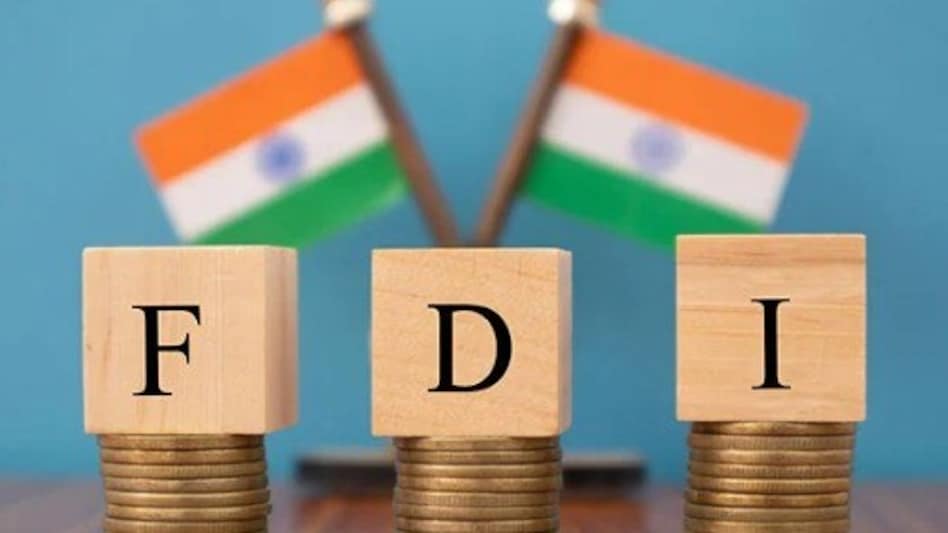
 At the aggregate level, foreign direct investment (FDI) trends are showing signs of improvement, though challenges persist.
  At the aggregate level, foreign direct investment (FDI) trends are showing signs of improvement, though challenges persist.
 India’s investment activity on the ground is picking up, with about $6.1 billion worth of projects taking shape across 14 states in FY26. The investments span around 60 projects with Gujarat, Madhya Pradesh and Maharashtra among the key destinations, underscoring a continued concentration of capital in established industrial hubs even as more states attract interest.
At the aggregate level, foreign direct investment (FDI) trends are showing signs of improvement, though challenges persist. Gross FDI stood at $88.29 billion as of February, while net FDI came in at $6.27 billion, reflecting continued outflows and repatriation. Both figures are up year-on-year (YoY), pointing to a gradual recovery in inflows.
Officials remain cautiously optimistic about the near-term outlook. Amardeep Sing Bhatia, DPIIT secretary expects FDI inflows to cross $90 billion in FY26.
Beyond the immediate horizon, the government’s investment promotion arm is setting a more ambitious target. Invest India Managing Director and CEO Nivruti Rai said the goal is to surpass China’s FDI inflows, estimated at around $116 billion by 2032, a benchmark that would require a sustained increase in both inflows and retention of capital.
At the sectoral level, chemicals, pharmaceuticals, & biotechnology and food processing account for approximately 65 percent of grounded investments.
The divergence between gross and net FDI continues to highlight a structural issue: translating investor interest into long-term capital commitments. While the spread of projects across states suggests improving execution, sustaining momentum will depend on policy stability and the ability to anchor investments over longer cycles, officials shared.
 India's $20 billion weak spot: Zerodha's Nithin Kamath flags crisis in THIS critical sector
 Will AI disruption and oil price shocks create bigger risks for Indian markets?
 'FDI isn't down, there is a confusion': Arvind Panagariya explains what critics are missing
 Is Vijay Kedia right about ending LTCG tax on equity investors?
 'When the world’s largest container line bets on...': China hails Maersk’s new India trade corridor
 Will RBI Start Raising Rates From June? Devang Shah Weigh In
 Why Is India Sending AI Data Centres To Space?
 U.S. & Japan 30-Year Bond Yields Cross 5% - What It Means For India
 If India Is Growing So Fast, Why Are Investors Pulling Back?
 After NEET & CBSE, Now UPSC Prelims 2026 In Controversy! Students Outraged Over Tough Paper
 PB Fintech shares in focus as founders plan Rs 654 crore stake sale via block dealWill AI disruption and oil price shocks create bigger risks for Indian markets?
 Ashok Leyland Q4 results: Net profit rises 13% to Rs 1,405 crore; key highlights
  PhysicsWallah shares in focus as Q4 loss narrows; what it says on AI integration
 'Anomalies in turnover': Patanjali shares in focus after Rs 1,353 cr GST demand, penalty