








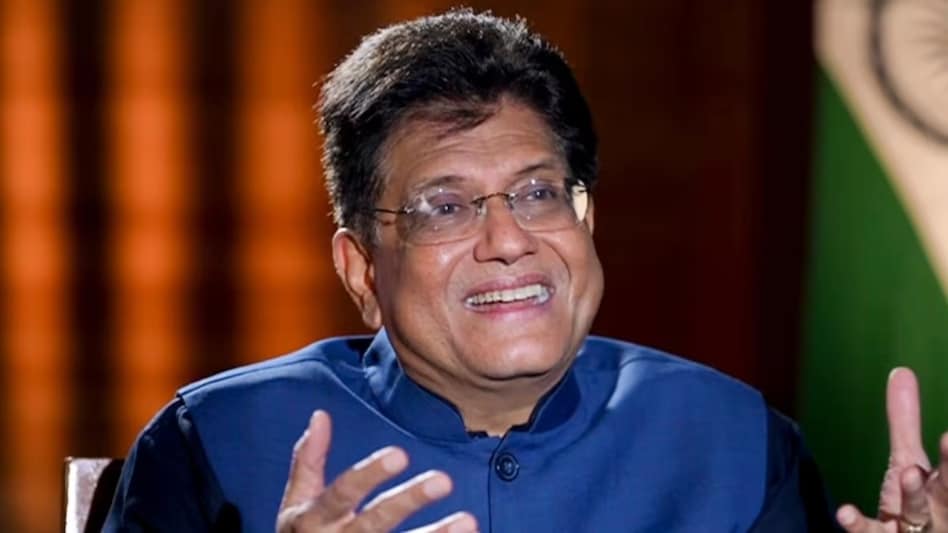
 On energy imports, Goyal clarified that while sourcing crude oil, LNG or LPG from the US aligns with India’s strategy of diversifying energy supplies, purchasing decisions would remain with companies.
 On energy imports, Goyal clarified that while sourcing crude oil, LNG or LPG from the US aligns with India’s strategy of diversifying energy supplies, purchasing decisions would remain with companies.
Union Commerce and Industry Minister Piyush Goyal on February 8 said India has fully protected its agricultural interests in the India-US trade deal, asserting that no concessions have been made on sensitive farm and food products.
Speaking to ANI, Goyal said India had “safeguarded 100%” the interests of farmers and domestic producers during negotiations. He underlined that the agreement does not open up Indian markets to meat, poultry, genetically modified (GM) foods, soya meal, corn, maize, cereals such as rice and wheat, millets including jowar, bajra and ragi, sugar, fruits produced domestically, pulses, oilseeds, animal feed, groundnuts, honey, malt, non-alcoholic beverages, flour, starch, essential oils, fuel ethanol or tobacco.
“These are sensitive to India. We have not given up,” Goyal said, stressing that none of these products were offered concessions as part of the trade arrangement.
The minister described the negotiations with the US as intense but constructive, noting that India has successfully concluded trade agreements with several major economies and blocs in recent years. “Americans have negotiated very hard and we've had a wonderful experience negotiating with tough countries across the globe,” he said, adding that discussions were held in a positive atmosphere despite tough bargaining.
Highlighting the opportunities arising from the deal, Goyal said India’s growing demand for civil aviation products would significantly benefit US manufacturers. He noted that India already has orders worth about $50 billion with Boeing, along with separate orders for engines and spare parts, and estimated that total civil aviation-related imports could touch $80-100 billion in the coming years.
Beyond aviation, Goyal pointed to India’s expanding needs in advanced technologies. “We are setting up data centres, and we are developing the AI and quantum computing economy in a big way,” he said. According to the minister, India currently imports goods worth nearly $300 billion annually across such sectors, and this figure could rise to around $2 trillion over the next five years — an area where the US has strong capabilities to support India’s growth.
Responding to allegations that the trade deal compromises India’s sovereignty, Goyal dismissed the claims as “absolute nonsense.” He said the agreement was aligned with India’s long-term development vision of becoming a developed nation by 2047 under the ‘Viksit Bharat 2047’ goal. “Nonsense…pretty ignorant of person who said it. This trade deal is a labour of love”, he said.
The minister added that the deal would create major opportunities for Indian youth, women, farmers, fishermen and MSMEs. Sectors such as textiles, footwear, leather, toys, handloom, handicrafts, auto components and furniture are expected to gain from improved access to the US market.
On energy imports, Goyal clarified that while sourcing crude oil, LNG or LPG from the US aligns with India’s strategy of diversifying energy supplies, purchasing decisions would remain with companies. “The trade deal doesn’t discuss who will buy what and from where,” he said, explaining that free trade agreements primarily focus on ensuring smoother trade pathways and preferential market access.
Goyal also noted that with an 18 per cent reciprocal tariff framework, India now enjoys a competitive edge over other developing nations in the US market.
 SEBI draws line between listing norms and RBI rules in guidance to PNB
 Cyber attacks, AI misuse and data privacy rules emerge as top boardroom risks for India Inc
 'India has played it pretty safe, deal is very balanced': Top agri economist on India–US trade agreement
 Funding Viksit Bharat: Govt to set up high-level panel to prepare banks for big-ticket growth
 'Uncomfortable subtext is conditionality': Ex-foreign secretary on US monitoring clause for Russian oil
 BT Golf 2025-26 Kochi, Kerala Awards Ceremony Marks A High-Energy, Successful Conclusion
 Golf Is An Addiction. We Eat And Sleep Golf!
 The Fairway Fixes Everything. Mindset, Life, Relationships
 BT Golf LIVE: Join AU Small Finance Bank Presents BT Golf 2025-26 For Its 4th Leg In Kochi, Kerala
 AI Will Change MBAs, Not Leadership: IMD President On India’s Global Education Rise
 RIL, SBI, Kotak Bank, Kalyan, HAL, BEML, BDL among stocks in focus next week; here’s why
 NSE IPO may unlock mega gains for billionaire investors RK Damani, Premji
 SBI Q3 Results: Profit jumps 24% to Rs 21,028 crore; asset quality improves
 IDBI Bank stake sale: Kotak Mahindra Bank says ‘has not submitted a financial bid’
 BDL, Mazagon Dock, MRF, Hindustan Copper, RVNL, others to turn ex-dividend next week