


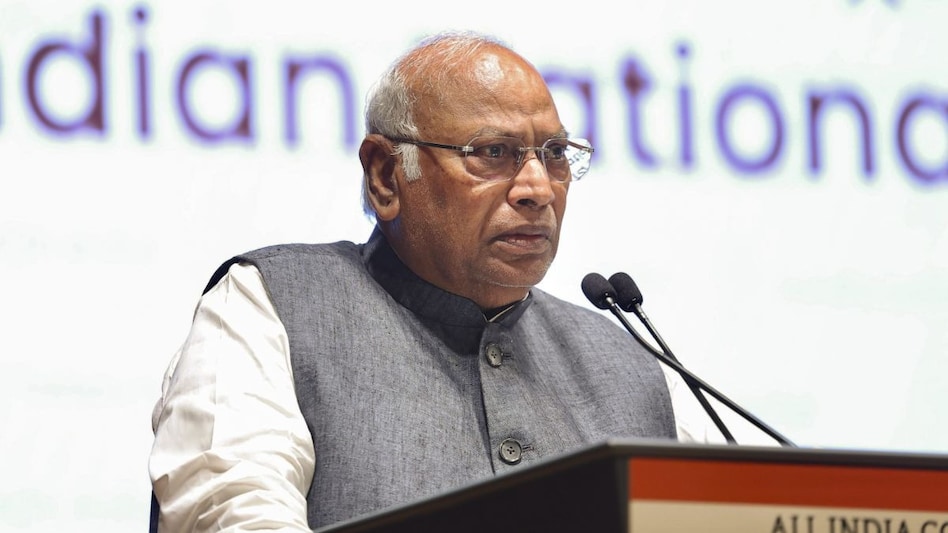
 GST rate cuts: Kharge recaps 'Gabbar Singh Tax' jibe, here's why
Congress president Mallikarjun Kharge has strongly voiced his opposition to the current Goods and Services Tax (GST) structure, accusing the ruling government of deviating from the original 'One Nation, One Tax' vision. Kharge said that the grand old party has been demanding the simplification of GST for nearly a decade now.
The veteran Congress leader criticised the complexity of the multiple tax slabs and the heavy burden imposed on the middle and poor classes, while only a small percentage is collected from the wealthy.

 BT Big Story: How the FCNR(B) deluge has created two new problems for the RBI
  ‘I think the world of Chandra,’ says JPMorganChase Chairman Jamie Dimon amid reappointment row
 Tata Sons to be split into smaller entities instead of listing? Here’s what we know
 NSE IPO beats Hyundai, LIC, Paytm in subscription; how 5 largest issues fared
 'Upcoming superpower in Indo-Pacific': V4 countries back India’s UN Security Council bid
 Tata Tussle Escalates: N Chandrasekaran Row | What Lies Ahead For Tata Group And Stocks?
 Burqa Ban In Italy? Meloni Pushes New Rules On Face Coverings
 Tata Trusts-Tata Sons Row: Harish Salve Explains RBI Rules, Singhvi Flags Shareholder Rights
 Top Legal Eagles Flock To Tata Sons & Tata Trusts As Boardroom Clash Heads To Court
 Over Next Three Years Company Expects To Invest ₹15,000 Cr For Deepwater Exploration
 Multibagger stock with 11,000% returns: Promoter buys 41 lakh shares, stock gains
  Waaree Energies shares in focus on order win from 'a leading solar developer'
 YES Bank, GMR Airports Infra, IDFC First Bank: Stocks to trade — Key levels, targets & stop loss
 NSE IPO allotment today: Step-by-step guide to check status; allotment odds, GMP & listing date
 GRSE shares in focus as board approves expansion plan, more details Multibagger stock with 11,000% returns: Promoter buys 41 lakh shares, stock gains
  LPG, CNG, PNG prices today (September 22): Check latest rates in Delhi, Mumbai, Kolkata, other cities
 Trump's TRUMP TV goes live as CNN, other news outlets sue: A new fight over who controls the White House feed‘I think the world of Chandra,’ says JPMorganChase Chairman Jamie Dimon amid reappointment rowWaaree Energies shares in focus on order win from 'a leading solar developer'












