


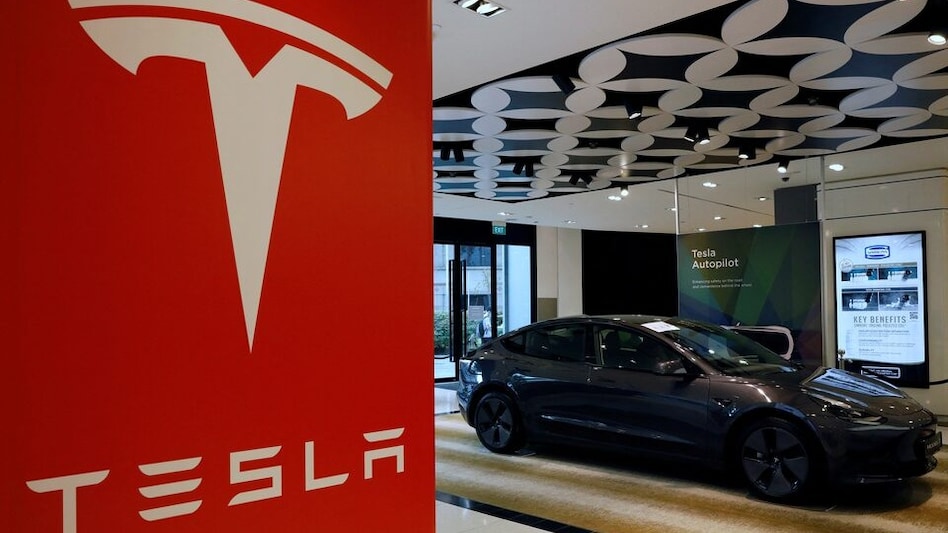
 India-US trade deal: Tesla prices won't budge in India despite tariff cuts on high-end American cars
Despite India cutting tariffs on high-end American cars from as high as 110 per cent to as low as 30 per cent, Tesla is not likely to get a reprieve. Tesla cars in India will continue to remain expensive, mostly due to the duties.
According to a report in Reuters, India will not make concessions on electric vehicles, which means Tesla will not stand to gain by the duty cuts. An official told Reuters that electric vehicles have been excluded from the deal, shutting the door on a possible lower-tariff entry route for Tesla.
India, will, however, eliminate duties on Harley-Davidson bikes, and other premium motorbikes will also enjoy a duty cut as part of the trade deal.
According to the official, tariffs on traditional internal-combustion cars with engine capacity above 3,000 cc will gradually fall to 30 per cent over 10 years under the deal. India, the world's third-largest car market after the US and China, has traditionally protected its domestic auto industry with high import tariffs ranging from 70 per cent to 110 per cent.
New Delhi, meanwhile, offered a broader auto access to the European Union with steep tariff cuts to as low as 10 per cent, across a wide range of vehicles, as well as concessions on some electric vehicles.
The US and India have moved closer to a trade agreement after releasing an interim framework on Friday. This follows President Donald Trump's announcement that duties on Indian exports would be reduced to 18 per cent from 50 per cent, in exchange for India stopping purchases of Russian oil. The tariff reductions are expected to take effect after both countries sign an agreement in March.
TESLA SALES IN INDIA
Tesla launched discounts of up to Rs 2 lakh on select variants of its Model Y sport-utility vehicle in India earlier this year. The move comes as the company seeks to stimulate demand after a sluggish start to the year.
According to VAHAN data as of January 15, 2026, Tesla sold around 16 electric cars in India during the first half of the month. In comparison, Chinese electric vehicle manufacturer BYD sold 83 EVs during the same period.
Demand for Tesla’s vehicles softened since a strong showing in December 2025, when the company registered sales of 69 electric SUVs.
Tesla does not manufacture cars locally in India. Despite the government rolling out the Scheme to Promote Manufacturing of Electric Passenger Cars in India (SPMEPCI), Tesla has not participated in the programme.
BYD, another prominent player in the Indian EV market, recorded 249 unit registrations in December 2025, a decrease from 300 in December 2024. German manufacturer Mercedes-Benz registered 70 EVs in December, while BMW reported an increase to 351 units.

 Exam reforms: Tech titan Nandan Nilekani picked by PM Modi to fix national public examination system
  'Tax officers struggled for own land': Nirmala Sitharaman slams laidback attitude of govt depts
 CBDT issues new crypto reporting guidance: No new tax, but exchanges must track and report all transactions
 Did Cockroach Janta Party's 'Chalo Sansad' 2.0 threat trigger Dharmendra Pradhan's resignation? What we know so far
 'Will discharge my responsibilities with complete humility': Pralhad Joshi after being appointed Education Minister
 AI Data Centers, Aerospace & Gas Turbines: What's Powering Indo-MIM's Future Growth?
 Best Healthcare Stocks: Gaurang Shah's Outlook On Apollo Hospitals, Fortis & The Manipal Health IPO
 Is Indo-MIM's IPO Valuation Justified? Here's Why The Company Sees Strong Growth Ahead
 Treasury Bills Explained: Why T-Bills Are One Of The Safest Short-Term Investment Options
 FDs vs Markets: Where Should You Keep Your Short-Term Money?
 Gland Pharma stock: Price target of Rs 3,250 likely in medium term, says analyst
  Metal recycling stocks to buy: Gravita, Pondy Oxides, Jain Resource among top picks
 TRIL shares: Should you average the falling stock? Here's 'fixed and final' stop loss
 Adani Power: 45 GW target, Rs 2 lakh crore capex plan among conference call highlights
  ITC Hotels, Chalet, Ventive, IHCL, SAMHI: Hotel stocks to buy despite travel disruptions
 Beyond mutual funds: Why analysts see SBI Funds' alternative asset business as a long-term growth engine
 'Ashamed of it...': Manoj Muntashir calls Adipurush his biggest mistake, seeks country's forgiveness Exam reforms: Tech titan Nandan Nilekani picked by PM Modi to fix national public examination system 'Tax officers struggled for own land': Nirmala Sitharaman slams laidback attitude of govt depts
 Delhi targets traffic bottlenecks on Aruna Asaf Ali Marg with ₹1.97 crore elevated road study









