


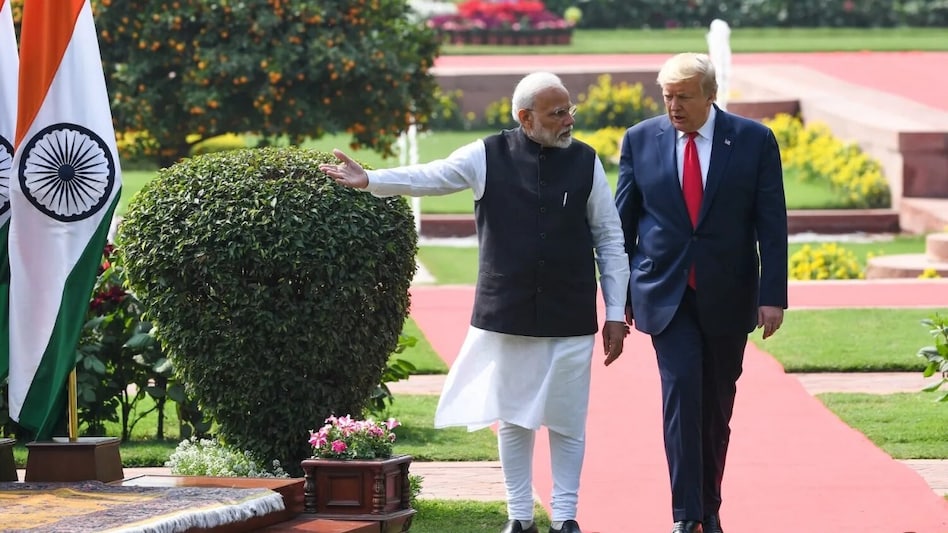
 Washington does not view New Delhi as a strategic partner but as a rival, said Brahma Chellaney
US Trade Representative Jamieson Greer’s remarks that India still has some distance to travel in terms of cutting down purchases of Russian oil is indicative that Washington has no intention of slashing the 50 per cent tariffs on New Delhi, says geostrategist Brahma Chellaney. It never was about purchasing Russian oil, he said, but more about power.
“Let’s be clear about what this is — and is not — about. If Russian energy imports were truly the issue, the U.S. would have moved first against China, the largest buyer of Russian energy, or the EU, the second-largest importer. It has done neither. Instead, Trump has granted Europe a comfortable transition period, allowing EU states to phase out Russian gas imports gradually by early 2028, by which time the Ukraine war may be over,” he said.
Chellaney said the tariffs have “little to do with energy and everything to do with power”.
Trump’s tariffs are a political signal, he said.
“They are a political signal: a rising India is no longer viewed in Washington primarily as a strategic partner to be cultivated, but as an economic rival to be constrained. This harder line is visible well beyond trade. Across South Asia, U.S. policy now reflects a less benign view of India — one that no longer hesitates to work against India’s regional interests,” said Chellaney.
Greer, in an interview with Fox Business, said that it is difficult for New Delhi to wean off the supplies because of the kind of discounts they are getting over Russian oil. He also acknowledged that New Delhi has made a lot of progress.
“I am in frequent contact with my counterpart in India. I have a great working relationship with him, but they still have a ways to go on this point,” said Greer. Greer, however, agreed that India got a lucrative deal with the European Union free trade agreement (FTA).

 US-Iran pause attacks for second day; Trump 'giving talks some space' as Hormuz deal discussed
 New paper leak bill in Lok Sabha today, proposes harsher punishment; MPs given draft
 Which ITR form should NRIs use? Why filing ITR-1 could be a costly mistake
 Top stocks in news: NTPC, Jindal Steel, Bank of Baroda, NBCC, IDFC First, TCPL, SBI Cards, REC
 SIFs, mutual funds, PMS or AIFs: Which investment route deserves a place in your portfolio?
 AI Data Centers, Aerospace & Gas Turbines: What's Powering Indo-MIM's Future Growth?
 Best Healthcare Stocks: Gaurang Shah's Outlook On Apollo Hospitals, Fortis & The Manipal Health IPO
 Is Indo-MIM's IPO Valuation Justified? Here's Why The Company Sees Strong Growth Ahead
 Treasury Bills Explained: Why T-Bills Are One Of The Safest Short-Term Investment Options
 FDs vs Markets: Where Should You Keep Your Short-Term Money?
 Hindustan Zinc share price: HZL targets by Jefferies, HSBC, Citi & other stock brokerages
 Nifty, Sensex, Nifty Bank outlook for today: GIFT Nifty up 140 points; key levels to watchTop stocks in news: NTPC, Jindal Steel, Bank of Baroda, NBCC, IDFC First, TCPL, SBI Cards, REC
 Gland Pharma stock: Price target of Rs 3,250 likely in medium term, says analyst
  Metal recycling stocks to buy: Gravita, Pondy Oxides, Jain Resource among top picksNew paper leak bill in Lok Sabha today, proposes harsher punishment; MPs given draft
 Think a marriage certificate makes you husband and wife? Gujarat HC explains why registration alone cannot prove a valid Hindu marriageHindustan Zinc share price: HZL targets by Jefferies, HSBC, Citi & other stock brokerages
 A scooter in Coimbatore was slapped with 249 traffic challans worth ₹3.69 lakh — but there's a twistUS-Iran pause attacks for second day; Trump 'giving talks some space' as Hormuz deal discussed









