


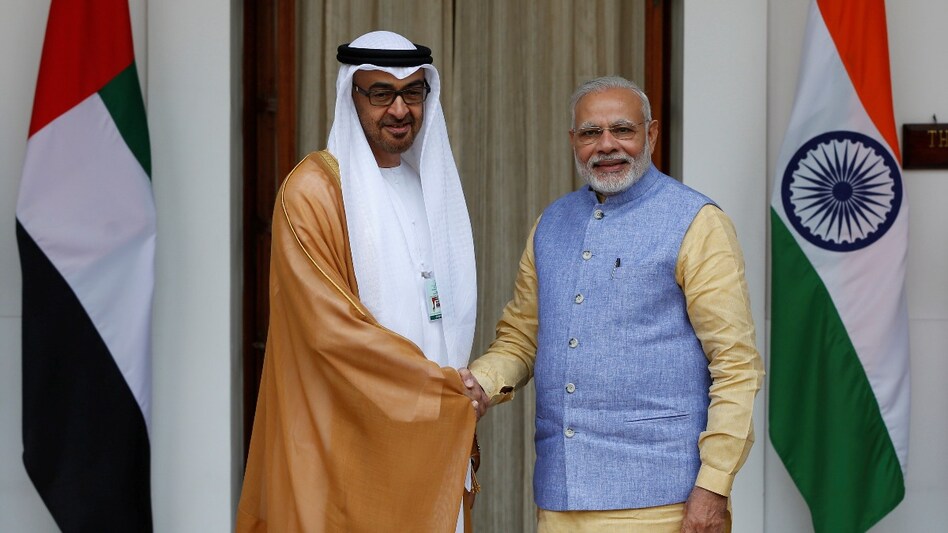
 Sheikh Mohamed bin Zayed’s visit to India also follows a series of recent engagements spanning both civilian and military leadership.
UAE President Sheikh Mohamed bin Zayed Al Nahyan arrived in India today for a brief official visit. According to an ANI report, the visit will last around two hours, with talks between the two leaders scheduled in the national capital this evening.
Soon after his arrival, Prime Minister Narendra Modi welcomed UAE President Sheikh Mohamed bin Zayed Al Nahyan and his family at his residence at Lok Kalyan Marg. As part of the welcome, the Prime Minister presented traditional Indian gifts to the visiting leaders.

 'Every great airline is built over decades': Tata Sons Chairman says Air India's turnaround is a 5-10 yr mission
  Tata Motors flags ‘severe disruption’ at Sanand plant in Gujarat due to floods
 HDFC Bank penalises top officials, including CEO and CFO, in MSRDC case. Here’s why
 Only 26 of every 100 young Indian graduates have salaried jobs; just 4 enjoy basic employment benefits: Report
 Where are the jobs: Youth unemployment remains high; fewer jobs for those with higher education in India
 DCB Bank Management | Q1 Earnings, Loan Growth, Margins & Asset Quality Explained
 Infosys Fined In France: 70-Hour Work-week Debate Returns After €175,000 Labour Penalty
 I.T. Sector Outlook: Is the Worst Over for Indian I.T. Stocks After Long Underperformance?
 France And Spain Wildfires Threaten Cap Ferret Mansions And Bordeaux Wine Country
 Maruti Suzuki Eyes 25-30% SUV Growth, Says CNG Demand Has Overtaken Diesel
 Tata Power Q1 profit rises 11% to Rs 1,176 crore; revenue up 6%, capex tops Rs 5,300 crore
 HDFC Bank concludes internal review into MSRDC deposit arrangements; CEO, CFO among 3 fined Rs 1 lakh
 How Narayana Murthy's era, Vishal Sikka's stint and Salil Parekh's tenure differed; big task awaits next Infosys CEO
 BEL Q1 results: Net profit rises 9%, revenue at Rs 5,533 crore
  Sensex, Nifty snap five-session losing run; investors add Rs 5.1 lakh crore in wealth
 Grab a ready-to-occupy home in Delhi: DDA rolls out Karmjivi scheme with 25% price cut
 High power bills burning pockets? Claim up to ₹78,000 under PM Surya Ghar scheme
 AU Small Finance Bank hikes FCNR(B), NRE FD rates; here's what NRIs need to know
 India's Vande Bharat sleeper gets a luxury upgrade: First look inside the redesigned first AC coach
 Brazil aced the ethanol journey. Here's why it shows consumer trust matters most










