


 Manish Tewari fires back: ‘Trump’s tariff is biggest tribute to Indian strategic exceptionalism’
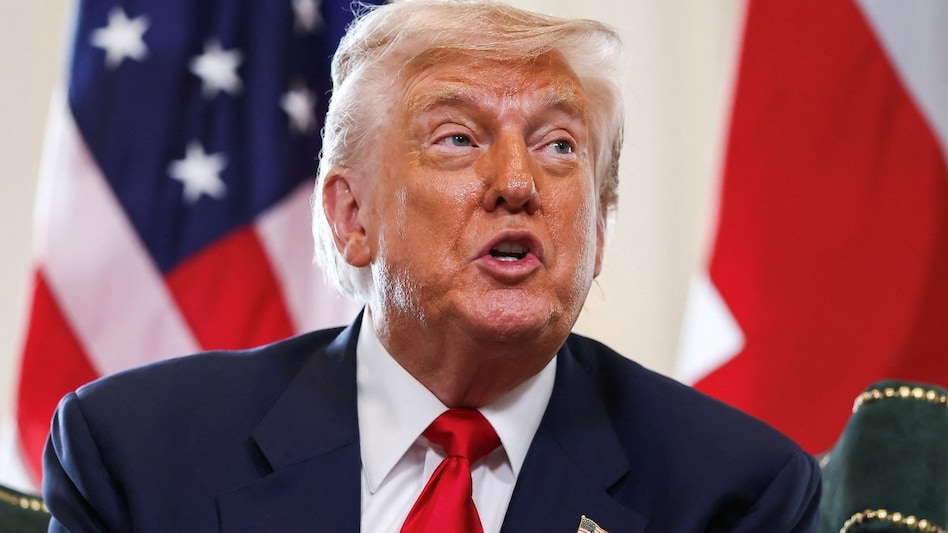
Hours after US President Donald Trump imposed a 25% tariff and an unspecified penalty on Indian imports, Congress MP Manish Tewari said the move would not shake India's long-standing strategic autonomy. Framing the escalation as a tribute to India's "strategic exceptionalism," Tewari wrote on X, "Would Trump's tariff threat make any difference to the strategic autonomy that we have built up over the decades and across different dispensations and administration’s — NOT REALLY."
US President Donald Trump has announced a 25% tariff, along with an unspecified penalty, on Indian imports, citing New Delhi's continued defence and energy engagement with Russia. "India will therefore be paying a tariff of 25%, plus a penalty for the above, starting on August first,” Trump wrote in a post. He also slammed India’s trade practices, calling them “among the highest in the world” and accused India of maintaining “strenuous and obnoxious non-monetary trade barriers."

 Infosys, Tech Mahindra, TCS, Wipro: Why IT shares are down in a rising market today
  AI safety or market control? Anthropic, OpenAI, Google SpaceXAI accused of slowing AI progress
 Cyber hits to fake news: Vaishnaw warns of foul play against India’s semiconductor push
  Raymond, Welspun Living, Alok Industries shares rise up to 8%; here's why
  IIT-B prof to be summoned by police; Director signs 18-point charter amid students’ demands
 India’s Credit Growth Surprises At 18-19%: Christopher Wood On CapEx | Jefferies Forum 2026
 MG Hector Tomahawk EV Review | 517km Range, 7 Seats, Performance & Ride Quality | MG’s Best SUV Yet?
 Gold Price Target 2026: Expert Sees MCX Gold At ₹1.8 Lakh By Year-End Amid Strong Demand
 Health Insurance: Why Pre-Existing Diseases And Waiting Periods Matter For Buyers
 Crude Oil Above $100: How High Energy Prices And Rupee Weakness Impact Gold Prices In India
 NSE IPO: What sets India’s second-largest issue apart? A token sale
 NSE IPO: India's largest exchange gets 1.73x subscription on Day 3 so far; retail portion booked 94%
 SAMIL shares: Stock fall 2%; company buys 50.1% stake in aerospace & defence firm
 Airtel, NOCIL, Acutaas among top stocks to buy for short-term gains; check target prices & details
 Dilip Buildcon emerges L-1 bidder for Rs 1,265 crore transmission project; stock reactsNSE IPO: What sets India’s second-largest issue apart? A token sale
 Smokers Pay Up to 100% More for Term Insurance in India: Here's What You Need to Know Before You Buy
 Critical milestone for nuclear sector: NPCIL commences geotechnical investigation for 2 more projects in Rajasthan
 Planning to visit Canada this year? All you need to know from eTA, visa to processing time, visitor visaIndia’s Credit Growth Surprises At 18-19%: Christopher Wood On CapEx | Jefferies Forum 2026












