












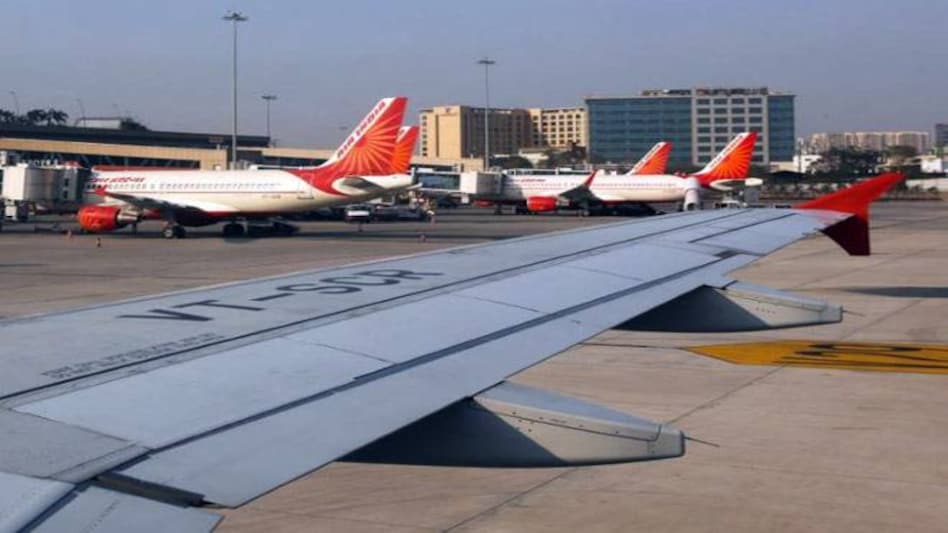
While the positive impact of GST on the economy is still being debated, the Narendra Modi-led NDA government has taken its first step to divest stake in the loss-making national carrier Air India. The finance minister Arun Jaitley announced that the cabinet has given in-principle approval for disinvestment in AI, and a group of ministers (GoM) will be formed to look into the divestment process.
If the government succeeds in selling AI this time, the third such attempt in the past two decades, it would definitely reaffirm the current government's commitment of ensuring "minimum government, maximum governance". In his 2014 visit to the US, PM Modi had said that "it is not the government's business to run a business." With AI disinvestment, he seems to be walking the talk.
The cabinet approval is the initial step in what seems like a process lasting several months. According to rough estimates, the deal is likely to be concluded by the end of the current financial year. Given the dismal performance of the airline, the government might have to throw its weight around to conclude the deal. So far, no major corporate group has evinced interest in buying AI. The government though has reportedly held informal meeting with Tata Group chairman N. Chandrasekaran to sell majority stake.
Since the government's intent is clear, getting regulatory clearances - and reaching consensus within the group members - will not be an issue. Thankfully, the disinvestment would not require approval from parliament which could well have been a tardy process. In 1994, Air Corporation Act was repealed that ended the monopoly of national air corporations and opened the sector for private carriers.
Finding the right buyer who can pay reasonable price is going to be the biggest challenge. AI, which is fully owned by the government, has huge national interest, and to say the least, the whole disinvestment process needs to be transparent. Several attempts to revive AI have failed miserably. The last biggest (futile) attempt was made in 2011 when the government approved Rs 30,231 crore turnaround plan (TAP) to pull the airline out of mounting losses and debt burden.
Setting up of the first-ever GoM, a select group of ministers, looks like a u-turn by the government. Soon after coming to power, Modi dissolved all ministerial panels - some 27 GoMs and 24 EGoMs -formed by the UPA-II government to take decisions on policy and corruption matters. Decisions taken by GoMs in the previous regime were referred to the cabinet for its consideration. The same procedure is likely to be followed in AI's case.
Even as the role of this group is yet to be understood, it is apparent that the government will have to make AI an attractive asset for prospective buyer. The GoM's task could include finalising a buyer, engaging with private valuation agencies, defining government's role in paring down debt, and reworking the organisational structure. At present, AI has multiple arms - aviation (Air India, Alliance Air and Air India Express), maintenance, repair and overhaul (MRO) operations, hospitality (Centaur Hotels), and airport services (Air India SATS). Each of them can be possibly hived off and sold individually, if needed.
The government will also have to deal with obvious tendencies to hyberbolize the airline's debt burden (of Rs 46,570 crore) and avoid devaluing its assets. For the past few weeks, the discussions around AI sale are often loaded with cynical view of its high debt levels.
There's no denying that the airline has its own sets of issues but that doesn't make it a distressed asset. Globally, there have been instances where corporations with deep problems could command premium on the back of window dressing. AI might not need to do that. It has some valuable assets that should lure serious buyers. This includes marquee assets in metro cities, large market share, sizable fleet, plentiful prime slots (parking and landing) slots at key airports such as Delhi, Mumbai, London, New York and Tokyo. For now, the government has set the ball rolling.
 Operation Sindoor Anniversary: How strikes by India's tri-services reshaped its terror response- A look back
 KKR-backed InCred Holdings files UDRHP with SEBI for IPO; fresh issue at Rs 1,250 crore
 Operation Sindoor Anniversary: This defence stock gave 400% returns in a year— Do you own?
 ‘Extend paternity leaves’: EAC-PM bats for phased, gender-neutral parental leaves
 Up to 57% more upside in Coforge shares post Q4 earnings? Check target prices
 Vijay Stakes Claim! Congress Dumps DMK To Join TVK- Is Thalapathy Tamil Nadu’s Next CM?
 "Every Ship Is Blown To Pieces": Trump Says Iran Navy Is Gone & A Deal Is "Very Possible"
 FIIs Keep Selling, But Indian Markets Refuse To Crack — Here’s Why
 Vijay’s CM Dream: TVK Chief Short Of Majority! Can Congress And Left Push Him Over The Mark?
 Uber Stock Jumps After $58B Forecast | Robotaxi Strategy & Global Expansion Explained | Q2 Outlook
 Firstsource Solutions shares get rating upgrade, but target price cut - here's why
 Bajaj Auto Buyback 2026: Share repurchase price, expected gains, record date & more
 Tata Power shares gain 28% from January low; time to book profit ahead of Q4 earnings?
 Polycab India: Q4 revenue, margins beat pushes FMEG stock to record high; should you buy?KKR-backed InCred Holdings files UDRHP with SEBI for IPO; fresh issue at Rs 1,250 crore