


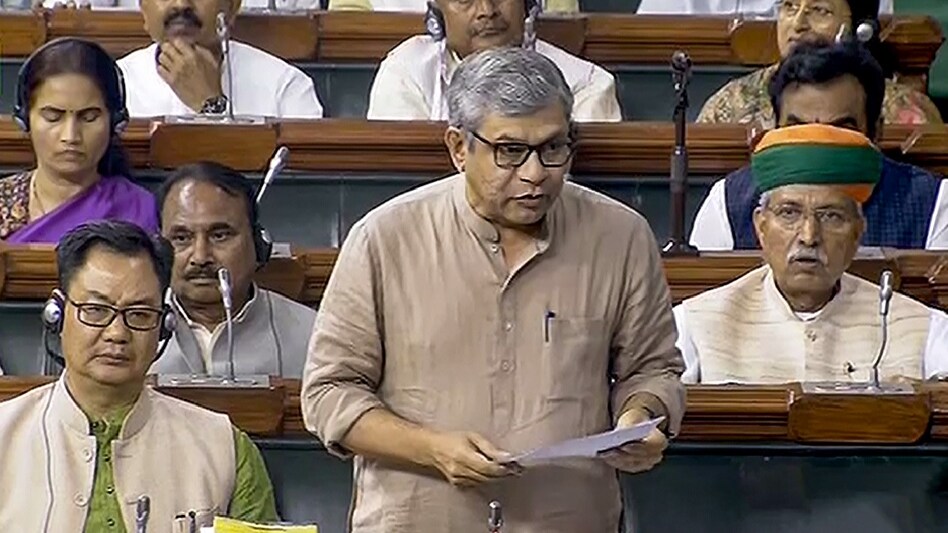
 Union Minister for Electronics & Information Technology Ashwini Vaishnaw introduces the Digital Personal Data Protection Bill, 2023, in the Lok Sabha during Monsoon session of Parliament, in New Delhi
 After a long wait, the Digital Personal Data Protection Bill, 2023 was presented in the Lok Sabha by Union Communications, Electronics, and Information Technology Minister Ashwini Vaishnaw introduced. The bill, which brings India closer to having its first legislation that addresses citizens' privacy and establishing guidelines for how individuals' data can be used by private or government entities, was dissented by the opposition members, but the industry has welcomed the move.
Manish Sehgal, Partner, Deloitte India, said: “The much-anticipated privacy bill (referred to as Digital Personal Data Protection Bill, 2023), was tabled in the Parliament. Once enacted, it will enable individuals (referred to as Data Principals) to govern their own personal (digital) data, and will drive enterprises (referred as Data Fiduciary) to process personal data of individuals in a lawful manner, for specific purposes only.” Sehgal added: “in view of the bill’s extra-territorial coverage, enterprises based outside India serving individuals in India will also be expected to adhere to the provisions of this bill once enacted. Enterprises will have to review the current ways of working especially for the personal data of individuals such as their employees, customers, merchants, vendors, etc. to be able to honour the rights that individuals may exercise, such as the right to access, update, erase their personal data etc. Non-adherence of obligation listed in the bill may attract sanctions and commercial penalty as high as Rs 250 crore.”
 NSE empanels Augmont as key partner to promote Electronic Gold Receipts
 Repeated ₹2,000 UPI payments for one purchase? Your bank could flag the pattern: What it means
 US govt vs Anthropic: DC appeals court upholds Pentagon blacklist order. What it means?
 Historic! Home loans in India are now cheaper than the US -- What NRIs must know
 Xi Jinping in US: Beijing, Washington agree to $30 billion reciprocal tariff cut, says report
 R Veeramani Case: Granite Tycoon Faces Widening POCSO Probe In Chennai
 Gen Z And Money: Why Young Investors Want Quick Returns Over Long-Term Wealth Creation
 How Is Alexa+ Different? Will It have Ads Even If You Pay? Exclusive Chat
 Demand Robust Across Segments | Production To Ramp Up, Exports To Expand: Vivek Srivatsa
 GST Council To Meet On October 7: Invoice Matching, ITC & UPI MDR Tax In Focus
 IPO rush: Four IPOs conclude today; check subscription status, other details of issues still open
 Meesho shares slip 7% as Nomura assigns 'reduce' call; here's what the brokerage says
  Sensex, Nifty extend losing streak to seventh week, longest since 2020: What's next?
 Suzlon in bear grip: Oversold signals emerge near 52-week low for the stock
  EIL shares jump 7% to hit record high; stock up nearly 62% in six months: What's driving the rise?
 Asian Games 2026: India beat Iran 40-34 in thrilling Men’s kabaddi final to retain gold medal
 Who is Preeti Aghalayam? IIT Madras alumna’s journey from student to first woman IIT directorNSE empanels Augmont as key partner to promote Electronic Gold Receipts
 ₹20,000 salary, two PF calculations: What changes in your September 2026 EPF contribution
 Monkey walks into Ranchi liquor shop, drinks vodka and falls asleep; Video goes viral












