

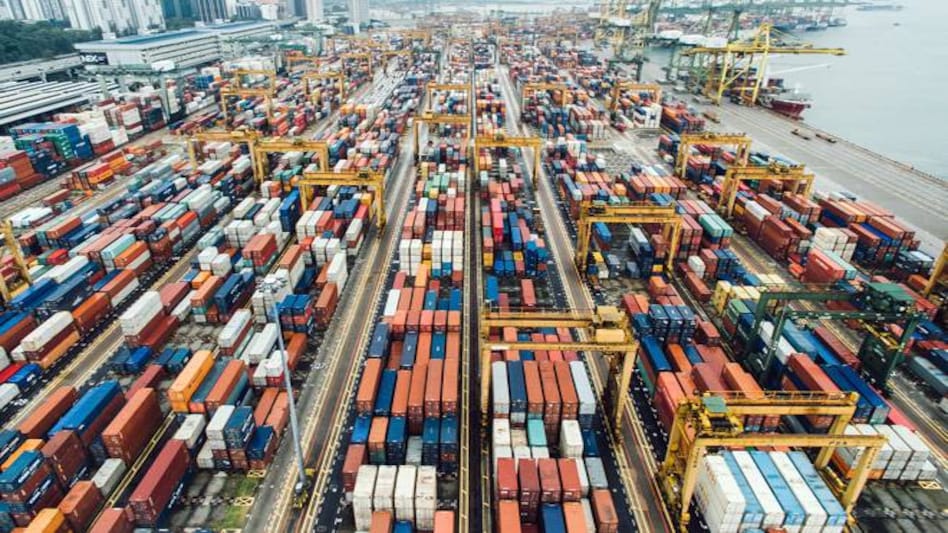
The foreign trade data for the month of June has made the task of export promotion of Union Commerce and Industry Minister Piyush Goyal tougher. India's exports have declined 9.71 per cent to $25.01 billion in June 2019 as compared to $27.7 billion in June 2018. Over two-third of the major product groups in the export basket have registered a fall (in exports) last month. The minister who has taken up measures to arrest the slump in exports in a time bound manner as his priority will now have to address broad-ranging problems across sectors for a meaningful intervention. It becomes all the more difficult as the global trade environment is far from being export friendly.
"The de-growth in exports is a reflection of sluggish global demand and rising tariff war. The high exports base of June 2018 contributed in no less measure. The softening of crude and steel prices also pulled down exports," says Sharad Kumar Saraf, president of Federation of Indian Export Organisations (FIEO).
 Anthropic says Claude now leads 26% of its AI R&D work: How fast is AI development accelerating?
 100% tariffs immediately? What Trump’s new Russia sanctions law means for India
 Russian oil & gas purchase: Trump signs Bill into Act targeting 100% tariffs on India, China
 'Tatas today are the face of India...': Former Solicitor General Harish Salve backs Tata Sons public listing
  Trump’s announces Greenland deal with Denmark: What it means for US military presence
 Gold Price Outlook: Why Gold Could Rise Despite Global Interest Rate Hikes | Silver Market Update
 Health Insurance: Why Claim Settlement Ratio Is Not Enough When Choosing The Right Insurer
 “Unacceptable And Unprofessional”: MEA Rejects Pakistan’s Claims Over INS Kolkata Collision
  Commodity Trading For Beginners: How MCX & NCDEX Work | Trading Basics | Money Today
 US Fed Rate Hikes A Headwind For Foreign Flows? | Jibi Jacob | Jefferies
 Jindal Supreme, SS Retail, Hero Motors IPOs subscribed up to 181 times on final day; details here
 Sensex, Nifty post sixth weekly loss; TCS, Titan among top laggards, slip up to 4%
 How AI collapse could benefit Indian equity market; Jefferies' Christopher Wood explains
  Banks are no more secular growth story, prefer NBFCs: Chris Wood
 Jefferies' Christopher Wood sees gold at $10,000 'sooner or later'; likes India's small, midcapsAnthropic says Claude now leads 26% of its AI R&D work: How fast is AI development accelerating?Gold Price Outlook: Why Gold Could Rise Despite Global Interest Rate Hikes | Silver Market Update
 Ghosts in the machine: How a false AI intel almost triggered a US-China clash in West Asia
 Fujifilm X Half review: The not-so-retro digital camera for Gen-Z
 Now, Google Gemini becomes latest AI model to break out & hack real companies












