








The government has suggested setting up a centralised Public Sector Asset Rehabilitation Agency (PARA), to tackle the problem of twin balance sheets with corporates and public sector banks and rising non-performing assets and bad loans.
Stressing the need for a fresh approach to solve the issues, while admitting existing provisions including private run asset reconstruction companies have only been partially successful, the Economic Survey 2016-17, does not shy away from enabling PARA take up politically tough decisions to reduce debt. It does not, however, specify what those steps could be.
As per the Survey, gross NPAs have climbed to almost 12 per cent of gross advances for public sector banks by end-September 2016 and at this level, India's NPA ratio is higher than any other major emerging market except Russia.
"The consequent squeeze of banks has led them to slow credit growth to crucial sectors-especially to industry and medium and small scale enterprises (MSMEs)-to levels unseen over the past two decades. As this has occurred, growth in private and overall investment has turned negative," says the survey. Overall, NPAs are more than Rs 6 lakh crore and public sector banks are straddled with the bulk of these unserviceable loans.
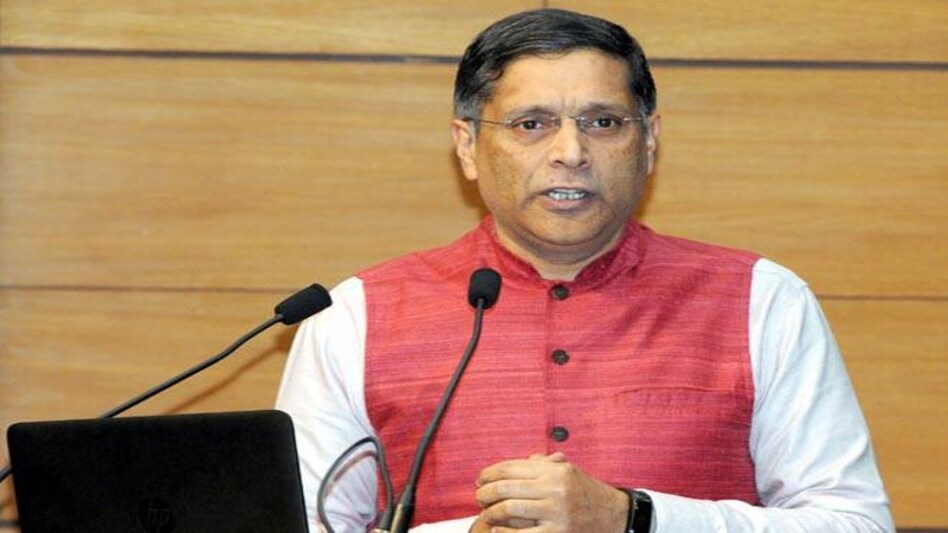
"We have tried various things in the past yet there has been no significant improvement in the situation," said Arvind Subramanian, chief economic advisor.
"Even the track record of private ARCs is patchy at best. So we thought why not approach the problem with a fresh angle and set up an agency that is capable of taking tough measures. It (setting up the agency) will not be a drain on the taxpayer as the latter is already suffering due to high NPAs. In fact there may be a net gain if we are able to avoid such situations in future or are able to get something out of the NPAs right now."
The high debt scenario is a by product of the boom years between 2005 and 2010, when companies expanded aggressively and banks lent over zealously even to those who already were highly leveraged. Following the global recession of 2008 and the subprime crisis in US, the impact on India led to a relative slowdown in growth of the economy and companies found it hard to service some of the debts.
While the survey says some of the problems were due to diversion of funds, a vast majority has been caused by unexpected changes in the economic environment after the Global Financial Crisis, which caused timetables, exchange rates, and growth rate assumptions to go seriously wrong.
"PARA may be necessary because while public discussion has focused on bank capital, far more problematic is finding a way to resolve the bad debts in the first place," it says. "International experience (especially that of East Asian economies) shows that a professionally run central agency with the government backing could overcome the coordination and political issues that have impeded progress over the past eight years."
 Cyber attacks, AI misuse and data privacy rules emerge as top boardroom risks for India Inc
 'India has played it pretty safe, deal is very balanced': Top agri economist on India–US trade agreement
 Shell firms, circular trading: Fake GST invoice frauds continue despite curbs
 'The real sting is the monitoring': Brahma Chellaney flags risk for India in Trump's Russian oil order
 Moltbook hype unravels: Viral posts were human-written, not AI, finds MIT Technology Review
 BT Golf 2025-26 Kochi, Kerala Awards Ceremony Marks A High-Energy, Successful Conclusion
 Golf Is An Addiction. We Eat And Sleep Golf!
 The Fairway Fixes Everything. Mindset, Life, Relationships
 BT Golf LIVE: Join AU Small Finance Bank Presents BT Golf 2025-26 For Its 4th Leg In Kochi, Kerala
 AI Will Change MBAs, Not Leadership: IMD President On India’s Global Education Rise
 RIL, SBI, Kotak Bank, Kalyan, HAL, BEML, BDL among stocks in focus next week; here’s why
 NSE IPO may unlock mega gains for billionaire investors RK Damani, Premji
 SBI Q3 Results: Profit jumps 24% to Rs 21,028 crore; asset quality improves
 IDBI Bank stake sale: Kotak Mahindra Bank says ‘has not submitted a financial bid’
 BDL, Mazagon Dock, MRF, Hindustan Copper, RVNL, others to turn ex-dividend next week