


Advertisement
India-EU summit ahead: Commerce Ministry says GSP impact limited to 2.66% of exports not 87%

India-EU summit ahead: Commerce Ministry says GSP impact limited to 2.66% of exports not 87%

Even as exporters contend with higher US tariffs, shipments to the EU have faced an additional setback following the suspension of tariff preferences under the EU’s Generalised System of Preferences (GSP). From January 1, 2026, GSP benefits have been withdrawn on an estimated 87 per cent of India’s exports to the bloc.

Business Today Desk
Business Today Desk
  • Updated Jan 24, 2026 1:23 PM IST
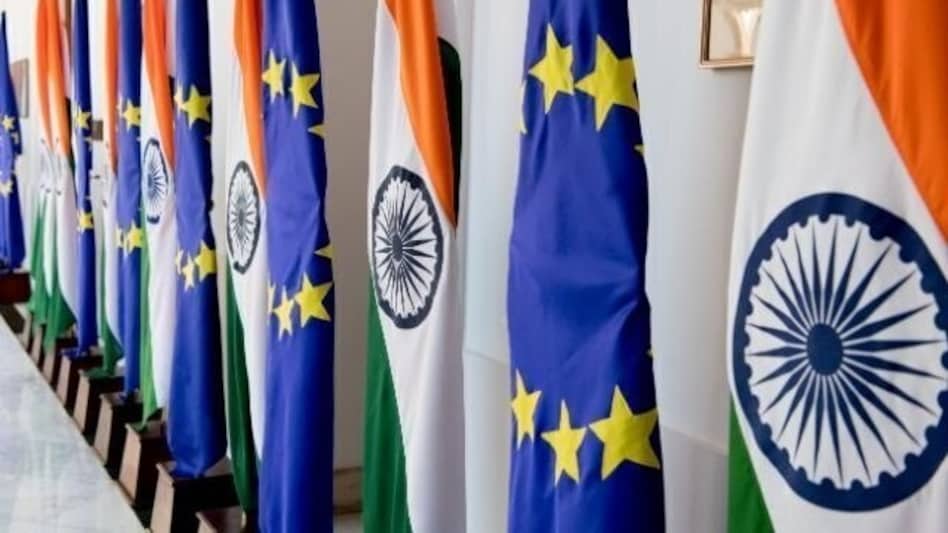
India-EU summit ahead: Commerce Ministry says GSP impact limited to 2.66% of exports not 87%India and the EU have been working to close remaining gaps in the FTA negotiations, which were revived in 2022 after a nine-year pause.

The upcoming India–EU summit is expected to mark a decisive shift in relations between the two sides, with economic cooperation and security emerging as central pillars at a time when reliance on the United States is increasingly being questioned. The meeting is likely to accelerate progress on a long-pending free trade agreement (FTA) and pave the way for a deeper defence and security partnership aimed at diversifying military supply chains and improving access to advanced capabilities for both regions.

Advertisement

Related Articles

The announcement of a trade deal could follow Prime Minister Narendra Modi’s meetings with European Council President António Costa and European Commission President Ursula von der Leyen, who will co-chair the India–EU summit during their visit to India from January 25 to 28. If approved and ratified by the European Parliament, the agreement could provide a significant boost to Indian exports, particularly in labour-intensive sectors such as textiles and jewellery. However, the EU’s ratification process is expected to take at least a year, delaying the actual on-ground benefits for exporters.

Challenging times for exporters

The renewed diplomatic momentum comes at a challenging time for Indian exporters. As they grapple with higher US tariffs, shipments to the European Union have also been hit by the suspension of tariff preferences under the EU’s Generalised System of Preferences (GSP). From January 1, 2026, GSP benefits have been fully withdrawn on an estimated 87 per cent of India’s exports to the bloc.

Advertisement

The suspension applies to a broad range of products, including mineral products, chemicals, plastics, iron and steel, rubber, textiles, pearls and precious metals, motor vehicles, machinery and electrical appliances. These items will now face full most-favoured nation (MFN) tariffs, raising costs and weakening price competitiveness for Indian exporters in the interim period.

“Now concessions are suspended for 87 per cent value of Indian goods exports to EU and these have to face full MFN tariffs. Even if India signs its FTA deal with the EU right away, it may take one year or more to get implemented. Indian exporters will feel the pinch till that time,” Ajay Srivastava, Founder of the Global Trade Research Initiative (GTRI), told Hindu Businessline.

Advertisement

2.66% not 87%

However, the Commerce Ministry has said that the new regulation affects only 2.66 per cent of India’s exports to the EU, and not 87 per cent. In a note, the ministry clarified that the European Commission has adopted Implementing Regulation (EU) 2025/1909, which sets out the rules for suspending specific tariff preferences for certain GSP beneficiary countries, including India, for the period 2026–2028. The regulation formally came into force on January 1, 2026, and will remain applicable until December 31, 2028.

Under the revised GSP framework, agricultural tariff lines have not been graduated. Within the non-agricultural segment, only leather products have been reinstated under the preference regime. The suspension applies to thirteen specific GSP sections, including mineral products; inorganic and organic chemicals; plastics and related articles; rubber and related products; textiles; articles of stone, plaster, cement, asbestos, mica or similar materials; ceramic products; glass and glassware; pearls and precious metals; iron and steel and related articles; base metals other than iron and steel and articles thereof; machinery and mechanical appliances; electrical machinery and equipment and parts; railway or tramway locomotives and rolling stock; motor vehicles, bicycles, aircraft and spacecraft; and ships and boats.

According to the ministry, EU imports from India were valued at approximately €62.2 billion in 2023. Of this, only €12.9 billion was eligible for benefits under the EU’s Standard GSP framework, as India has already graduated from 12 major product categories. Under the new regulation, an estimated €1.66 billion worth of trade is expected to graduate out of the GSP regime, reducing the eligible GSP trade value to about €11.24 billion based on 2023 data.

Advertisement

Viewed in this context, the ministry said, the new regulation impacts only around 2.66 per cent of India’s total exports to the EU. It added that the graduation process is based on the competitiveness of a country’s exports and is periodically reviewed by the European Union. India’s graduation from multiple product categories over time, the ministry noted, reflects the increasing competitiveness of its exports rather than a punitive trade action.

What is Generalised System of Preferences

The European Union’s Generalised System of Preferences (GSP) is a unilateral trade preference programme through which the EU offers reduced or zero customs duties on imports from developing and least-developed countries. The scheme is designed to support export-led growth in beneficiary countries by improving their access to the EU market.

GSP is a non-reciprocal arrangement, meaning beneficiary countries are not required to offer similar concessions in return. It functions as an exception to the World Trade Organization’s Most-Favoured-Nation (MFN) principle. The scheme’s permanent legal basis under WTO law is the 1979 Enabling Clause, which permits developed countries to extend differential and more favourable tariff treatment to developing nations.

The EU’s GSP framework is structured across three distinct tiers. The Standard GSP applies to low- and lower-middle-income developing countries that meet specified eligibility criteria. India is a beneficiary under this standard GSP category. The GSP+ scheme offers enhanced tariff preferences but requires beneficiary countries to ratify and effectively implement a set of international conventions covering labour rights, human rights, environmental protection and good governance.

Advertisement

The third tier, known as Everything But Arms (EBA), applies to least-developed countries. Under EBA, eligible countries receive duty-free and quota-free access to the EU market for all products, with the sole exception of arms and ammunition.

India-EU FTA

India and the EU have been working to close remaining gaps in the FTA negotiations, which were revived in 2022 after a nine-year pause. The talks gained traction last year amid rising global trade tensions and have since gathered pace following sharp shifts in US trade policy.

Under President Donald Trump, the US imposed tariffs on both India and the EU, disrupting long-standing trade relationships. New Delhi was penalised for purchasing Russian crude, with a cumulative 50 per cent tariff imposed on Indian shipments to the US. Relations between Washington and Europe have also deteriorated since Trump returned to power in January 2024, with disagreements spanning multiple issues, most recently including tensions over Greenland. These developments have pushed both India and the EU to seek greater strategic and economic autonomy through closer bilateral engagement.

(With agency inputs)

Published on: Jan 24, 2026 12:13 PM IST
Post a comment0