


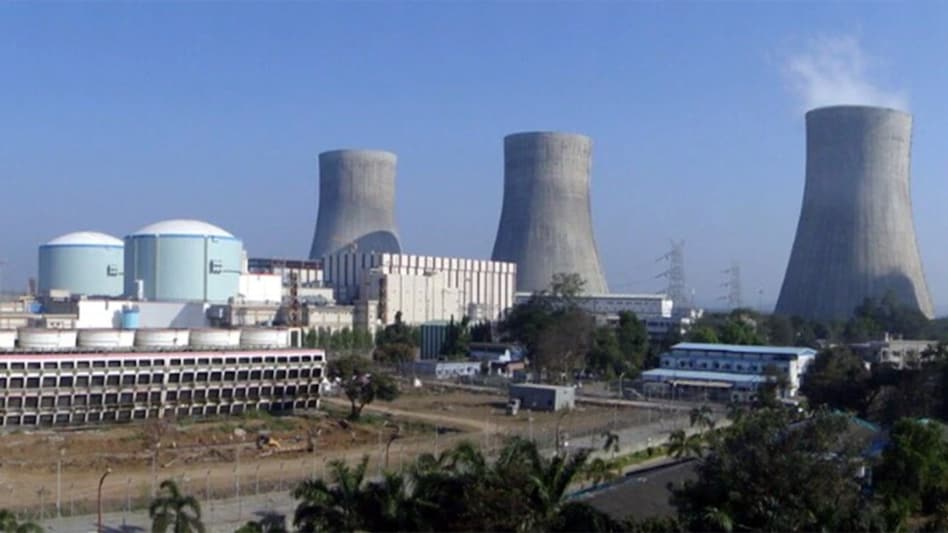
 SHANTI Bill paves way for private participation in nuclear sector
The Sustainable Harnessing and Advancement of Nuclear Energy for Transforming India (SHANTI) Bill, 2025, which opens private players’ entry into nuclear power, addresses concerns related to operator liability norms. However, high capital costs, execution risks and tariff competitiveness remain a challenge.
The Bill, if passed, aims to transition India from a tightly controlled, state-dominated nuclear sector controlled by the Nuclear Power Corporation of Indian Limited (NPCIL) to a more diversified model that permits regulated private participation while maintaining government control over sensitive activities.

 'Every great airline is built over decades': Tata Sons Chairman says Air India's turnaround is a 5-10 yr mission
  Tata Motors flags ‘severe disruption’ at Sanand plant in Gujarat due to floods
 HDFC Bank penalises top officials, including CEO and CFO, in MSRDC case. Here’s why
 Only 26 of every 100 young Indian graduates have salaried jobs; just 4 enjoy basic employment benefits: Report
 Where are the jobs: Youth unemployment remains high; fewer jobs for those with higher education in India
 DCB Bank Management | Q1 Earnings, Loan Growth, Margins & Asset Quality Explained
 Infosys Fined In France: 70-Hour Work-week Debate Returns After €175,000 Labour Penalty
 I.T. Sector Outlook: Is the Worst Over for Indian I.T. Stocks After Long Underperformance?
 France And Spain Wildfires Threaten Cap Ferret Mansions And Bordeaux Wine Country
 Maruti Suzuki Eyes 25-30% SUV Growth, Says CNG Demand Has Overtaken Diesel
 Tata Power Q1 profit rises 11% to Rs 1,176 crore; revenue up 6%, capex tops Rs 5,300 crore
 HDFC Bank concludes internal review into MSRDC deposit arrangements; CEO, CFO among 3 fined Rs 1 lakh
 How Narayana Murthy's era, Vishal Sikka's stint and Salil Parekh's tenure differed; big task awaits next Infosys CEO
 BEL Q1 results: Net profit rises 9%, revenue at Rs 5,533 crore
  Sensex, Nifty snap five-session losing run; investors add Rs 5.1 lakh crore in wealthDCB Bank Management | Q1 Earnings, Loan Growth, Margins & Asset Quality ExplainedTata Motors flags ‘severe disruption’ at Sanand plant in Gujarat due to floods'Every great airline is built over decades': Tata Sons Chairman says Air India's turnaround is a 5-10 yr mission
  Indian Army launches internship offering up to ₹75,000 stipend in Delhi. How to apply?
 India adds 1.18 lakh hectares of mangroves in 40 years, second-highest gain globally: Report










