


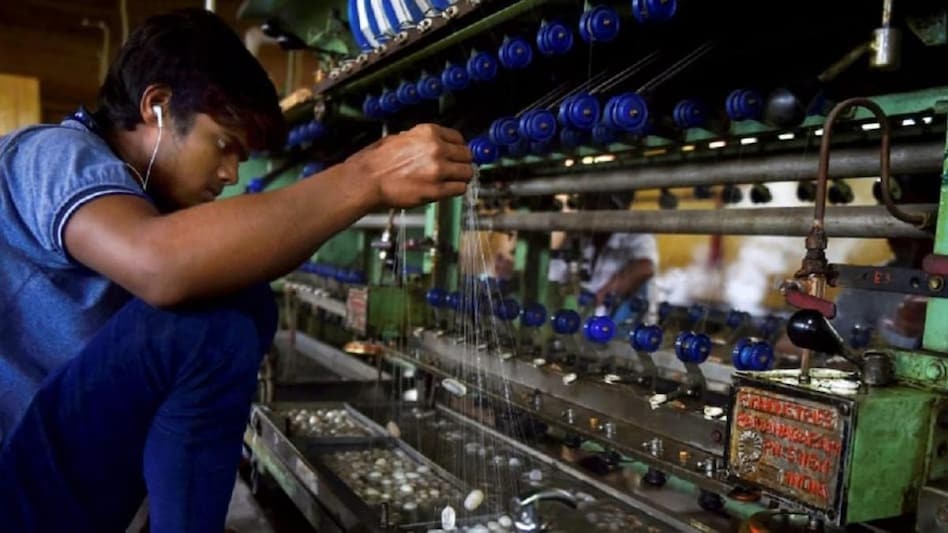
 The government has also increased the maximum project cost from the existing Rs 25 lakh to Rs 50 lakh for manufacturing units and from existing Rs.10 lakh to Rs.20 lakh for service units.
 The government has approved the extension of the Prime Minister's Employment Generation Programme (PMEGP) for five years from 2021-22 to 2025-26 with an outlay of Rs.13554.42 crore.
PMEGP had been launched in 2008 to facilitate the generation of employment opportunities for unemployed youth across the country by assisting setting up of micro-enterprises in the non-farm sector.

 How Tamil Nadu is continuing to lead in manufacturing with factories and factory workers
 Carney strikes back: Canada retaliates against US tariffs with duties on $20 billion of goods
 Get a lifetime membership at Delhi's iconic Roshanara Club; DDA opens 750 slots, check prices
 Did you know India’s cash demand is strong despite the digital payment boom?
 Xi Jinping likely to visit India after 7 years for BRICS summit, may bring 400-member delegation
 Trump Moves To Make H-1B Visa Fee Permanent And Higher: What It Means For Indians
 Market Rally Vs Geopolitical Risk: What Wins From Here? Aditya Agarwal
 Daily Calls: Ask Your STOCK MARKET TODAY QUERIES | Market Update | Share Market News Today
 Symbiotec Pharmalab IPO | Top Management On Growth Plans, Business Outlook & IPO Strategy
 Chennai Second Airport Halted: Parandur Project Faces Wetland Concerns & Political Storm
 Paytm shares up 33% in a month: Time to book profits or is there more upside left?
 Nykaa shares: Elara Capital hikes target price; sees 43% upside potential
 Crompton Greaves shares: Brokerage sees 67% upside potential; check target price
 Dixon Tech, Amber Enterprises: Will they benefit from MPMS? Kotak shares views
 Vodafone Idea, Paradeep Phosphates, Hindustan Copper shares: What expert says
 Honda Rebel 300 launched: The cruiser battle is about to get interesting
 India’s metro first: DMRC gets global certification that could change how cities run trains
 China develops hypersonic glide vehicles that can target aircraft thousands of miles away; must nations worry?
 Amrit Bharat Express Prayagraj-Mumbai maiden run fully booked: Check route, timings, stoppages
 HDFC Bank, Federal Bank, Slice SFB and ESAF SFB revise FD rates; senior investors can earn up to 8.50%












