


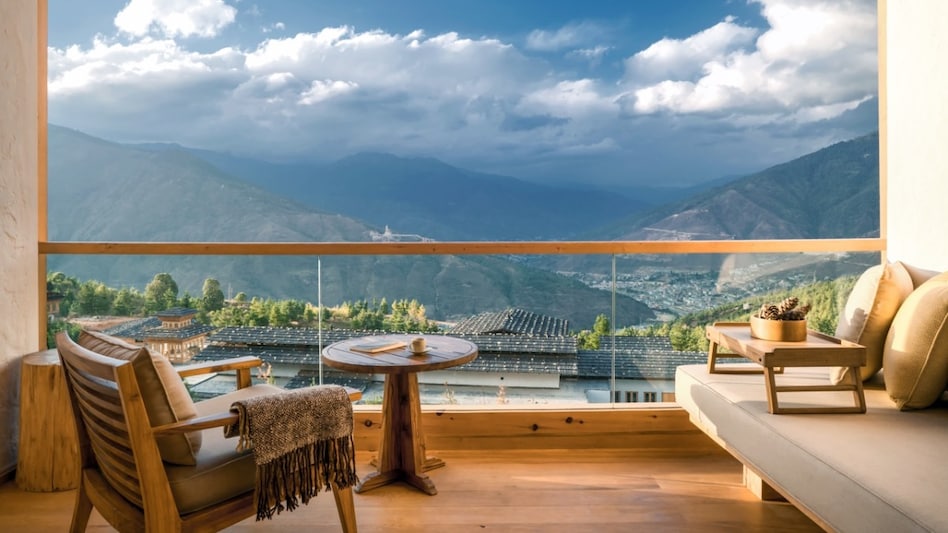
 Six Senses Bhutan
As 2026 approaches, travel is shedding its excesses. The urgency to tick destinations off a list is fading, replaced by something slower, more intuitive, and deeply personal. Wellness is no longer confined to spa menus or retreat calendars. It has become a way of moving through the world. Where we go, how long we stay, what time we wake, how we breathe, and even how much sunlight we absorb are now part of the travel conversation.
Across continents, hospitality leaders are observing the same quiet shift. Travellers are no longer chasing transformation in a week. They are seeking continuity. They want experiences that feel sustainable enough to carry home, rituals that do not demand performance, and environments that allow wellbeing to unfold naturally.
The Rise of Integrated Destinations and Celebration-Led Travel
India continues to shape travel patterns across South Asia, not through volume, but through intent. As celebrations become more experiential and less transactional, destinations that allow multiple purposes to coexist are gaining momentum.
“As we look ahead to 2026, India continues to be our strongest and most influential driver shaping regional travel in South Asia. Guests are increasingly gravitating towards destinations that offer scale, seamless connectivity, and the ability to blend business, leisure, and celebration within a single journey. At Cinnamon Life at City of Dreams, this is reflected in the growing interest from Indian corporates, major conferences, and destination weddings. With UTSAV by Cinnamon Life set to take centre stage, Colombo is poised to emerge as a preferred destination for celebrations of every scale, from intimate family milestones to large, multi-day gatherings. The future points towards integrated destinations that allow guests to personalise their experiences while remaining deeply connected to the energy, culture, and rhythm of the city,” said Sanjiv Hulugalle, Chief Executive Officer and General Manager, Cinnamon Life at City of Dreams.
"There is a clear shift towards immersive luxury, where guests are seeking more than just a stay... Travelers are prioritising meaningful journeys that emphasize personal milestones, and deeper connections with place over the sheer number of trips. Culinary tourism, immersive local experiences, and hands-on activities are gaining traction. People are seeking meaningful interaction with local communities and actively participating in cultural traditions," says Digvijay Singh, General Manager, Conrad Bengaluru.
This shift signals a broader redefinition of luxury. It is no longer about escape from life, but about designing spaces where life can be fully lived, celebrated, and restored in one continuous arc.
Slower Travel, Closer to Home, With Clearer Purpose
Within India, domestic travel is becoming more reflective. Shorter journeys are being chosen with greater care. Sustainability is no longer a secondary concern but a deciding factor.
“As we approach 2026, domestic travel in India is being redefined by intent rather than scale. Travellers are increasingly choosing destinations closer to home, slower itineraries, and shorter, purpose-driven getaways that align with personal milestones and wellbeing. Sustainability is no longer a parallel conversation as it directly shapes travel choices and expectations. At Six Senses Fort Barwara, the property’s setting, scale, and approach naturally encourage guests to travel with intention, stay present, and form a deeper connection with place. As travellers increasingly seek experiences closer to home that offer restoration and meaning, this return to mindful, culturally rooted travel reflects a way of travelling we have always believed in and quietly practised,” said Rajat Gera, Commercial Director, Six Senses Fort Barwara.
The emphasis is not on doing more, but on doing less, better.
Mohit Patel, Co-founder & CEO at Raga Svara, a family-run boutique luxury retreat dedicated to holistic learning and healing, said, “As we move toward 2026, travel is undergoing a fundamental shift, from indulgence-driven experiences to deeply intentional journeys. People are consciously stepping away from rushed itineraries and constant stimulation, choosing instead to slow down, reconnect with nature, and travel in ways that support inner well-being. I believe today’s travellers are seeking depth and meaning: a deeper understanding of their physical, mental, and emotional needs; access to authentic wellness practices; and environments that create space for reflection, healing, and personal growth. I believe this is why wellness retreats are no longer viewed as occasional luxuries or short-term escapes, but as purposeful spaces for recalibration, preventive care, and long-term balance. This shift reflects a broader global awakening to intentional travel, where journeys are designed not merely to take people somewhere new, but to help them return grounded, resilient, and truly well.”
"Instead of rushing through destinations, many guests are choosing slower travel—spending time exploring cafés, local markets and neighbourhood experiences. Pune has emerged as a strong destination for this kind of travel, particularly for workations and short breaks. At JW Marriott Pune, we are adapting to this shift by offering easy-going stays, curated local recommendations and spaces that seamlessly support both work and downtime," says Amit Kumar, General Manager, JW Marriott Pune.
Wellness as a Lived Practice, Not a Programme
Wellbeing in 2026 is increasingly intuitive. Guests are moving away from rigid schedules and outcome-driven retreats, gravitating instead toward environments that allow rest, nourishment, and movement to merge into everyday living.
“Over the past year at Six Senses Vana, we have noticed a gentle change in how people relate to wellbeing. The pace is slower. The intention feels clearer. Many guests are looking for practices that feel authentic and sustainable rather than quick results or short moments of relief.
As we approach 2026, wellbeing continues to move toward intuition and lived experience. Stillness, emotional steadiness, and practices from ancient healing systems supported by nature are becoming part of everyday life for travellers. A small ritual before a meal, a moment of silence, or movement that supports the body’s rhythm feels meaningful and real.
Many guests now choose retreats where rest, nourishment, and mindful practices form one continuous way of holistic living. Something they can take home and return to whenever life becomes overwhelming, or they need a pause to go on. They are looking for places where presence feels natural and where they can notice subtle shifts, such as calmer sleep, softer breath, or a clearer inner landscape.
At Six Senses Vana, our role is to hold space with sincerity and care. We offer guidance, not urgency. The environment is designed to help guests slow down and reconnect with what feels steady and true. Change does not need to happen fast. Often it unfolds quietly through consistency, awareness, and time,” said Jaspreet Singh, General Manager, Six Senses Vana.
This philosophy reflects a broader rejection of wellness as performance. The future belongs to spaces that allow change to happen without forcing it.
Manish Dayya, General Manager, Pullman and Novotel New Delhi Aerocity said, “By 2026, wellness will no longer be a ‘vertical’ within travel—it will be the lens through which guests choose destinations, hotels, and experiences. We’re seeing a decisive shift toward purposeful travel, where rest, movement, nutrition, and mental wellbeing are seamlessly integrated into the stay. At Pullman and Novotel New Delhi Aerocity, wellness is being redefined beyond the spa—through intelligent room design, sleep-focused experiences, mindful dining, fitness-led social spaces, and curated moments of pause for both business and leisure travellers. The future of hospitality lies in enabling guests to leave not just refreshed, but genuinely better than when they arrived.”
Meanwhile, Kula Naidu, Director, Secret Ingredient, weighed in saying, "By 2026, wellness will influence travel decisions as strongly as location or price. Travellers are increasingly aware of how food, sleep, and their surrounding environment affect energy, mood, and mental clarity, and are gravitating towards brands that support healthier routines without diluting the joy of travel. Food will be central to this shift, with growing demand for transparency, lighter cooking techniques, functional ingredients, and menus designed to energise rather than overwhelm- often rooted in regional wisdom and locally sourced produce."
"Wellness is no longer about restriction or rigid regimes; it is about intelligent indulgence that fits naturally into real travel lifestyles. Alongside this, there is a renewed appreciation for local ingredients and indigenous dishes, valued not just for authenticity, but for their inherent nutritional intelligence and connection to place. Seasonal produce, traditional grains, native herbs, and time-tested cooking methods are being rediscovered and reinterpreted to support both wellbeing and pleasure. The idea that wellness exists only within spa walls is fading. In 2026, it will show up in everyday touch points- from breakfast and minibar selections to hydration rituals, dining formats, and the emotional impact of a space. The hospitality brands that will stand out are those that integrate wellness seamlessly into the guest journey, while celebrating regional identity- creating environments where better choices feel intuitive, pleasurable, and deeply woven into the overall travel experience," Naidu added.
Dushyant Singh, Hotel Manager, Mulberry Shades Bengaluru Nandi Hills talks about how the brand has seen a very strong year with healthy demand from both business and leisure travellers, and we expect this momentum to continue into 2026. He adds, "One of the most noticeable shifts is the growing importance of wellness in travel decision-making. Increasingly, especially among solo travellers, people are seeking meaningful breaks that allow them to slow down, reset, and focus on their personal well-being through quiet, nature-led escapes."
Light, Movement, and the Architecture of Everyday Wellness
Wellness in 2026 is increasingly shaped by environmental awareness. Sunlight, circadian rhythm, and gentle movement are influencing destination choices as much as design.
“Travel and wellness in 2026 are increasingly shaped by proactive, longevity-driven lifestyles, with travellers weaving movement, nutrition, and restorative rituals into their everyday routines. With the rise in wellbeing consciousness, awareness around Vitamin D, circadian health, and sunlight exposure is rising, influencing destination choices and daily habits. Guests are turning to data-driven insights from sleep tracking to personalised activity plans, while simultaneously seeking analogue moments and digital detox spaces to counterbalance overstimulation. Wellness is becoming a lived practice rather than a retreat, supported by slower, more intentional journeys that help people heal from chronic stress. Travellers want environments that make healthy choices effortless, from morning light exposure to nutrient-rich menus. Properties that integrate wellness seamlessly into everyday touchpoints will resonate most in this new era of mindful, lifestyle-led travel,” said Nida Wongphanlert, Managing Director, 137 Pillars Hotels and Resorts.
This aligns closely with broader global observations from Six Senses, where analogue living is emerging as a deliberate counterbalance to digital fatigue.
“In 2026, analogue living is poised to become the antidote to hyperconnectivity. This marks the deepening of the digital detox as people don’t just want to disconnect from the virtual world; they want to intentionally reconnect with the real world. Travel is a time when we become part of a world beyond the everyday and have the capacity to embrace the extraordinary. What we’re able to do at Six Senses is allow our guests to log off completely through things that feel tactile, slow, and real, whether that’s in our Earth Labs, at the Alchemy Bar or through a range of crafted experiences otherwise known as ‘pinch me moments’.”
Wellness as a Shared, Multigenerational Experience
Wellness is no longer solitary. Increasingly, it is something families and friends experience together, at their own pace.
“Wellness today is no longer defined by solitude alone. It is increasingly about shared, meaningful moments, designed with care, comfort, and authenticity at their core, where different generations can reconnect at their own pace. At Phulay Bay, a Ritz-Carlton Reserve, wellness is approached as a living practice that balances stillness and movement, individuality and togetherness,” said Vidya Sagar, General Manager, Phulay Bay, a Ritz-Carlton Reserve.
This focus on connection extends beyond wellness spaces into immersive, place-led experiences that allow guests to feel part of the destination rather than observers of it.
Chris McFall, Vice President – Sales, Shangri-La Group said, “International travel has evolved into one of the most defining cultural experiences of modern life. Families today are crafting thoughtful bucket lists, seeking destinations that offer exceptional service, meaningful stays, and culinary journeys that become part of their shared memories. This shift is reshaping global hospitality, where experience-rich, emotionally resonant travel has become a central demand pillar. In 2025 alone, we at Shangri-La welcomed international guests who chose us for celebration travel, wellness journeys, and multi-generational vacations. Their expectations are clear: they want authenticity, comfort, and connection, all delivered with the sophistication of contemporary luxury. AI is also transforming this landscape. It allows travellers to plan with greater precision, and it enables hotels to forecast intelligently, personalise seamlessly, and price responsibly."
India Looks Outward, With Purpose
As Indian travellers increasingly look beyond familiar geographies, destinations that offer depth, flexibility, and emotional resonance are gaining favour.
“In 2026, our approach is guided by a shared ambition to welcome more travellers while creating deeper, more meaningful experiences. The focus is on building growth that is sustainable, inclusive, and rewarding for both visitors and partners. We will also continue to open up new stories of Kenya, inviting visitors to stay longer and explore the country beyond its iconic wildlife and beaches, into culture, wellness, adventure, heritage, and community experiences that reflect Kenya’s rich diversity,” said June Chepkemei, CEO, Kenya Tourism Board.
She added, “As Indian travellers seek flexibility, depth, and distinction, Kenya offers a destination model that is inherently adaptive, easy to personalise, rich in experience, and rewarding even at short notice.”
Chris McFall, Vice President – Sales, Shangri-La Group said, “In today’s hyper-connected world, the boundary between work and leisure is no longer a straight line; it’s a gradient. ‘Bleisure’ travel — where professionals extend business trips for personal time has moved from niche behaviour to mainstream. A 2025 analysis of the global bleisure market estimates it at USD 692.7 billion in 2024, with projections of USD 4.17 trillion by 2035 at an annual growth rate of 17.8%, underscoring how quickly this segment is scaling."
"On the demand side, 54% of business travellers took at least two blended trips in 2024, and more than half use that extra time to explore the destination, while nearly 40% dedicate it to personal hobbies or wellbeing. Global travel data also shows the average length of international hotel stays is about 12% higher in 2024 than in 2019 — reflecting a clear tilt towards longer, richer itineraries," McFall added.
Jurgen Bailom, President & CEO of Waterways Leisure Tourism Pvt. Ltd., Cordelia Cruises belives that value is no longer defined by price alone, but by convenience, inclusivity, and the quality of experiences offered. He adds, "Formats that simplify travel while delivering multiple experiences in a single journey are gaining strong traction. Cruising aligns well with this shift, offering destination variety, built-in experiences, and a sense of discovery without the complexity of traditional multi-stop travel. We expect this preference for curated, and experience-rich holidays to shape the next phase of travel growth in India.”
Off-Grid, Experience-Rich, and Quiet by Design
This appetite for depth over density is also reshaping destination development globally.
“Experiential travel is becoming the new gold standard in tourism. Modern travellers aren’t just counting miles or days. Exclusive culinary and art experiences as well as local culture immersions are now at the heart of these journeys, enabling travellers to forge deeper connections with the destinations,” said Iyad Rasbey, Vice President, Destination Tourism Development, Ras Al Khaimah Tourism Development Authority.
He further noted, “Travel demand is increasingly shifting away from overcrowded destinations toward lesser-explored places that offer depth, authenticity, and a strong sense of place.”
Looking Ahead
Sumit Mitruka, Founder & CEO of Summit Hotels and Resorts said, "Wellness is deeply linked to geography and context. The North East offers something increasingly rare in modern travel: silence, clean air, slow rhythms, and a strong connection to nature and indigenous wisdom. As wellness travel evolves in India, we see growing demand for experiences rooted in landscape rather than luxury alone. Summit’s focus is on integrating wellness with the region’s natural assets, forests, hills, climate, and culture, creating spaces where recovery happens organically. The future of wellness lies in authenticity, not excess, and the North East is uniquely positioned to deliver that in a meaningful and sustainable way."
“By 2026, AI will fundamentally reshape how travellers plan and experience journeys. We are already seeing a shift where itineraries are no longer built around fixed attractions, but around personal preferences—pace of travel, wellness needs, culinary interests, and even emotional intent," says Arun Vishnu, General Manager, The Ritz-Carlton Hotel Pune.
Meanwhile, Bhavik Sheth, COO, Evoke Experiences said, "Wellness is woven into the rhythm of the destination rather than positioned as a separate offering. At Rann Utsav Tent City, the introduction of sound healing has resonated strongly with guests seeking mental stillness and sensory balance in a vast, uncluttered landscape. As we look ahead to our upcoming property in Ayodhya, the inclusion of a dedicated wellness centre reflects a natural progression aligned with the city’s spiritual ethos. We believe the future of wellness travel in India lies in immersive, place-led practices that deepen a guest’s connection with environment, culture, and intent."
Kush Kapoor, CEO, Roseate, “For me, travel has always been about how it makes you feel long after the journey ends. As we look ahead to 2026, wellness has become central to this experience. Guests today are seeking rest, balance, and moments of genuine calm in a fast-moving world. Wellness travel is becoming simpler and more meaningful. People want quiet mornings, nourishing food, mindful therapies, and spaces that allow them to disconnect from noise and reconnect with themselves. True comfort now lies in thoughtful care, warm service, and experiences designed with intention. As travel continues to evolve, I believe the most memorable journeys will be those that leave guests feeling lighter, calmer, and more connected to themselves and the world around them.”
"We have seen leisure travel evolve significantly, especially family vacations and experience-led stays becoming a priority. Sustainability emerged as an important decision factor in 2025, and this will only strengthen in 2026 as travellers continue to invest in meaningful, responsible experiences. Looking ahead, luxury is becoming more personal guests are seeking greater customisation, privacy, and space," says Ronan Fearon, General Manager, JW Marriott Bengaluru Prestige Golfshire Resort & Spa.
Deeppreet Bindra, General Manager, The Westin Hyderabad Mindspace highlights how in 2026, travel continues to evolve within a dynamic global environment, influencing traveller behaviour, with guests placing greater value on reliability, flexibility, and trusted brands. "From a hotel standpoint, this presents an opportunity to be a reassuring constant amid change. Domestic travel remains resilient and optimistic, driven by leisure, celebrations, and purposeful getaways, while corporate travel is returning with renewed focus, balancing cost awareness with expectations of comfort and efficiency," adds Bindra.
Sustainability and digital technology are no longer optional or buzz words in hospitality - they are the essentials, says Anuradha Venkatachalam, Hotel Manager, Moxy Bengaluru Airport Prestige Tech Cloud. She adds, "Guests expect hotels to operate responsibly while offering easy, seamless experiences powered by smart technology. At Moxy Bengaluru, I’ve seen firsthand how our initiatives like “Roxy the robot” and other financial automation tools are changing daily operations, taking care of repetitive tasks, so our teams can focus on what they truly excel at - delivering warm, personal service that builds loyalty. Sustainability matters more than ever, as travelers increasingly choose brands that care about the environment and local communities. Reducing waste, saving energy, and operating responsibly isn’t just good for the planet, it’s good for business and long-term success."
As 2026 draws closer, the through-line is unmistakable. Travel is no longer about escape, accumulation, or spectacle. It is about alignment. With self. With rhythm. With place.
Luxury, today, is not louder. It is calmer. More considered. More human.
Travel in 2026 is less about arrival and more about intention. Wellness has matured into a quiet companion, present in light-filled rooms, nourishing food, unhurried mornings, and spaces that honour both science and soul.
The future belongs to journeys that feel human again.


I don’t just chase stories, I shape them. As an editor and journalist deeply immersed in both technology and luxury, I bring a sharp eye for detail, a bias for clarity over cliché, and a knack for finding the narrative that others miss. Whether I’m unpacking a flagship device or exploring the craftsmanship behind a heritage brand, I approach every piece with precision and purpose.
I’ve interviewed industry leaders from AI pioneers and watchmakers to whisky blenders and hoteliers, and I thrive on asking the kind of questions that lead to real insight, not recycled soundbites. My work bridges deep reporting with a clean, compelling editorial voice, crafted to resonate across platforms and capture the attention of the world’s most discerning audiences.
 Anthropic says Claude now leads 26% of its AI R&D work: How fast is AI development accelerating?
 100% tariffs immediately? What Trump’s new Russia sanctions law means for India
 Russian oil & gas purchase: Trump signs Bill into Act targeting 100% tariffs on India, China
 'Tatas today are the face of India...': Former Solicitor General Harish Salve backs Tata Sons public listing
  Trump’s announces Greenland deal with Denmark: What it means for US military presence
 Corporate Vs Personal Health Insurance: Which Is Better On A Budget?
 Gold Price Outlook: Why Gold Could Rise Despite Global Interest Rate Hikes | Silver Market Update
 Health Insurance: Why Claim Settlement Ratio Is Not Enough When Choosing The Right Insurer
 “Unacceptable And Unprofessional”: MEA Rejects Pakistan’s Claims Over INS Kolkata Collision
  Commodity Trading For Beginners: How MCX & NCDEX Work | Trading Basics | Money Today
 Jindal Supreme, SS Retail, Hero Motors IPOs subscribed up to 181 times on final day; details here
 Sensex, Nifty post sixth weekly loss; TCS, Titan among top laggards, slip up to 4%
 How AI collapse could benefit Indian equity market; Jefferies' Christopher Wood explains
  Banks are no more secular growth story, prefer NBFCs: Chris Wood
 Jefferies' Christopher Wood sees gold at $10,000 'sooner or later'; likes India's small, midcaps
 H-1B visa: Trump admin extends $100,000 employer fee till Sept 2027, tightens job-replacement rules
 MDR on UPI: 'Unanimous report was submitted,' says Parl finance panel chief on Manish Tewari's claims
 Is Europe preparing for war? Macron Russia warning, drone fears & UK emergency adviceCorporate Vs Personal Health Insurance: Which Is Better On A Budget?Anthropic says Claude now leads 26% of its AI R&D work: How fast is AI development accelerating?












