
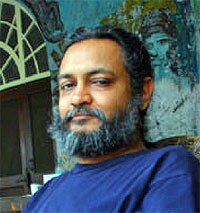
 Astrong educational background, single mindedness and passion are usually the ingredients of a successful career. Even if the choice of career is unconventional, which may include no one fixed career at all. After grduating in chemistry from Delhi’s St Stephen’s, doing a postgraduation from IIT Kanpur and PhD in Environment Toxicology from Cornell University, US, Delhi-based Rahul Ram should have been a topgrade scientist or an ace academician or both. But 44-year-old Ram’s career is music.
“I hardly had a career plan. My choice of subject to study and the career I wanted was based on my passion. Two things I was certain about—I had to be good in what I was doing and education is an asset,” says the bassist and vocalist of one of India’s premier bands, Indian Ocean.
Ram’s attitude to a career may not be conventional or ideal. But it may just be the sign of an emerging trend, where a tunnel vision to career doesn’t work. There are ways one can productively follow one’s passion and that’s by being sincere and hardworking in whatev -er you undertake.
Ram discovered his two passions— environment conservation and bass guitar—rather early in life. “I started learning to play the guitar in school,” says Ram, who was also a very vocal member of a local eco-group that even went to meet Sunderlal Bahuguna in Tehri. Influenced by the Rachel Carson’s book Silent Spring, he could hold discussions on impact of pesticides for hours. “I also honed my argumentative skills with facts and figures,” says Ram.
While studying chemistry in St Stephen’s College, Delhi, he played the guitar with various college bands. From there he moved to IIT Kanpur. He was still uncertain about his career path even after getting a great score. He then went to Cornell University to do a PhD in Environment Toxicology. “I picked up the subject of my interest and spent the next four years (1986-90) studying social and development sciences alongwith my research work,” he says.
Ram put music on hold but “heard a lot of it”. With an all A score and strong research behind him, he looked for work with leading environment NGOs. But no good offer came his way. “I still wonder why I was not taken in,” rues Ram.
In September 1990 he came back to India and joined Narmada Bachao Andolan (NBA) Support Group in Delhi as an associate activist for Rs 2,000 a month. He stayed with them for two years. “I had some savings and even played guitar for jagran bands to make money,” says Ram, who had married Amita—a sociologist also involved with NBA—in 1989 while in Cornell. In 1991, he took up his classmate Susmit’s offer to be a part of Indian Ocean for a show. “I joined the group but continued to do my own things too,” says Ram.
Periods of uncertainty never bothered Ram as his parents and wife were extremely supportive. His earnings were from concerts, playing at jagran and creating pamphlets for the NBA; Ram cruised through with ease. “More than money it was the freedom to do my thing that egged me on,” says Ram. While music continued, he started giving guest lectures in various colleges including the School of Planning and Architecture, Delhi.
Money was tight and there weren’t many opportunities to play for the band. But somehow the band kept alive its music—playing at the occasional concerts. Meanwhile, the media took note of the band and from relative obscurity and a modest group of enthusiastic fans, Indian Ocean began to be known around the country. Money began to trickle in. With the release of their second album—Kandisa—in March 2000, the band went on to acquire cult status. “Kandisa changed everything,” says Ram.
The international scene opened too. After their first concert abroad in London in August 2001 to touring the US thrice in 2005-6, there has never been a dull moment. They also composed the music for Black Friday, a Hindi film, and are getting more such jobs. The four-member band has held over 70 shows in the past one year.
The environmental activist in him has taken a back seat as finally Ram has found a job he is content with. From an annual earning of Rs 30,000 in 1990 to a seven-figure yearly earnings, Ram considers his monetary success spectacular. On the career front, he is rocking.













