

There is no denying the steely reserve in 46-yearold photographer Sunder Iyer’s voice when he says, “There are times when one has to bite the bullet and take an important decision.” In October, 2006 Iyer quit his producer’s job at television channel CNBC Awaaz to take up photography as a full-time profession.
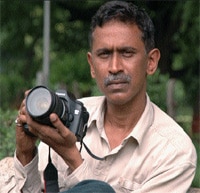 “It’s a passion, especially nature photography,” he says. “It was a now-ornever decision. I decided to follow my heart. And money doesn’t mean much if you are not happy doing what you are doing.” In 2004, he was offered a producer’s job at CNBC Awaaz. After 13 years in the print medium, the audio-visual was a new territory. An added attraction was a better pay package. The icing was a move to Mumbai, which meant working in a much more competitive atmosphere.
The novelty lasted just a few months as Iyer soon realised his job remained the same—editing stories. It was during this time that he toyed with the idea of quitting a formal employment and taking up photography. “I’ve been taking photographs for a long time. It was something I enjoyed doing. It took some brainstorming sessions with my wife to decide if I could risk taking up a totally new career at such a late age,” he says.
But his mind was set—it was either now or at a much later date, by which time it might be more difficult to make a mark in his chosen field. Thankfully his family was supportive. After making sure he had enough savings to see through his two sons’ education, he quit in October 2006.
Born and brought up in Kanpur, Iyer completed his post-graduation in commerce in 1982. Earlier that year he had joined Bank of India as a cashier-cum-clerk. “I knew what I liked but as for career I wasn’t too sure. So like many middle-class Indians I took tests for banking services and got a job,” he says explaining the rationale behind his first career move. The initial years were exciting as he learnt the functioning of banks. But professional ennui soon set in. “There was nothing new to learn. I could sense the boredom creeping in,” he says.Previous Careers: Banking and Media |
| Job profile: Money transactions/reporting and editing |
| Salary: Rs 55,000 a month |
Current Career: Photography |
| Job profile: Nature photography |
| Earning: Less than before |
| Age at career switch: 45 years |
| Reason for job switch: Boredom |
| Transferable skills: An eye for detail |
| Career outlook: “Follow your passion” |
He realised that as a career working for a public sector bank was not the fastest way to grow. In 1989, while working with Canara Bank, he decided to join a journalism course and quit his job. By that time he was married. “That was the first risk I took,” he says. The idea of journalism had always fascinated Iyer. Growing up in a literary atmosphere— his father and sister were authors—he had a flair for language.
“The best way to use my talent was to use it in journalism,” he says. After completing the course he joined the Lucknow edition of Navbharat Times in 1990. And immediately fell in love with his job. Given his banking background (and also that he studied commerce in university) he worked in the business section, both as a correspondent as well as a subeditor.
There were new things to learn as the team tried to raise the awareness of Indian business among Hindi readers. “The pay in my first foray in journalism—Rs 1,800 a month—was less than what I was earning at the bank. But I was so satisfied working as a journalist,” he says.
The honeymoon didn’t last long. In 1992, the edition shut shop. Iyer was without a job. Worse, he had a son to take care of. And doubts of quitting a secure employment (in the banking sector) for the glory of the printed word started to surface. “It was a difficult stage in my life. I had a family to feed and no job,” says Iyer, whose wife supported the family with her job in a bank.
The worrisome phase soon passed as he found a job with Rajasthan Patrika. From then on it became, as in the case with so many other journalists, hopping across various other newspapers, including Swatantra Bharat, Rashtriya Sahara and Hindustan. And as it so often happens he once again became bored. “I was in print journalism for 13 years; roles changed but my core responsibility remained the same— to edit stories. After sometime the learning stopped and so did the excitement,” he says. His next break came in 2004 when the CNBC Awaaz offer came his way.
With his and his wife’s (who took voluntary retirement from a bank) savings, Iyer has ensured that his kid’s education is taken care off. Meanwhile he posts the photographs he has clicked on various websites. The few that sell bring him some money. There is also money trickling in from the occasional photo shoots that he does to accompany his wife’s travelogues.
However, as he keeps insisting, he sees the new profession as something more than a money-making machine. The excitement is in travelling and photographing. “Oh, the money will start flowing in. It’s just a matter of time,” he says in an offhand way.









