

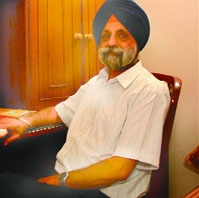
When Major General Amarjeet Singh retired in 1990, after serving his country for 38 years, you’d have thought he would spend his days at the club.
But Singh was not prepared to hang up his boots. A mechanical engineer with an MBA degree, he had been heading a maintenance department when he retired. He put all his skills to use when he joined Subros, an air-conditioner manufacturer, as CEO.
After five years, Singh began looking for something a little less stressful. He accepted an offer from the Sumi Motherson group, an engineering firm, to head its corporate office. At 73, Singh has still not retired, but has removed himself from active daily participation and is still a director with the company.
 More and more retirees today aren’t content with growing roses and walking dogs. They want to continue to use their skills, but at a less gruelling pace. And companies are delighted; they get skilled employees who will not require training and hand-holding.
With rapid advances in medicine, chances are that you will live for at least 20 years post-retirement, possibly outliving your retirement savings. Given the lack of social security in the country, it’s up to you to provide for those 20-odd years. Assume you plan to retire with a corpus of Rs 2 crore.
If you opt for a post-retirement job to take care of day-to-day expenses, and invest the nest-egg in an instrument that gives you 10% returns, you will end up with a substantial amount when you actually decide to retire.
The big advantage of a postretirement job is that you don’t have to stick to the 9-to-5 corporate grind. Opt for part-time or temp jobs, or work out of home. Even better, you can avoid the office entirely simply by working online.











