













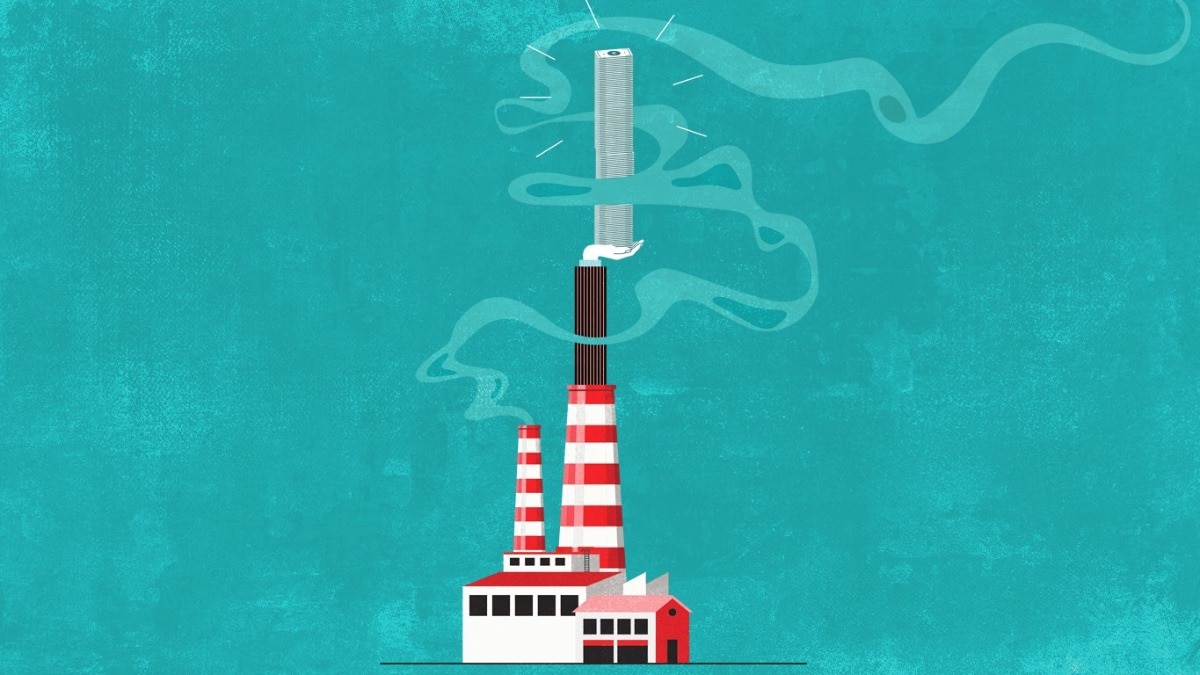
Process of economic development has generally been associated with some structural transformation. One of them is increase in the share of manufacturing in Gross Domestic Product (GDP). We trace here the relationship between economy’s structural transformation and manufacturing.
During the period 2011-12 to 2024-25, the share of manufacturing in GDP has stagnated at 14-17 %. It has been the intention of the Government post economic reforms in 1991 to raise its share to 25 %. This target, despite repeated extension, still remains elusive. Another plan was to raise the share of workers engaged in manufacturing to at least 100 million; we have just reached two thirds of that level in 2023-24 (11.4 % of total workers). Overall manufacturing growth during 2011-2025 has averaged 5.9 % as against overall GDP growth of 6.0 %. To get a 25% share in GDP, overall rate of growth of manufacturing needs to be nearly 1.6 times the rate of growth of GDP.
Trade disruptions, supply chain chokes, geopolitical uncertainties, need for a greater oversight of the production process, job creation, innovation and national security reasons make a strong case for onshoring manufacturing. India cannot be an exemption to this. For our growth we need to pull all levers of economic activity, including manufacturing.
Our analysis reveals that, as a nation, we need to develop and adhere to a strategic intent for manufacturing. Like China’s Strategic Development Plan 2025. In our broader economic and development goals, we should identify key focus areas or core sectors for development, including in manufacturing. Government must build consensus among the stakeholders for these focus areas so that future governments will not deviate from these goals.
The Chief Economic Adviser has already recommended that the govt must get out of the way of business, roll back regulations significantly, stop micro managing economic activity, shift from “guilty until proven innocent” to “innocent until proven” outlook, regulation not standing in the way of innovation and creating a competitive environment. We believe that his recommendations must be implemented effectively.
Emphasis on effectiveness of R&D is necessary. China has a reservoir of AI experts built up through emphasis on R&D. Domestic labs, innovators, institutions have been funded adequately by them. This includes repatriation of Chinese AI experts from abroad. Tamil Nadu has developed a scheme to get overseas top Indian talent to repatriate. One hopes that the RDI scheme approved this month will be tailored to perform a similar function.
Manufacturing provides forward and backward linkages to the sectors of the economy. Its development stimulates demand for more and better primary goods (in agriculture and mining) and services (as banking, insurance, communication, trade and transport). Manufacturing also generates externalities in technology and skill development for sustaining competitiveness. More than the desirability, the concerns are more about the feasibility of growth.
Manufacturing in India, as elsewhere, has been a mix of sectors. Use of technology has impacted the sectors of manufacturing. During 2011-2023, for which disaggregate data in terms of characteristics of manufacturing is available, it is observed that average value added in manufacturing was Rs.
20,244 billion, employing on an average 56 million workers and having Rs. 67,655 billion of capital stock. Major characteristics of disaggregated manufacturing could be visualized from table below:
For structural transformation, we analyse the Total Factor Productivity (TFP) in manufacturing.
The overall TFP growth of manufacturing sector has averaged 0.22 %. Major technology intensive sectors have a negative TFP, particularly chemical & chemical products; transport equipment; petroleum products; machinery; electrical equipments; food products; and plastic products. Negative factor productivity in these sectors indicates that in new technology areas, Indian manufacturing is still missing advanced technology or recourse to reverse engineering. In traditional industries like textiles, apparels & leather; metals and fabrications; non metallic mineral products; paper, pulp and printing; miscellaneous manufacturing & recycling, where value added is usually low, TFP is positive and in some cases significantly higher. Data also reveals that while overall ratio of GVA to capital stock is 0.3 (or three units of capital is needed to produce one unit of value added), it is lower than the overall manufacturing average in sectors which are traditional and low technology intensive. Incidentally they have a positive TFP. Employment growth, however, is more in new set of industries like motor vehicles; electrical equipments; metal & metal products and chemical & chemical products, but in most of these sectors TFP is negative. Labour intensive sectors like textiles and food products have low employment growth. In the metric of value added per person employed, the divergence is significant, from an average of Rs. 86 thousand in wood products to Rs 77 lakh (90 times) in refinery segment, though this sector had witnessed lowest average annual growth. Average sectoral growth has overall been range bound. Indian manufacturing, therefore, is a bundle of contradictions and needs solution within or across the entire spectrum consistent with their competitiveness. The only common factor currently is consistency in growth which is moderate, below target and not showing any signs of upsurge.
Low TFP stems from twin issues of scale and innovation. Nearly 40 % of manufacturing in the unorganized sector employs on an average 2 persons. Even in the organised ASI sector, 35 % of factories producing just 3.2 % of overall ASI GVA, have been scale constrained. ASI data for 2022-23, further indicate that factories with employment in excess of 2000 persons, with a share of just 1.36 % of factories, produced 31 % of GVA. Factories with more than 100 workers, accounting for a little over 20 % of factories, produced 87 % of GVA. This scenario does not change in regard to invested capital. Factories with investment above Rs 10 crore, which is currently the MSME threshold, accounting for 14 % of factories, produced 80 % of value added. With oligopolistic structure at the top and family outfits at bottom, both of them either reluctant or unable in improving efficiency, Indian manufacturing is hardly likely to reach the target share in GDP in the medium term.
Some Characteristics of Manufacturing (average of 2011-12 to 2022-23)
|
|
Value Added |
persons Employed |
Capital Stock |
GVA |
Labour |
Capital |
TFP |
GVA/ Capital Stock |
Per Person GVA |
|
|
Per cent share |
Average Annual growth |
Ratio |
(Rs Lakh |
|||||
|
Textiles & Leather |
12.41 |
23.64 |
13.49 |
5.14 |
0.31 |
3.98 |
2.99 |
0.28 |
1.88 |
|
Food Products |
9.66 |
18.64 |
14.27 |
3.18 |
0.93 |
5.61 |
-0.96 |
0.2 |
1.86 |
|
Other Manufacturing |
3.51 |
10.7 |
3.41 |
9.9 |
2.93 |
2.51 |
6.9 |
0.31 |
1.18 |
|
Metals and Products |
15.42 |
9.34 |
16.96 |
5.04 |
4.01 |
3.44 |
1.29 |
0.27 |
5.92 |
|
Non-Metallic Mineral Products |
6.21 |
7.98 |
6.79 |
5.08 |
0.52 |
4.04 |
1.61 |
0.27 |
2.79 |
|
Electrical Equipment |
5.63 |
5.89 |
4.37 |
4.59 |
4.81 |
5.23 |
-0.57 |
0.39 |
3.43 |
|
Wood and Products |
1.39 |
5.8 |
1.06 |
4.52 |
-2.82 |
1.76 |
4.09 |
0.39 |
0.86 |
|
Machinery |
7.45 |
4.58 |
5.91 |
4.88 |
2.68 |
7.31 |
-1.57 |
0.38 |
5.85 |
|
Chemicals and Products |
13.52 |
4.23 |
10.66 |
6.53 |
4.58 |
7.08 |
-0.22 |
0.38 |
11.48 |
|
Transport Equipment |
10.31 |
3.38 |
7.52 |
6.83 |
4.06 |
8.28 |
-0.52 |
0.41 |
10.95 |
|
Paper, Printing and Publishing |
2.29 |
3.2 |
5.2 |
2.32 |
2.47 |
0.69 |
0.53 |
0.13 |
2.57 |
|
Rubber and Plastic Products |
3.96 |
2.24 |
3.75 |
4.93 |
2.94 |
7.18 |
-1.25 |
0.32 |
6.36 |
|
Petroleum Products |
8.25 |
0.38 |
6.62 |
1.00 |
3.88 |
5.47 |
-4.22 |
0.37 |
77.78 |
|
Manufacturing |
100 |
100 |
100 |
5.17 |
1.98 |
5.75 |
0.22 |
0.30 |
3.59 |
Source: Reserve Bank of India (KLEM data base), June 2024
To overcome the constraints of scale, we suggest three options. First is clustering, which has been under implementation in many sectors. We believe that the schemes should typically combine soft and hard interventions in order to be successful. One size fits all approach has often been counterproductive. Second is the labour reforms. Government regulation of labour markets has typically been on three fronts: the wage setting process, working conditions and the hiring and firing process. At a minimum, labour codes must be implemented. Third relates to reducing the compliance costs. Studies show that the manufacturing establishments have a variety of statutory obligations to discharge, which are costly, time consuming and often ineffective in meeting their stated objectives.
There are options to increase efficiency apart from increasing R&D expenditure from 0.64% of GDP. We need automation and robotics, use of ERP systems, AI and digital in areas where productivity can leap. Skill development should be strengthened from the school level with private sector participation. We need technology trackers together with an institutional mechanism which could access, evaluate and finally facilitate adoption of most appropriate technology. As most of the well-known producers of technology equipments are now system integrators, we need to combine them with lean manufacturing, process optimization and focus on quality. Government has a big role to play in improving infrastructure, maintaining a reserve of critical inputs and overhauling GST. GVC participation, with trade negotiations helping manufacturing, is critical. Knowledge, access and acquisition would remain issues requiring concerted effort. The current deficit in infrastructure and defence production should be leveraged to get both investment and technology. The deficit in production of capital goods at 40 % of the domestic use needs correction.
We cannot avoid mentioning the MSME ecosystem. Finance, technology adoption and marketing need focus from the govt and financial markets. Meeting capital requirements of MSMEs without collateral with government guarantee is critical. Apart from policy changes, there is a need for a change of mindset at all levels to get the best out of the interventions.
Views are personal


