











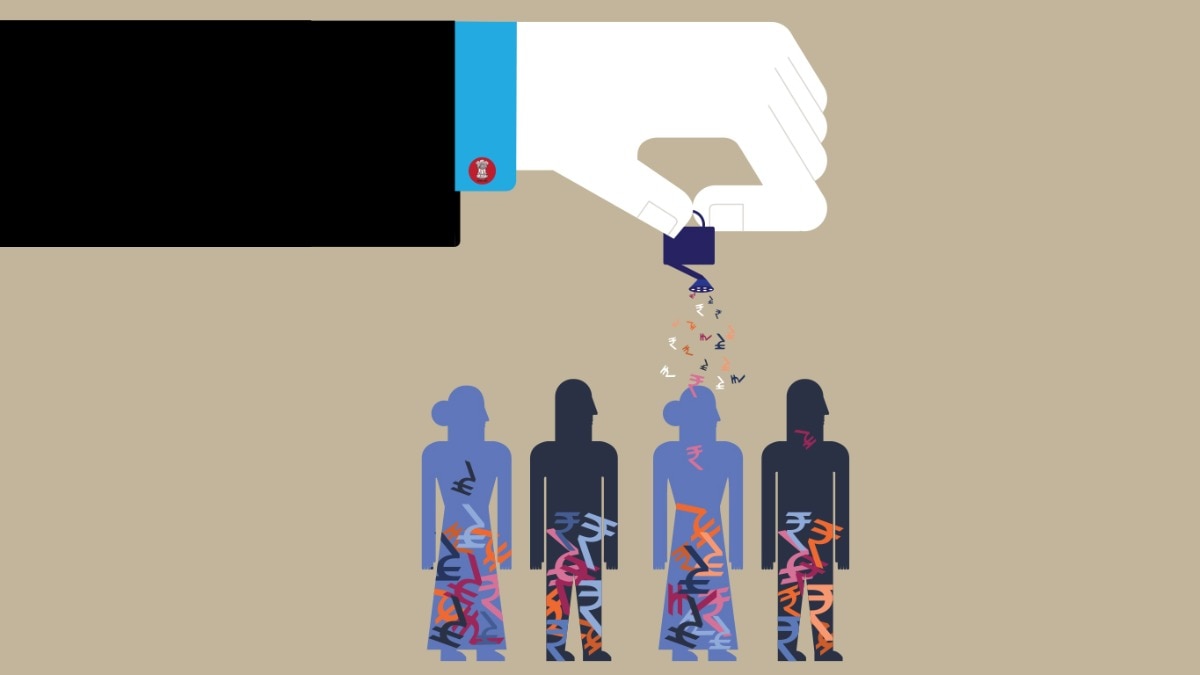
In a country as vast and varied as India, the true measure of progress lies not merely in GDP figures or infrastructure milestones but in how well it nurtures its people. Human capital—our education, skills, health, and productivity—is not just an economic asset but a moral imperative. Over the last ten years, a quiet, yet formidable, revolution has taken shape under the stewardship of India’s premier policy think tank, NITI Aayog, reshaping how the country invests in its most valuable resource: its citizens.
In a nation where over 65% of the population is below the age of 35, the demographic dividend presents a once-in-a-generation opportunity. But the sheer scale of this population brings enormous responsibility. The challenge lies in converting youthful energy into a force for economic growth and national development. This is where the NITI Aayog has emerged as a visionary catalyst—charting a road map not just for today’s progress but also for tomorrow’s prosperity.
Over the last decade, it has evolved from a think tank into a reformist engine and an execution partner, known for bold ideas backed by data, collaboration, and human-centred design. It has transformed policymaking to a dynamic process of co-creation with states, private players, global institutions, and civil society. Its strength lies not just in planning, but in listening—and turning those insights into action.
Education has been completely reimagined under its guidance. Recognising that access alone isn’t enough, the NITI Aayog pushed for quality and equity. The National Education Policy 2020, where it played a pivotal role, ushered in a new era—shifting from rote learning to critical thinking, flexibility, and vocational integration. It emphasised early childhood education, mother-tongue instruction, and seamless transitions between disciplines. Through initiatives like the Atal Innovation Mission, it ensured both accountability and imagination, embedding innovation in over 10,000 Atal Tinkering Labs.
Skilling India’s youth for the 21st century has been another cornerstone. From backing the Skill India Mission to ensuring that vocational programmes reach underserved districts via the Aspirational Districts Programme, the NITI Aayog has helped bridge the gap between classroom and career. Under Skill India Mission, more than 15 million youth have been trained through initiatives that blend technology, industry linkages, and demand-driven curricula. It mapped sectoral needs and designed programmes that opened real economic doors for India’s rural and urban youth alike.
In parallel, it championed a dynamic, inclusive labour market. It supported the rationalisation of 44 central labour laws into four simplified codes—on wages, social security, industrial relations, and occupational safety. These reforms balanced employer flexibility with worker protection, particularly benefiting informal sector workers who make up the majority of India’s workforce. By simplifying compliance and encouraging formalisation, the workplace became not only more productive but also more humane.
Healthcare, often seen as a cost, was reframed as an investment. The NITI Aayog helped engineer the shift from reactive treatment to proactive wellness. The Ayushman Bharat scheme, backed and monitored by the NITI Aayog, provided over 500 million Indians health insurance, while more than 150,000 health and wellness centres took primary care to the grassroots. Programmes targeted nutrition, maternal and child health, mental well-being, and noncommunicable diseases. The Covid-19 pandemic tested the resilience of India’s health system like never before. In this crisis, the Aayog stood tall—partnering with the Ministry of Health and ICMR to model infection patterns, ensure equitable medical resource allocation, and roll out platforms like eSanjeevani for telemedicine.
Beyond these, the NITI Aayog has been a lighthouse for entrepreneurship and innovation. Programmes like Start-Up India, Stand-Up India, and the Atal Innovation Mission created a fertile ecosystem for ideas to flourish. Thousands of start-ups are thriving today because they had policy support, incubation, and mentorship at crucial stages. These are not just businesses; they are job creators and problem solvers.
But perhaps its greatest achievement lies in how it has institutionalised a culture of evidence-based policymaking. By leveraging big data, artificial intelligence, real-time dashboards, and rigorous monitoring frameworks, it ensured policies remain adaptive, accountable, and aligned with ground realities. Whether it was launching India’s first SDG (Sustainable Development Goals) Index, guiding states on performance metrics, or using behavioural insights for policy design, the NITI Aayog brought scientific thinking to the heart of governance.
Its ability to coordinate across ministries and sectors has made it more than an advisory body—it has become the conscience-keeper of development. It has encouraged healthy competition among states through performance-based rankings, worked with civil society to amplify voices from the margins, and engaged global partners.
More than just achieving targets, the NITI Aayog has focused on creating systems that are sustainable, inclusive, and future-ready. Its commitment to the SDGs is evident in every initiative—from clean energy transitions to green mobility, from digital public infrastructure to gender equity in workspaces.
India’s rise as a knowledge economy is no longer a distant dream—it is a work in progress. What the NITI Aayog has done is elevate the discourse around development, reminding us that true progress is measured by the strength, health, and dignity of its people. In doing so, it has become more than a think tank. It has become the pulse of a young, aspiring India—an India that dreams, dares, and does. And at the heart of this story is the quiet confidence that when you invest in people, you build not just a better economy, but a better nation.
Views are personal. The author is Minister of State (Independent), Statistics and Programme Implementation; Union Minister of State (Independent), Ministry of Planning; Union Minister of State, Ministry of Corporate Affairs


