










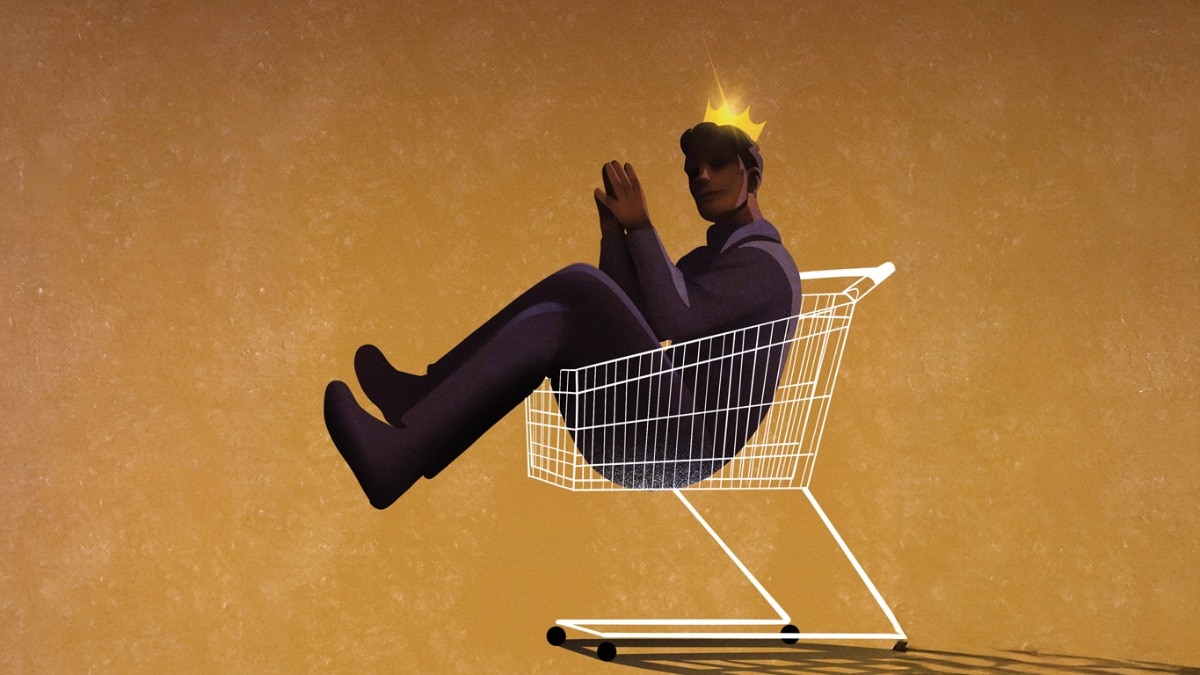
In 1947, won its political freedom. By 1991, it began a journey of economic liberation. In 2025, it is navigating the turbulence of a digital age. But by 2047 the real revolution will be that of the Indian consumer. She will emerge as a powerful force shaping markets, ethics, and innovation. From being price-conscious to value-driven, from underserved to over-informed, the consumer will be a sovereign citizen.
Demographic Dividend
In 2047, India’s population will likely be over 1.6 billion. Over 1.3 billion Indians will be online, and close to a billion will be using smart devices embedded with AI agents that anticipate needs, preferences, and spending behaviour. Consumption will be shaped by data but driven by dignity. Consumers will demand fairness, privacy, and ethical engagement.
As digital literacy becomes universal, even rural consumers will lead trends. Vernacular commerce platforms, voice-based interfaces, and AI-driven virtual assistants will democratise access to services. The tyranny of location will be dead.
Value-Conscious, Purpose-Driven Consumer
The consumer of 2047 will be assertive. They will chase holistic value: quality, ethics, transparency, sustainability, and brand purpose. Greenwashing, dark patterns, and manipulative pricing will increasingly come under the scanner. Brands that fail to walk the talk—on ESG goals, labour practices, or digital ethics—will be boycotted not just on Twitter, but in wallets.
This will give rise to a more domestically rooted consumption pattern, one that celebrates Indian crafts, local supply chains, organic farming, and climate-smart choices.
The Age of Predictive Consumption
By 2047, AI will curate, personalise, and negotiate on behalf of the consumer. Smart fridges will reorder groceries based on consumption patterns. Personal finance bots will suggest tailored insurance and investment products. Health wearables will trigger proactive service delivery for everything.
But this will come with risks. Algorithmic nudges, subconscious targeting, and surveillance capitalism may erode consumer autonomy. India will need a strong data protection regime, consumer-centric AI regulation, and digital literacy.
Trust
In an age where attention is scarce and data abundant, trust will be the new currency of commerce. Platforms and brands that deliver consistent quality, fair pricing, ethical use of consumer data, and grievance redressal will win. India’s Consumer Protection Act 2019 will need to evolve to match the sophistication of the marketplace. We must have an agile, tech-savvy regulatory ecosystem where disputes are resolved through AI-assisted mediation.
Participative Consumerism
In 2047, the Indian consumer will not just buy or boycott—they will shape and co-create. Consumers will vote with their time, data, and influence. Many will be micro-entrepreneurs themselves, offering handmade, hyper-local, or digital services in a gig-plus-creator economy.
The boundaries between producer and consumer will blur. India will be home to millions of prosumers—individuals who consume and produce simultaneously. Policies around IP protection, platform accountability, and consumer–producer hybrid roles will need to be robust.
Equitable, Sustainable
Finally, the Indian consumer in 2047 must also be an included consumer. Markets must not leave behind the elderly, disabled, socially disadvantaged, or digitally underserved. Products and services must be designed with universal access in mind. Inclusion cannot be an afterthought; it must be integral to innovation.
Sustainability too must not remain a niche concern. Climate-conscious consumption must be made affordable. Just as India leapfrogged to digital payments, it must leapfrog to circular economy models, energy-efficient products, and zero-waste supply chains.
Consumer Sovereignty
India@100 will be defined not just by GDP or unicorns, but by the quality of choices and protections its consumers enjoy. The consumer of 2047 will be smarter, sharper, and stronger—but she will also expect the system to respect her time, intelligence, and rights.
This is both an opportunity and a responsibility for businesses, regulators, and civil society. If we can create a future where consumption is not just about buying things—but about affirming identity, dignity, and shared prosperity—India will not just be the largest market in the world, it will be the fairest.
The consumer of 2047 will not ask: ‘What can I buy?’
She will ask: ‘What does this brand stand for, and what does it say about me?’
And therein lies the true test for India’s next generation of businesses.
Views are personal. The author is the Former Secretary, Department of Consumer Affairs, Government of India.


