












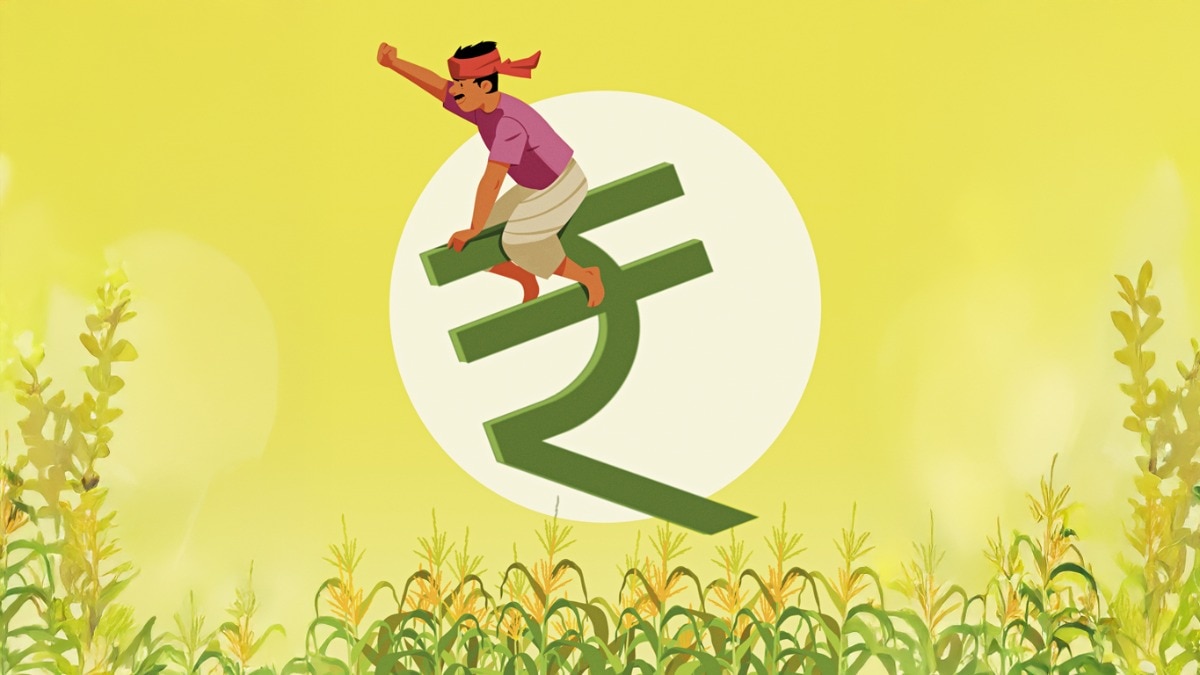
As India sets its sights on becoming Viksit Bharat by 2047, the transformation of its rural economy is not just a policy imperative—it is the foundation of national progress. Nearly two-thirds of India’s population still resides in rural areas, and any vision of equitable, sustainable development must begin in the villages. While agriculture has traditionally anchored the rural economy, the reality on the ground is changing rapidly. Rural households are diversifying their incomes, engaging in non-farm work, adopting digital tools, and seeking upward mobility. The future of Bharat is not in preserving its rural past, but in reimagining its economic potential.
A recent working paper by PRICE, “Reimagining Annadata Households and Their Livelihoods Beyond the Farm”, provides a granular, data-driven view of this transformation. While it focuses on the 68 million annadata households, those primarily reliant on agriculture, it also reveals a broader evolution in the rural economic landscape. Farming is no longer the sole or even dominant source of income for many households. As of 2024–25, only 21% of Indian households are expected to depend primarily on agriculture, down from 42% in 1975–76. The rest are increasingly supported by a mix of non-agricultural work: construction, retail, services, pensions, remittances, and small enterprises. In this diversification lies both the challenge and the opportunity.
The opportunity is vast. Rural India is emerging as a vibrant economic zone. Annadata households, once seen solely as cultivators, are now becoming participants in a broader rural economy. Nearly one-third of their income comes from outside the farm. Mobile penetration is high—65% of such households now own smartphones—and usage of digital payments is growing. Asset ownership among rural middle-class households is comparable to that of their urban counterparts, and even vulnerable households are showing an increasing access to consumer durables and connectivity. These trends point to a new kind of rural economic agency—resilient, adaptive, and aspirational.
Yet challenges persist. The biggest is a legacy policy mindset that continues to define rural livelihoods largely through land ownership and agriculture. Most government schemes —including PM-Kisan and crop insurance programmmes — are designed for land-owning farmers. This excludes an estimated 12.5 million tenant farmers and sharecroppers who work the land but do not own it. As a result, millions of vulnerable rural workers fall outside the net of support. The PRICE study emphasises that rural policy must shift from land-centric targeting to livelihood-centric design, ensuring that support reaches actual cultivators and workers, regardless of their formal land titles.
Another major challenge is inequality across caste, gender, region, and income classes. General category annadata households earn nearly 50% more on average than their SC/ST counterparts. State-level disparities are even starker: average household incomes in Punjab exceed Rs 20.6 lakh per year, while those in Chhattisgarh lag at around Rs 3.2 lakh. Women, who make up one-third of the rural workforce, remain marginal in terms of land rights, credit access, and enterprise ownership.
The way forward must rest on three pillars: enabling diversification, deepening inclusion, and driving rural enterprise.
First, policymakers must recognise that diversification is not a deviation from agriculture—it is a strategic response to agrarian risk and stagnation. Farming incomes are increasingly vulnerable to climate shocks, price fluctuations, and input costs. Second, inclusion must be mainstreamed across every rural development initiative. Financial services, especially insurance and digital credit, must be reimagined for rural realities. Third, the future of rural growth lies in enterprise. With the right ecosystem—skilling, credit, digital infrastructure, and market linkages—rural India can be the next big entrepreneurial frontier. Skilling programmes should move beyond agriculture and incorporate digital work, green jobs, logistics, care work, and creative sectors.
Rural India is no longer just a market for low-cost goods; it is a space for innovation, services, and co-creation. Climate resilience must also be at the heart of rural policy. Investments in climate-smart agriculture, water harvesting, renewable energy, and low-emission enterprises will not only protect incomes but also position rural India as a leader in sustainable development.
Ultimately, a Viksit Bharat must be built on the strength of a confident, connected, and economically empowered rural India. What’s needed now is a coherent, forward-looking strategy that views rural India not as a residual category, but as a driver of national development.
Views are personal. The author is the Managing Director & CEO of People Research on India’s Consumer Economy (PRICE).


