
The annual ranking of India’s top CEOs, now in its 14th edition, is back! Like last year, Business Today has partnered PwC to put in a place a robust methodology that took into consideration both quantitative metrics and qualitative factors.
That decision was driven by a dynamic business scenario, where speed and accuracy of decision-making is most critical. In more ways than one, companies have had to continuously revisit and fine-tune their strategy because of the geopolitical fractures in recent years. It is vital to be flexible to foster the process of innovation and make companies sturdier for the long haul.
Our process began with a data-driven analysis to shortlist the top three performers in each category. The nomenclature has been refined, over time, to reflect the contemporary approach to business. To elaborate, cement and chemicals are grouped under “Pillars of Progress”, while “The Wealth Makers” comprise AMC, insurance and brokerage. “Urban visionary” comprises capital goods, oil and gas, infrastructure, metals and mining, power, while agriculture and allied fall under “Farm Champion.”
The exercise of shortlisting the three names in each category went through assessments and filters from the BT500 ranking universe, a comprehensive list of India’s most valuable companies in terms of one-year average profitability.
Only companies with revenues exceeding Rs 1,000 crore were included, with data sourced from the corporate database Ace Equity. The study period was FY23, FY24, and FY25, and companies with accounting periods of 12 months were considered.
Those companies where the latest audited financial year results were not available were dropped, as were those that posted a net loss in any of those fiscal years. Companies that debuted on the bourses during the study period were not considered. Banks and NBFCs are not a part of the final list.
A total of 363 companies made the cut, of which CEOs (or executive heads) who had been on the job for the full study period were considered. In the case of PSUs, the period was a minimum of one fiscal. To arrive at the rankings, growth in total income, profit before interest and tax (PBIT) and total shareholder returns (TSR) were considered, with the results being considered on a consolidated priority basis. Firms were assigned a score on the average of year-on-year absolute change and three-year CAGR in total income and PBIT, along with the geometric CAGR of TSR, which was calculated using net price change. Dividends were also considered. Thereafter, scores were assigned to each of these parameters, which were then added to get the final result. In total, there are 17 process-driven categories, and three jury awards, which were Lifetime Achievement, Business Icon of the Year, and Market Infrastructure Institutions.
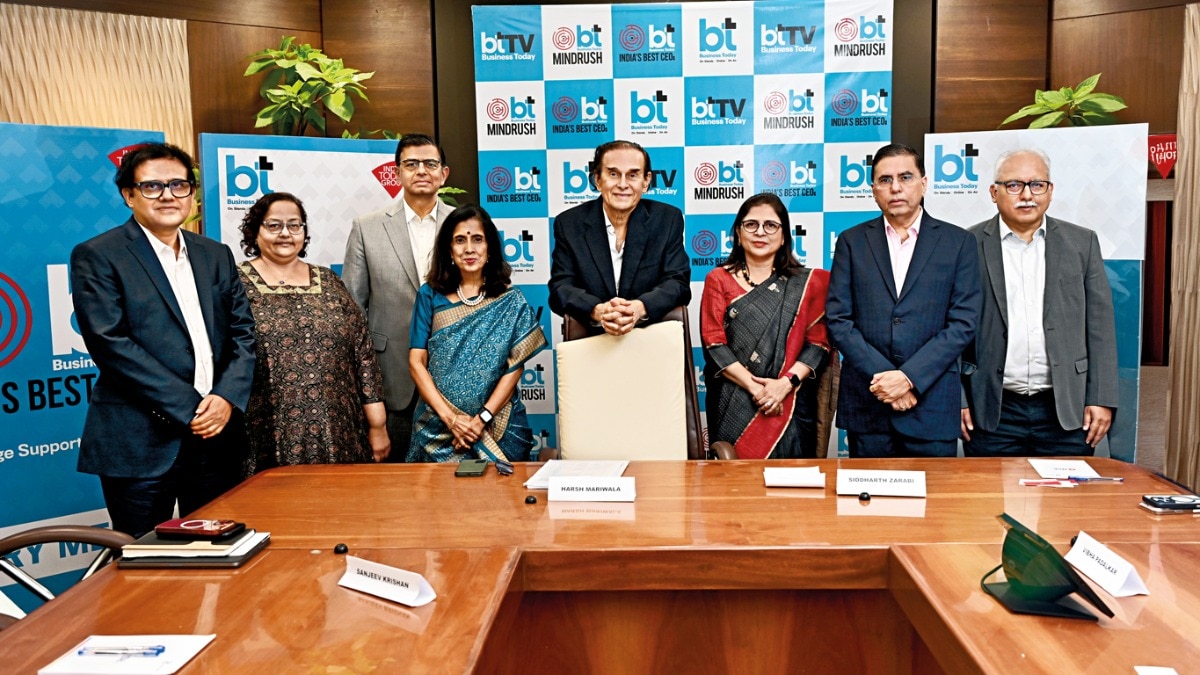
As a final step, the names of the Top 3 CEOs in each group were then placed before the jury led by Harsh Mariwala, Chairman, Marico Ltd, for the qualitative analysis.
@krishnagopalan













