Advertisement
From Likes to Riches: Tracking the rise of contentpreneurs

From Likes to Riches: Tracking the rise of contentpreneurs

As Gen Z content creators turn their influence into enterprise, work and income are getting redefined in India's digital economy.

From beauty to gaming, young creators now drive a new labour market across sectors, as publishers, marketers, performers, analysts, founders, and increasingly, employers.

"I used to shoot after 10 pm when my parents were asleep. It was work during the day, YouTube at night. My sleep schedule was ruined, but one video changed everything” - Meet 28-year-old Gaurang Patel, aka Matgonian, a Gen Z gamer with over 2 million followers. He quit his full-time job as a software engineer after his creator income surpassed his salary at the 700K-subscriber mark.

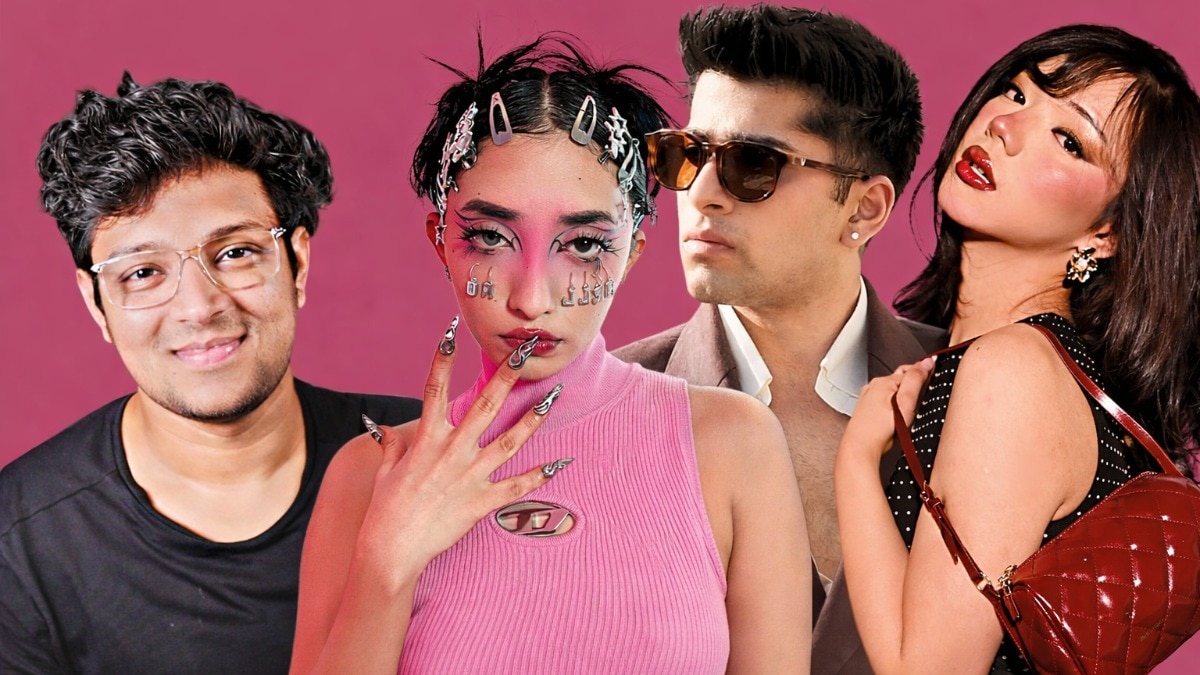
Gaurang isn’t the only Zoomer who has pivoted to the social media content space. From beauty to gaming, young creators now drive a new labour market across sectors, as publishers, marketers, performers, analysts, founders, and increasingly, employers. That’s because Gen Z is truly the first generation to come of age on social media platforms. “In India, the creator landscape is undergoing a foundational shift where individuals are evolving into ‘Contentpreneurs’, the next-generation start-ups of the media and entertainment industry,” says Gunjan Soni, Managing Director, India, YouTube.

India’s creator ecosystem is already a powerful economic force as 2–2.5 million creators influence an estimated $350–400 billion in annual consumer spending, and this is projected to touch $1 trillion by 2030, as per a 2025 BCG report.

The impact and potential of this ecosystem is clear and the entrepreneurial zeal mirrors evolving consumer behaviour. The BT-PRICE Gen Z Consumption Behaviour Survey reveals that 41% of Zoomers use the internet primarily for social media. They’re not just consuming content there; they’re acting on what they see. A good 22% of Gen Z respondents said they frequently purchase products or services after seeing them on social media, while 38% do so occasionally. But there’s a clear winner among the platforms: 44% said Instagram influences their purchase decisions, followed by YouTube at 25% and Snapchat at 11%.

As a result, marketers no longer see creators as just add-ons to digital campaigns, but as credible drivers of consideration and purchase. Akansha Baliga, Marketing Lead for skincare brand Plum, says, “Reach is just a hygiene metric for us. The real signal sits in the comments; you can tell who watched the content till the end, who’s asking genuine questions, and who’s actually considering a purchase. That’s how we separate creators who drive decisions from those who just drive views.”


Creative Work

The lives of creators unfold at the intersection of creativity and commerce. Yet for many Gen Z creators, the journey did not begin as a strategic career pivot. Krutika, who gained online fame as The Mermaid Scales, started with outfit posts. “After some time, I started posting videos and truly enjoyed content creation. It became something I genuinely looked forward to, and I feel that shift changed everything for me,” she says.

Kavya Mahajan, who splits his time between content creation and contributing to his family’s real estate firm Property Station, recalls how he started posting aesthetic images and videos during college. “I like creative direction. There is always a storyline in my videos,” he says. As his content began hitting over a million views organically, brand deals followed. But with success came challenges, including payment delays that stretched for months. He explains, “Now I ask for 50% advance and send a legal notice over delays.”

For Priyam Yonzon, what began as instinctive posting became her chosen means of livelihood after a reality show appearance and an exclusive retail partnership. At 23, she earns purely through brand campaigns. “When I look at people who are around my age, they are still looking for jobs,” she says. But she is quick to underline the discipline the profession demands, “If you want to sustain yourself, you cannot treat it simply like a side hustle. I shoot, edit, style and plan everything myself. I am a one-person army.”

There are niches here. For instance, in gaming, earnings flow in via views, memberships for special content, affiliates and brand partnerships.

Plus, YouTube tools like Super Chat, Super Stickers, and Channel Memberships, are helping with earnings, with over 45,000 channels in India earning from these products in a single month.

Over 40% of eligible creators in India are enrolled in its shopping affiliate programme, says Soni of YouTube. While YouTube Shorts can work best for reaching new audiences quickly, Gaurang believes long form is the real game. “With good engagement comes great earning opportunities that are generally much higher in long form,” he adds.


The Monetisation Game

As the creator economy matures, the search for the “right fit” has become critical for both brands and creators. Sitting between the two is a fast-growing layer of talent-management companies and social media managers.

Social media consultant Mayank Jha describes the evolution of content creation simply, “From hobby to business to professional ecosystem. That has been the journey of the last decade.” There are clear distinctions between creators based on their following: Nano (1,000 to 10,000), micro (10,000-100,000), mid-tier (100,000-500,000), macro (500,000 to 1 million) and mega (over 1 million). Rate cards are now far more standardised. Fashion and beauty drive campaign volume, while technology and auto often command the biggest cheques, particularly in long-form video formats.

Being in the business of developing laptops and tools for gamers and content creators, Bruce Lin, NB Marketing Manager of South Asia at MSI, observes how “nowadays, creating quality content isn’t the biggest challenge for young talents; it’s about integrating their creativity effectively and standing out in a competitive landscape”.

Aditi Shrivastava, Co-founder and CEO of digital media company Pocket Aces, says the pandemic accelerated the adoption of short-form and self-shot creator content. The company’s talent management vertical, Clout, manages about 250 creators and talent contributes more than a third of the parent company’s business. Annual earnings could range from Rs 20 lakh to Rs 1.5 crore for macro creators while mega creators may earn well into double-digit crores.

As earnings rise and brands chase phone-first consumers, an inevitable question arises: Is content creation a viable sole income? Jha puts it bluntly, “A majority of the current youth want to be creators. They start their channels, but only a handful of them can stick to it.” Turning content into meaningful brand deals takes consistency and persistence.

Gaurang, the gamer, cautions creators against quitting their jobs too early. His income is split between platform monetisation and brand deals, but his expenses mirror a production-house budget. Krutika seconds this, as many creators often underestimate hidden costs like the time spent on planning, shooting, and editing. She adds, “As content becomes more professional, production expenses and the need for a team also increase.”

With scale comes pressure. “From the day you lock a brand campaign till the day it goes live, you’re under pressure. Background, outfit, hair, makeup — everything is pre-approved,” says Priyam. On the flipside, she beams, “I only work on alternate weeks doing what I enjoy.” This is a flexibility most traditional jobs don’t offer.

The silver lining lies in a steadily levelling playing field, powered by deeper internet penetration and social media platforms rolling out creator-friendly tools and new monetisation pathways. Brands, the biggest drivers of this ecosystem, are expanding their ‘creator budgets’ as online exposure continues to convert into real consumer demand. Plum considers creators a part of the acquisition engine. “Creator-led content meaningfully influences our digital customer acquisition, even when it isn’t the final click,” says Baliga.

“Even a nano creator can easily earn Rs 2,000 to Rs 15,000 for a branded video or post,” says Jha. Soni sees today’s creators moving away from a single-format approach to building resilient businesses using a multi-format flywheel. She highlights how YouTube Shorts, with over 650 million monthly logged-in viewers in India, serves as the primary on-ramp for creators to find new audiences, while long-form video becomes a trust-building engine, where creators can develop their digital IP.

Brands, too, are increasingly helping creators not just to jump-start their journeys but to support them as they grow. MSI maintains a 20% year-on-year growth in digital collaborations via direct partnerships. “We also provide international stages for young talents through the MSI Creator Award, hosting creation contests and offering cash rewards and trips to world-class exhibitions like Adobe Max in the US,” says Lin.

Looking ahead, creators are placing greater emphasis on short-form content, even as a parallel shift toward deeper storytelling formats gains traction. Shrivastava chimes in, “Reality content is going to become big on social media as younger people like raw and authentic content.” She is also bullish on podcasts and micro-drama formats. “The creator,” Shrivastava says, “is steadily becoming the nucleus of the media ecosystem itself.” More are likely to follow in the footsteps of contentpreneurs like Kusha Kapila (UnderNeat) or Aanam C (Wearified), focusing on building their own brands.

For all the scale, capital flows and a viable professional pathway that now orbit the creator economy, the people driving it are still struggling to explain this to their families.

“My mother thinks I am acting for the brands. Indian parents believe a nine-to-six job is discipline and real work,” says an amused Kavya.

Becoming a Gen Z creator ensures autonomy and income potential but it also means operating in a volatile environment of shifting attention spans. What cannot be ignored is the influence this group now exerts on culture and consumption. For now, India’s Gen Z creators with their rizz are just out here stacking brand collabs, manifesting big bucks and no cap, hoping the creator economy, just like the content they create, absolutely slaps.
 

@octoprash


