












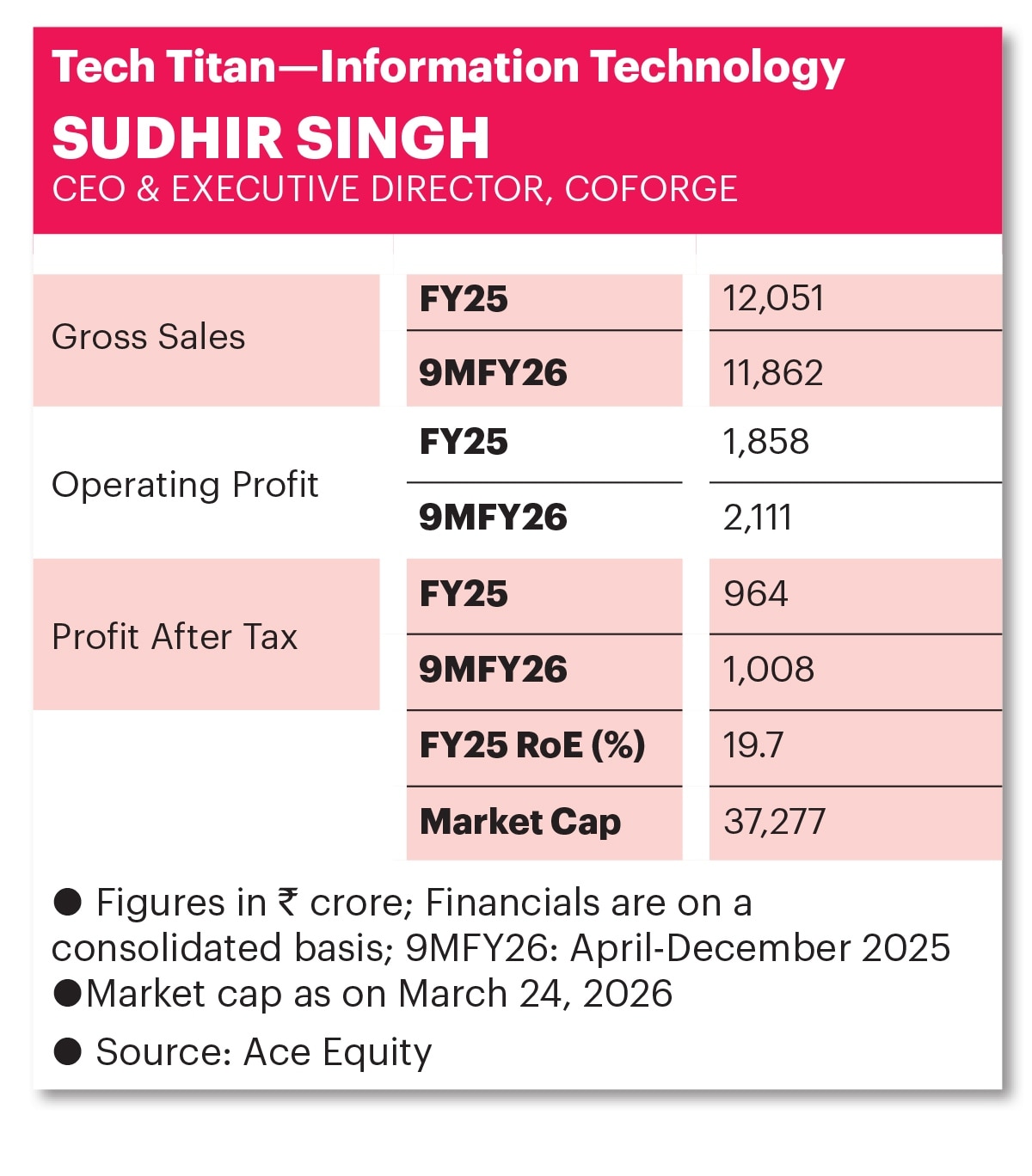

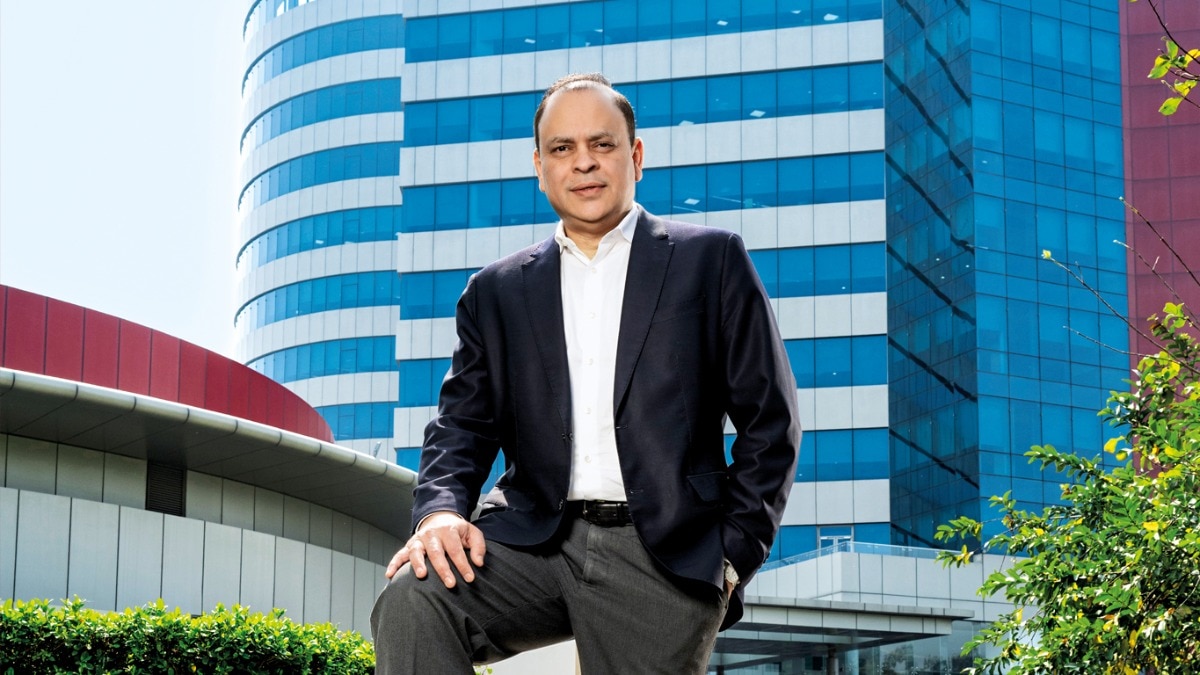
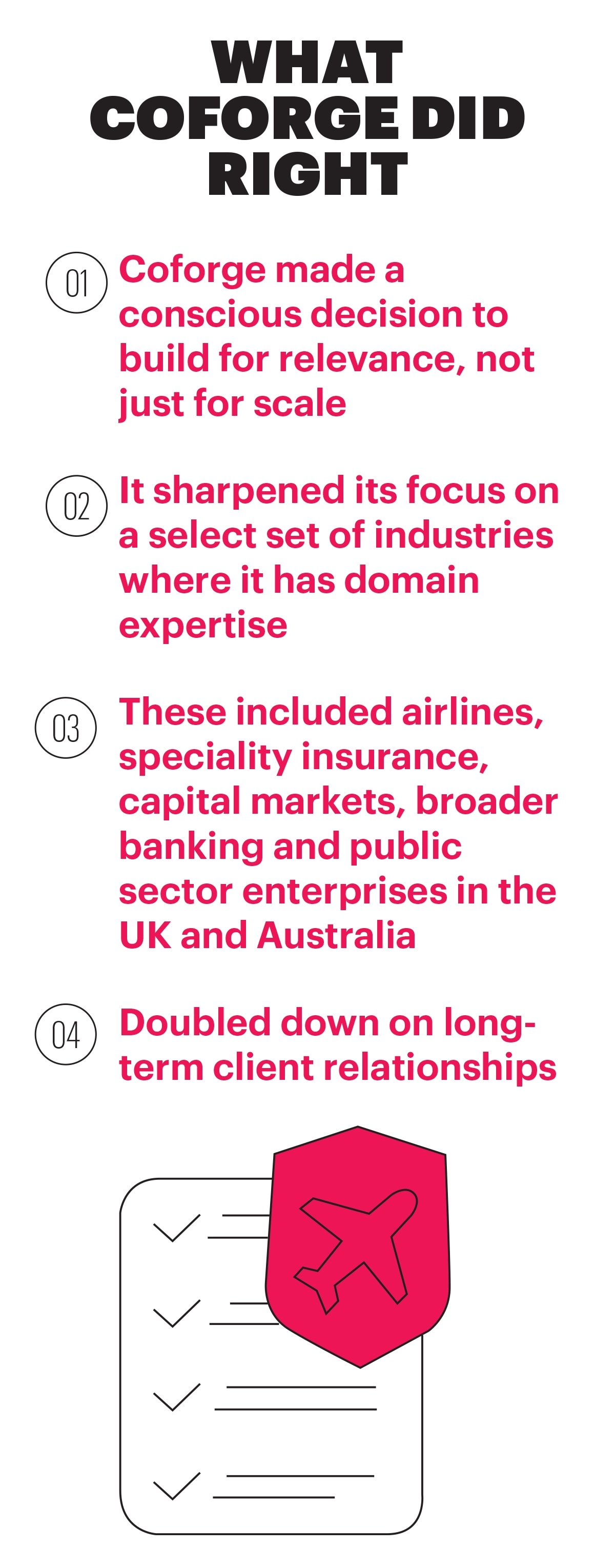
When Sudhir Singh was roped in to turn around IT services firm Coforge (formerly NIIT Technologies) in 2018, he made a conscious call to choose relevance over scale. This meant walking away from most industries that the IT firm used to service. Singh, the CEO and executive director at Coforge, sharpened the company’s focus on a select set of industries to build domain expertise.
“Even within those select industries, we started hyper-specialising. For example, it was only speciality insurance within insurance, it was initially capital markets within banking, and only airlines within travel and hospitality,” Singh tells Business Today. Cut to 2026, the IT firm is on the cusp of quadrupling its revenue over the last eight years to almost $2 billion in FY26, says Singh.
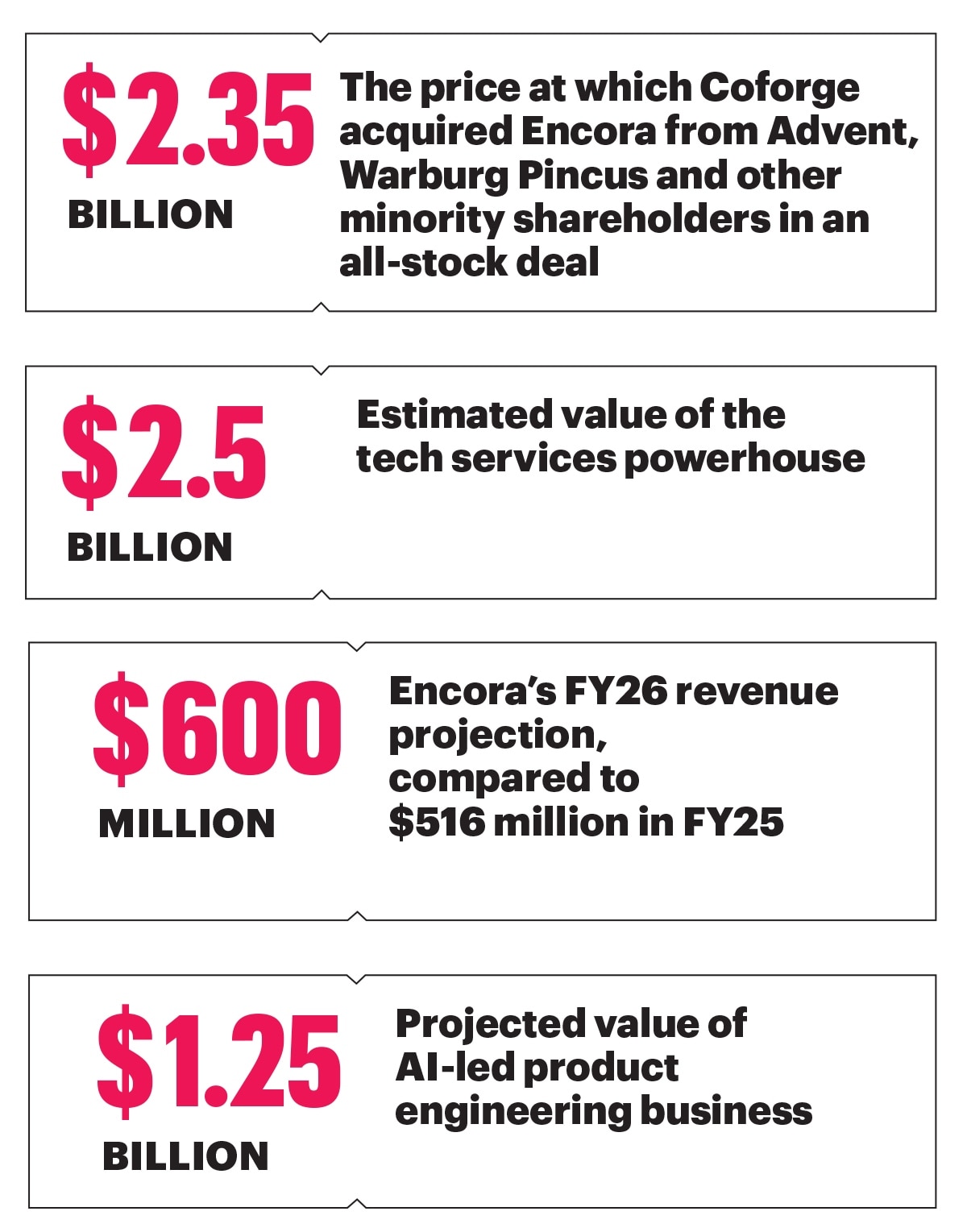
The turnaround of the decades-old mid-tier IT firm has been recognised in BT-PwC India’s Best CEOs list this year. It has been a long journey for a company that missed the outsourcing bus, as erstwhile promoters were too invested in education. Gradually, there was a revamp of the top leadership team, and the company was rebranded as Coforge in 2020. The Princeton, New Jersey, and Greater Noida-headquartered company made a massive bet to acquire Silicon Valley-based AI-native firm Encora for $2.35 billion in December last year. “We were leaning into AI (artificial intelligence), and platform-led delivery well before it became fashionable and the entire hoopla around Gen AI started,” says Singh.
Singh started his career in 1995 with a stint at Hindustan Unilever Ltd (HUL) in the sales and marketing division after completing his MBA from IIM-Calcutta. He brought with him something that wasn’t taught at the business school—execution intensity. “Execution possibly makes all the difference when it comes to a team or an organisation,” says Singh, calling it the most important skill. “It takes years to build that culture. It must be done consistently, daily and over a period. If that muscle is built up, that becomes the biggest differentiator or moat for an organisation,” he adds.
For Coforge, buying Encora has created a $2.5 billion tech services powerhouse purpose-fit for the AI era, further accelerating its execution intensity. “In the future, AI is going to be the core driver of enterprise re-invention, and it is only going to be delivered by firms that can create an AI-led data core purpose-built for the Cloud. And it does allow us to not just talk about AI and AI-led transformation but build upon the execution intensity that is uniquely our own,” says Singh. With the acquisition of Encora, the company now has a presence in LATAM (Latin America, encompassing countries in South America, Central America, Mexico, and parts of the Caribbean). “Our primary focus will continue to be North America and Europe, but LATAM, like Australia, will become an increasingly important secondary market,” he says.
Encora has around 9,300 employees, implying revenue per employee of around $74,000 versus $69,000 for Coforge, and operates at higher margins than Coforge, analysts at Motilal Oswal wrote in a note on December 26. “The vertical mix, primarily HiTech and Healthcare, is a positive, especially given Coforge’s strategic intent to scale these segments,” the report said. Calling Encora—which reported revenues of $516 million in FY25—Coforge’s biggest and boldest bet yet, brokerage Nuvama said the acquisition will further accelerate the IT firm’s growth.
According to Singh, the pandemic was the company’s most challenging period because of 30% exposure to airlines and airport clients. But since then, Coforge has been making strong gains. “Enterprises understand today that without rearchitecting their core systems, they cannot fully leverage AI, and this in turn plays directly to Coforge’s strengths,” says Singh. While the discretionary demand environment remains robust, it is becoming far more selective, he cautions. “Clients are no longer investing in transformation for transformation’s sake. They want measurable business outcomes,” he says.
As AI comes knocking on the $285-billion Indian IT industry’s door, Singh expects a material shakeout. “It is going to be very difficult unless talent transformation is done, and for firms that remain wedded to the legacy delivery models,” he says.
Singh is bullish about the opportunity as he believes that AI can create more solutions and address tech spend on innovation. “There will be winners and losers, and it’s going to be a big shakeout,” he says.
India’s top five IT firms have significantly slowed recruitment with only 17 net hires in the first nine months of FY26 as AI-driven delivery models gained traction. On AI’s impact on jobs, Singh says Coforge has been an outlier. “We have been recruiting aggressively. We have not changed our model of recruiting from colleges and campuses that some of our peers have stopped,” he adds. He believes that growth will be linked to hiring paradigms. The other thing that will be important, from a hiring and employment perspective, is the ability of the industry to drive talent transformation and ensure that people evolve faster than the industry itself.
The inflexion point in AI was about two years back, reckons Singh. “It was very clear even two years back that AI-led engineering at scale to help create and operate intelligent enterprises was the way forward. Enterprises are increasingly asking for partners who can execute against the promise of AI and show the return on investment instead of just talking about it,” he avers.
The Coforge CEO, who travels extensively across the company’s 30 delivery centres in 23 countries, says the toughest calls he has had to make have been around people. “Strategy and managing clients are easy, provided one has the right intent. The toughest calls have always been centred around people in the top 0.1% who you have to hold accountable at times. The toughest calls in business are always about people,” he says. To connect with his team, Singh conducts town halls regularly. This, he says, started from his days at HUL where the culture was one of getting the team together instead of working in silos. “Leaders and managers were expected to travel significantly. They walked the floors to make sure they were physically visible and accessible,” he says. His past HUL experience has also brought a unique style of leadership. “Leadership in trenches is a mantra I picked up at HUL. I have always believed that the best leaders are found in the trenches at the front. They are not found sitting in corporate cocoons,” says Singh.
Singh says the next challenges will relate to talent management challenge and re-architecting the talent pool. He believes Coforge’s bet on AI puts it in a position of strength as the market shifts. “Rather than treating AI as an overlay, we embedded it into how we engineer, modernise, and run enterprise systems,” he says, adding that the company has doubled down on long-term client relationships.
@karandhar11


