Search
Advertisement
Is it time to retire the Bell Curve while assessing performance?

Is it time to retire the Bell Curve while assessing performance?

Built for predictability, the bell curve struggles in today's workplaces. Organisations are now being challenged to redesign performance evaluation systems to reflect how employees generate value.

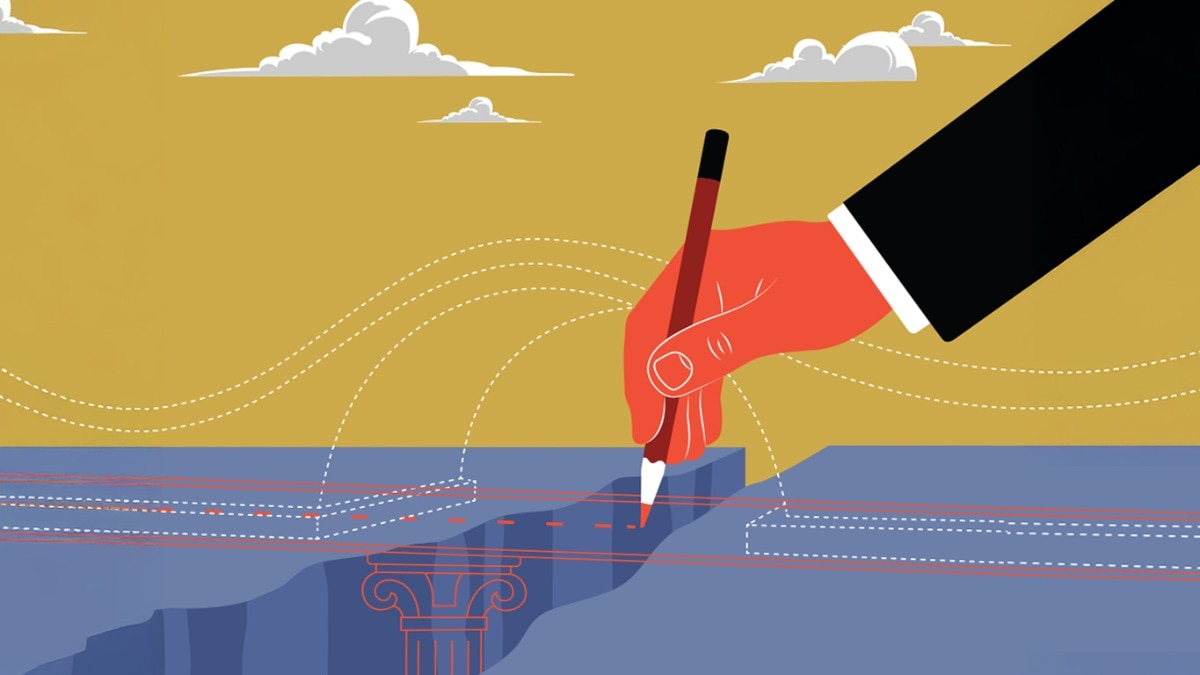
Retiring the Bell Curve

Archana didn’t question performance management until it questioned her.

After a year of stretching across multiple projects, adapting to shifting client demands, and being told consistently that she was doing well, the appraisal outcome felt jarring. “In fast-paced teams like ours, most people are genuinely strong performers,” says Archana (name changed), an IT professional at a services and consulting company in Bengaluru. “Yet, during appraisal cycles, managers are still forced to fit employees into predefined bell curves, even when the ground reality doesn’t support it.”

What unsettled her most was the disconnect between everyday feedback and final outcomes. Employees are encouraged throughout the year, told they are stepping up, only to land in an ‘average’ bucket during calibration. “Even if unintentional,” she says, “that gap slowly erodes trust in the process.”

Archana’s experience is increasingly familiar across corporate India, and it helps explain why performance management is now under unprecedented scrutiny.

THE DISCONNECT

Despite mounting dissatisfaction, organisations continue to rely on performance reviews to make high-stakes decisions on pay, promotion, and progression. Yet confidence in these systems is thin. Deloitte’s 2025 Global Human Capital Trends Report finds that only 32% of executives believe their current approach enables timely, high-quality decisions about performance.

Employee sentiment is even more decisive. According to performance management platform Betterworks, 64% of employees see performance reviews as a waste of time that does not help them perform better.

The cost is not just cultural, but economic. Analytics and advisory firm Gallup estimates that performance evaluations drain organisations of $2.4 million to $35 million annually in lost working hours, as managers and employees spend time on processes that struggle to influence real outcomes. What distinguishes this moment is that dissatisfaction persists despite repeated reform attempts—from eliminating ratings to adopting peer- or skills-based models. Deloitte’s data points to an execution gap: just 26% of organisations say their managers are effective at enabling team performance, and fewer than half of employees clearly understand what is expected of them.

The issue, then, is no longer whether performance management should exist, but whether organisations are prepared to reset systems that no longer reflect how work happens.


CHALLENGED BY COLLABORATION

Traditional performance systems—particularly bell-curve–driven models—were built for a more predictable era when fixed roles, stable teams, linear career paths, and annual planning cycles shaped how performance was assessed and rewarded.

“That context has steadily eroded,” says Arpit Shelat, HR Director at Genesys India. “The bell curve was designed to optimise control and cost management, not growth and development. Today’s work is cross-functional and interdependent, and success depends far more on collaboration and knowledge-sharing.”

The bell curve was designed to optimise control... Today’s work is cross-functional and interdependent, and success depends far more on collaboration and knowledge-sharing.
-Arpit Shelat, HR Director, Genesys India

In such environments, forced ranking often creates misaligned incentives. When employees compete for a limited number of high ratings, visibility tends to outweigh impact, and compliance is rewarded over experimentation. The outcome, Shelat notes, is not just skewed assessment but weakened psychological safety—an environment where people become cautious about sharing ideas, taking risks, or enabling others.

Performance, then, needs to be evaluated through evidence-based outcomes rather than relative positioning. Progress should be supported by documented records, trackers, and proof points, which together form the backbone of a continuous evaluation cycle. This approach, says Shelat, improves consistency and reduces dependence on recall or perception at year-end.

ENABLING PERFORMANCE

As collaboration, speed, and reinvention reshape work, leaders are increasingly questioning whether ranking employees against one another still serves any real purpose.

Shelat likens bell-curve evaluations to “using yesterday’s map to navigate tomorrow’s city.” While relative ranking may indicate who performed better than whom, he argues it fails to capture what organisations now need most—value creation, future capability, and alignment with shifting business priorities.

More critically, Shelat points to the psychological toll of forced ranking, which discourages risk-taking and experimentation, particularly when systems are not designed to support learning from failure. Over time, innovation slows—not because people lack ideas, but because the system quietly penalises uncertainty.

Differentiation in pay and promotions still occurs—but without forced distribution. Year-end decisions are based on outcomes achieved, supported by evidence and documented progress. “Without records, perceptions of bias creep in,” says Shelat.

For Indian organisations attempting similar shifts, he flags familiar risks: rigid KPIs, proximity and tenure bias, and excessive reliance on hierarchical judgment. Empowering managers to recognise real impact—rather than visibility—is essential if performance systems are to enable collaboration, innovation, and sustained morale.

Echoing this shift, Satyadeep Mishra, the CHRO at R Systems, says performance management at most organisations—including his own earlier—was largely retrospective and documentation-driven. Annual reviews, fixed goals, and scoring past outcomes prioritised evaluation and compliance over development.

“That form of evaluation falls short in today’s dynamic, cross-functional workplace,” Mishra says, particularly with a multi-generational workforce that includes Gen Z. “Employees today don’t respond well to one-way feedback. They ask why, they question what, and they expect dialogue. The balance of power has shifted from manager-led assessment to a more equal, two-way conversation.”

Some companies are reimagining performance as a continuous system of alignment and learning and have shifted their focus from retrospective scoring to a forward-looking model that emphasises enablement, adaptability, and role-relevant skill development—critical in a digital engineering environment where technologies and client expectations evolve rapidly. Annual reviews still exist, but they now consolidate insights gathered throughout the year rather than defining performance in isolation. Structured, two-way check-ins enable early course correction, clearer expectations, and shared accountability. Managers record feedback and progress in real time, reducing end-of-year reconstruction and perceptions of bias.

Nowhere is this shift more necessary than in India’s tech, digital, and services ecosystem. Rapid scaling, client-driven delivery, and matrixed teams are now the norm. In such environments, performance is rarely the outcome of individual effort alone—making systems built for isolated evaluation increasingly misaligned with how work gets done.


LATE FEEDBACK

From working closely with enterprise HR teams, Partha Neog, CEO & Co-Founder of Vantage Circle, sees a clear and growing misalignment between how performance is evaluated and how work happens today. “The breakdown of traditional reviews is no longer subtle,” he says. One key signal is where feedback now appears: employees increasingly express both frustration and appreciation through pulse surveys, engagement tools, collaboration platforms, and even exit interviews—indicating that formal reviews are becoming untrusted or irrelevant.

The breakdown of traditional reviews is no longer subtle. Employees now express both frustration and appreciation through pulse surveys, engagement tools.
-Partha Neog, CEO & Co-Founder of Vantage Circle

Data from The State of Recognition & Rewards 2025 supports this shift. Organisations with structured, inclusive recognition programmes—where appreciation happens regularly—show nearly twice the design maturity of others, highlighting that recognition works best when woven into everyday work rather than being treated as a periodic ritual.

In fast-moving teams delivering work in short sprints across functions and time zones, much context about individual contributions is lost by the time annual reviews occur. Early ideas, brief but critical problem-solving, and cross-functional coordination often go uncredited, leaving managers with a partial and outdated performance picture. This gap between the reality of work and what gets evaluated explains why once-a-year conversations struggle to mirror how performance unfolds. Ongoing recognition plays a critical role in evolution. Small, timely signals of appreciation or course correction help employees understand where they stand and how they can improve.

As organisations move away from rigid, one-size-fits-all models, best-in-class companies are sharpening differentiation, strengthening manager capability, and embedding continuous feedback, says Roopank Chaudhary, Partner – Talent Solutions at Aon India.

“Over the past few years, companies have experimented with different performance models—refining rating scales, strengthening the link between performance and rewards, and investing in manager capability,” he notes. According to Chaudhary, organisations that see sustained results strongly link performance outcomes to rewards, with top performers receiving nearly 1.7 times higher fixed pay increases. They assess not just what employees deliver but how they deliver it, embed real-time feedback to build self-awareness, and prioritise robust talent reviews with targeted development inputs.

DECOUPLING PAY FROM PERFORMANCE

Partha Neog points out that India presents a unique challenge as hierarchical norms and rating-linked rewards remain deeply embedded in the workplace.

In many organisations, the annual review is still the moment when employees learn about their growth prospects, their standing within the team, and how these assessments translate into pay. Shifting away from this model, he notes, cannot be done by abruptly changing it without eroding trust and requires careful design.

According to Neog, three credible levers are currently being tested to make this transition both fair and believable. The first is separating timing and intent, second is transparency in the criteria, and the third is technology-assisted calibration.


PERFORMANCE RESET

Modernising performance is still largely treated as a tooling decision, which undermines performance transformation efforts.

While technology plays an important role—without it, feedback signals remain fragmented and invisible—tools alone do not upgrade performance culture. The real friction, Neog argues, sits at the manager layer, where expectations, incentives, and coaching capability ultimately determine whether any new performance model works.

Organisations,then, should invest heavily in systems but underinvest in equipping managers to set meaningful goals, give developmental feedback, and run high-quality performance conversations. Without that capability, even well-designed reforms stall quickly.

Neog adds that in large, complex Indian organisations—where big-bang transformations are common—piloting new models with smaller cohorts, measuring outcomes, and refining based on feedback is often more effective. Iteration reduces risk, allows learning in real time, and enables smoother scaling without overwhelming culture or managers.

The real reset, then, is about a deeper choice: whether performance systems exist to enforce control—or to build capability, trust, and long-term organisational strength.


