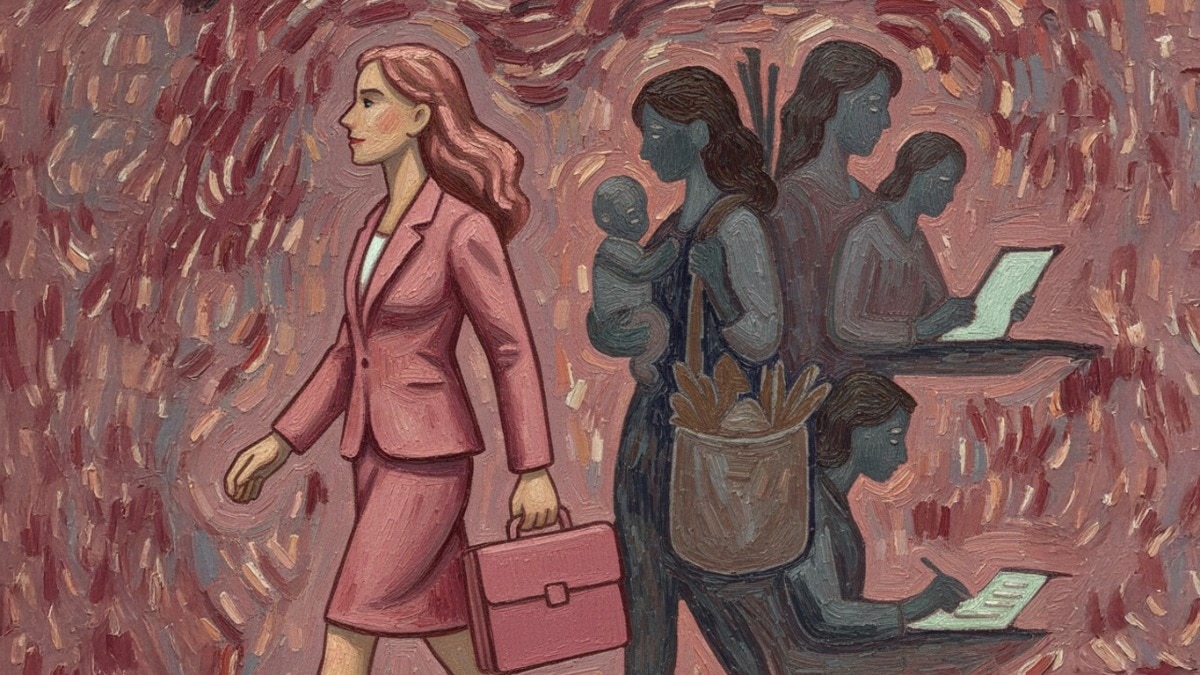
Behind every performance review and late-night login lies an invisible truth: women often work twice as hard just to stay in the race. They juggle caregiving, career breaks, bias, burnout, unfair expectations, all while maintaining the composure workplaces have normalised. What they want is neither special treatment nor exceptions or concessions; they’re asking for fairness, dignity, and support through predictable life stages. As Neha Bagaria, Founder and CEO of AI-powered career engagement platform for women HerKey, puts it, “Beyond generic challenges, four distinct barriers appear at different stages of a woman’s career: lack of career intentionality early on; biases during restarts; disproportionate caregiving for mid-career risers; and networking formats built by men, for men, which exclude women at senior levels.” Neha Bagaria, Founder and CEO, HerKeyWORK-LIFE BALANCE Flexibility has become both salvation and stigma for women. Bagaria notes three cohorts of women seeking flexibility today: those who need full work-from-home, those who need empathetic hybrid, and those who can manage hybrid with occasional support. But organisations often treat flexibility as a signal of reduced ambition. Sharon (name changed), who recently quit her senior role at a consumer electronics company, experienced this firsthand. “Men are still trusted more with ‘getting things done.’ They enjoy greater visibility and informal bonding, and that’s what gets rewarded. Women, especially with young children, are quickly sidelined,” she says. Flexible arrangements, she adds, come with invisible penalties—slower promotions, reduced visibility, and assumptions about lower commitment. Data backs her: Deloitte’s ‘2025 Women@Work’ report shows that nearly nine in ten women believe requesting flexibility will hurt their career. UNSPOKEN MENTAL TOLL Women’s composure at work often hides a mental-health crisis unfolding quietly beneath the surface. “Women aren’t burning out because they’re less resilient,” says Richa Singh, co-founder of emotional wellness platform YourDOST. “They’re burning out because they absorb more of the emotional load at work.” YourDOST’s upcoming ‘Decade of Wellness’ report reveals that 74.68% of women experience high stress, compared to 61.47% of men. Severe burnout is also higher among women (26.71% vs. 23.02%). High anxiety is nearly double that of men (44.34% vs. 27.48%). The burden grows heavier when paired with weaker support systems, as half of all women report low emotional support, according to YourDOST’s Emotional Wellbeing of Entrepreneurs (2024). Higher anxiety and sustained burnout create the perfect conditions for imposter syndrome, threat responses, and chronic overcompensation. A Deloitte report confirms a hidden crisis: only half of women rate their mental health as good, only four in ten can disconnect from work, and nearly 90% fear their manager would judge them for disclosing challenges. CAREGIVING CRUNCH Caregiving remains one of the most persistent and least addressed barriers to women’s workforce participation as women often face the double burden of unpaid domestic work. Numbers elucidate this problem. As per the Deloitte report, one in 20 women say the lack of reliable care could force them to quit their jobs. The report estimates that the care gap leads to over two million lost workdays each year, translating into $16.5 billion in missed economic opportunity. And the anxieties aren’t limited to current caregivers: one in three women fear that the absence of a strong care infrastructure could slow or derail their careers in the coming years. Women re-entering the workforce after maternity breaks face the steepest uphill climb; only 3% feel they have progressed in their careers after returning. Karishma Parikh, Vice President—HR at workforce solutions provider Adecco India, sums up the struggle: “Managing childcare alongside a demanding career is something I continue to navigate even today.” This is where supportive ecosystems transform futures. Arti Dua, Partner and CHRO, EY India, recalls being hesitant when she was offered the Partner role. “My kids were young, and I worried constantly. My leaders told me to work at a pace that suited me and supported me through the transition.” Her story underscores that growing in your career is not only about ambition, it also depends on having the right support around you. This gap becomes even more visible mid-career, a point at which experience collides with exhaustion. Saundarya Rajesh, Founder–President, Avtar Group, a workplace culture consulting firm, notes that this “mid-career cliff” is intensifying in the AI era. “Nearly 60% of women now require urgent upskilling to stay competitive in an AI-driven workplace, yet targeted learning opportunities often bypass them.” Saundarya Rajesh, Founder–President, Avtar GroupHEALTH: AN INVISIBLE BARRIER Menstruation, fertility treatments, perimenopause, and menopause create health realities that significantly impact women’s working lives, yet workplaces still treat them as private struggles. Parikh shares: “IVF was demanding. I took work calls even when completely under the weather.” Many women quietly push through severe discomfort: Deloitte reports that 40% work through intense symptoms without taking time off, and one in ten say talking about menstrual challenges negatively affected their career. Fertility, IVF cycles, and menopausal symptoms also affect confidence and performance. Rohit Jetley, Head of Global Platform Solutions Delivery and India Site Head, Fidelity International, stresses that organisations must act: “Menstrual health is not just personal, it’s a workplace wellbeing issue.” Recently, Karnataka became the first Indian state to offer paid menstrual leaves to all working women in formal jobs. THE EVERYDAY BIAS Despite years of progress, gender bias remains one of the deepest, most stubborn barriers to women’s advancement. It appears in hiring, promotions, pay, and daily interactions, often subtly, but powerfully. Sharon has seen it repeatedly. “Men are trusted more with delivery. They bond easily with the boys’ club. Women, especially mothers, are sidelined.” What widens the gap further is access to informal networks. Rajesh notes this is systemic, not anecdotal. “In our January 2025 study on gender diversity in the C-suite, 44% of women identified bias in hiring and promotion as a persistent challenge, and nearly half—48%—said organisational culture itself acts as a barrier,” she says. Work–life pressures compound this, with 60% of women citing it as a major obstacle to senior roles. Contrary to stereotypes, women today are equally career-driven. The BCWI 2025 study found that “seeking better job opportunities” is the top reason both men and women quit. And the Avtar–EY GDS study, Why We Work, shows women are even more adaptable and future-ready (57% women versus 52% men). Yet the pay gap remains stark. Global UN and WEF data show women still earn significantly less, with gaps widening in managerial roles. Rajesh emphasises structural action: “Regular pay audits, clear compensation frameworks, and active sponsorship are crucial. Mentorship isn’t enough; leaders must become sponsors who advocate for women at decision-making tables.” Bias also lives in quieter experiences—microaggressions and non-inclusive behaviours that chip away at confidence. Deloitte research shows 34% of women faced non-inclusive behaviours in the past year, with microaggressions reported by 28%. Only 58% of women who face microaggressions speak up. Many fear being labelled “too sensitive” or believe “nothing will change.” Rewriting the narrative begins with rejecting the myth of perfect balance. What sustains women’s careers isn’t flawless multitasking but the presence of strong support systems. While women have to meander around multitudes of obstacles—lack of support at home, gender bias working against them, predatory workplace, or a hostile working environment, Bagaria’s final reminder carries both steel and pragmatism: “We can’t wait for knights in shining armour. Women must be their own knights.”