In 2014, during the International Premier Tennis League, Coca-Cola posted a tweet in Hindi. What seemed gimmicky then helped the beverage brand garner 22 per cent higher engagement compared to what a non-Hindi tweet could at the time. Post this revelation, the company launched a Twitter campaign during the Pro Kabaddi League in 2015 for Thums Up by repurposing popular Hindi movie dialogues into regional languages. A 150 per cent increase in engagement was recorded, the company claims.
Brands are increasingly leveraging India's linguistic diversity to connect better with consumers. There are reasons to do so. The Internet and Mobile Association of India (IAMAI) estimates that while most of the 371 million mobile internet users in India are from urban areas, with the decreasing prices of smartphones, the next wave of growth will come from rural areas. Much like what happened with mass-market mediums. "In the 90s, when the growth of TV, radio and newspapers stagnated, to reach the next level of growth they launched channels in regional languages. This is happening on the Internet too, thanks to the proliferation of smartphone Internet," says Neil Shah, Research Director, Counterpoint Research. He foresees a 100 per cent increase in first-time smartphone buyers in rural areas.
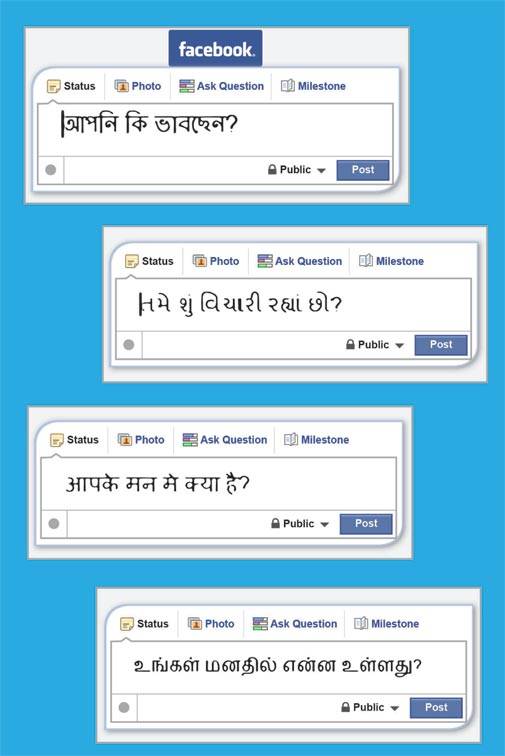
Debabrata Mukherjee, VP, Marketing and Commercial, Coca-Cola India and South West Asia, says, "Using vernacular languages helps global brands successfully localise, which helps consumers relate more to the brand, leading to a positive impact on the overall brand equity." Facebook is already available in 12 regional languages - Hindi, Bengali, Tamil, Malayalam, Telugu, Marathi, Punjabi, Gujarati, Kannada, Sanskrit, Oriya and Urdu. Facebook Lite, an Android app to cater to people in areas with low internet connectivity, also supports Indian languages.
Last year, Twitter added four languages - Gujarati, Kannada, Marathi and Tamil - to its web and mobile app, after Hindi and Bengali. Prathap Suthan, Chief Creative Officer of BangInTheMiddle, attributes this regional focus to a change in perception. "Earlier, speaking in English meant better chances in life. This meant that the English-speaking population was the one with money and, hence, the potential dartboard for brands. Now, with the middleclass population in India having an increased percentage of disposable incomes, brands, especially the mass product companies, have to speak the language the taxi driver and the autowallah is conversant with."
This month, GoDaddy added three new languages across its customer touchpoints - website, customer care, ads and e-mails - based on customer feedback, and supported it with a multi-lingual marketing campaign on digital and television. "20 per cent of small businesses said they felt the Internet was complex," says Rajiv Sodhi, VP and MD, GoDaddy India and Australia.
Usually, users on social media interact with brand pages by liking or sharing a post. Regional posts and tweets are able to draw more engagement as users comment a lot more on these. "It is because they are more confident expressing their opinions in their local language. They don't feel intimidated about making grammatical errors in English," says Zafar Rais, CEO, Mindshift Interactive.
While there is no data on digital spends on regional language campaigns yet, experts say it is catching on fast. Aloke Bajpai, Co-founder of travel search engine ixigo, is betting big on them. The click-through rate for ixigo's recent regional ad campaign on Google and Facebook was 40 per cent higher than the ads in English. A similar trend was seen on its app for push notifications.
DIGITAL DASHBOARD
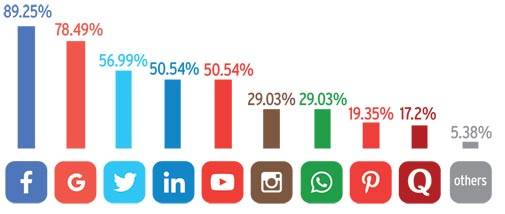
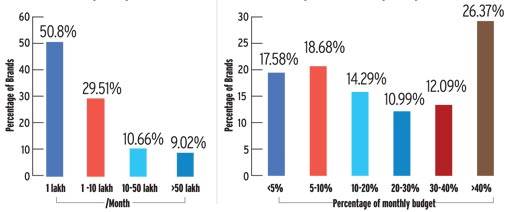
Digital Mix
Facebook and Google are the most popular digital marketing channels in India
LISTENING POST
Catch 'Em All
Pokemon Go has taken the world by storm since its release on July 7. The app has already been downloaded 15 million times on Google Play and App Store. The game fervour has spread so far that, according to a report by app analytics company Sensor Tower, smartphone users are spending more time on Pokemon Go than on Facebook, Snapchat, Twitter and Instagram. According to the company, on July 11, the average iPhone user spent 33 minutes on Pokemon Go in the US, 22 minutes on Facebook, 18 minutes on Snapchat, and 17 and 15 minutes on Twitter and Instagram, respectively. However, it ranked below MZ's Game of War, which had people playing for two hours total daily on average, and Candy Crush Saga, which had an average total daily usage of about 43 minutes.
Emojis Galore
Google has released a new set of emojis aimed at gender diversity and empowering women. The new emojis show women in various professions such as doctor, engineer, chef, etc, and in varying skin tones. "While there's a huge range of emojis, there aren't a lot that highlight the diversity of women's careers or empower young girls," the tech giant said in a blog post. "These new emojis are one of several efforts we are making to better represent women in technology, and to connect girls with the education and resources they need to pursue careers in STEM (science, technology, engineering and mathematics)," the company added. Google has also introduced both male and female versions of its 33 existing emojis.













