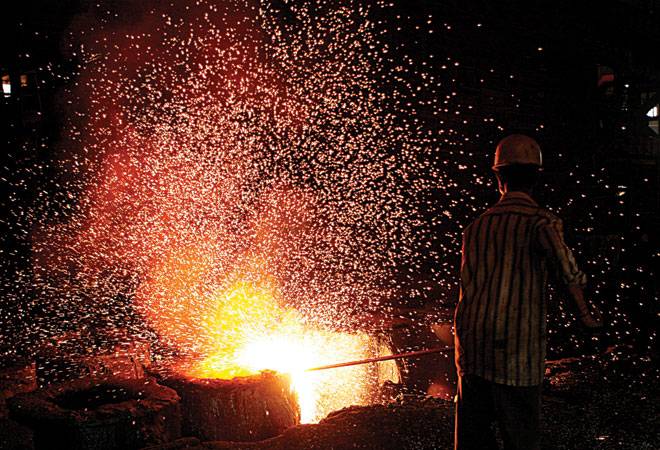
An unprecedented downturn in the global commodity cycle and persistent rise in steel and aluminium imports from countries such as China have forced the government to examine ways to safeguard these industries.
WHAT'S PUTTING PRESSURE ON THE ALUMINIUM INDUSTRY
> Steep rise in cheap exports from China
> Higher taxes on coal which accounts for big input costs
> Inverted duty structure that allows China to import bauxite from India and sell back finished goods
With the northern neighbour sitting on huge excess capacity in both these sectors, it is looking at ready markets, and India happens to be one such market. The government has already imposed safeguard duty twice to protect the steel industry, and the aluminium industry is hoping for a similar concession.
The steel industry, before the safeguard duties were imposed had seen imports rise 69 per cent in the last financial year. Just like steel, the aluminium industry has seen a steep rise in cheap imported finished products cutting into its market.
AND WHAT THE INDUSTRY WANTS
> Raising import duty on aluminium finished products from 5 per cent to 15 per cent
> Reducing import duty on raw materials from 7.5 per cent to 2.5 per cent
> Increasing export duty on bauxite from 20 per cent to 50 per cent
> Increasing Duty Drawback
"Dumping by China is a big reason. They are selling for lower than their production cost. It may be their strategy but it is damaging us," says Narendra Singh Tomar, Union Minister for Steel and Mines. The government has increased the import duty on steel on more than one occasion. It also imposed anti-dumping and safeguard duties. The odds are that more action is in the offing to shelter the metal producers.
The aluminium industry is currently reeling under not just cheap imports but also rising costs, largely due to higher taxes on coal, and a steep decline in aluminium prices. India consumes around 3.5 million tonnes aluminium every year, of which 1.5 million is imported, mostly from China and West Asia. Since 2011, the import surge has been a steep 159 per cent. In the first half of the financial year, the share of imports in total consumption was 56 per cent. Over the past few years, the domestic aluminium industry has witnessed significant capacity addition, and is currently operating atonly 50 per cent capacity, making debt servicing more difficult.
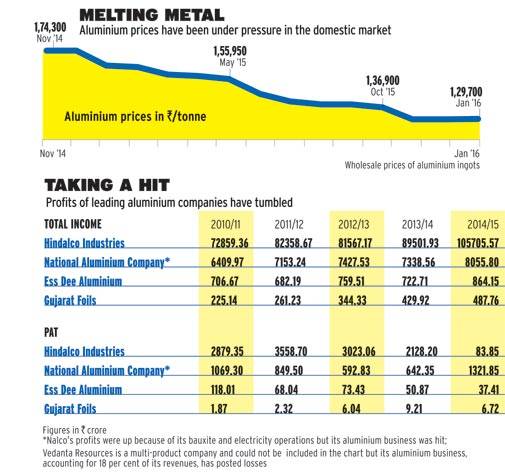
Continuous fall in global aluminium prices -40 per cent from $2,474 a tonne in November 2014 to $1,479 a tonne in January 20165 - has impacted the profitability of companies. Hindalco reported a 33 per cent decline in operating margin in the July-September quarter while Vedanta reported a loss in its aluminium business - which contributes 18 per cent to overall revenues - in the October-December 2015 period.
The government says it is actively considering the industry's wish for raising the import duty on aluminium from 5 per cent to 15 per cent. The aluminium industry also faces inverted duty structure where the duty is 5 per cent on imported finished products and 7.5 per cent on raw materials. It is trying to convince the government to reduce the import duty on raw materials to 2.5 per cent.
THE INDUSTRY IS PITCHING FOR INCREASING THE EXPORT DUTY ON BAUXITE TO DISCOURAGE CHINA AND OTHERS FROM BUYING IT CHEAP FROM INDIA AND THEN SELLING BACK VALUEADDED MATERIAL
Meanwhile, bauxite exports to China have surged 52 per cent in the past one year. There, value addition takes place and finished aluminium is exported back to India. The industry is pitching for increasing the export duty on bauxite from 20 per cent to 50 per cent to discourage China and others from buying it cheap from India and then selling back value-added material, which competes directly with what is produced by the Indian players.
Other commodity players are also watching keenly if the government extends the same safeguards to the aluminium industry that it has provided to the steel industry.
Solar panel manufacturers, the electronic hardware industry and tyre manufacturers are all clamouring for protection saying they are threatened by cheap imports. However, their case might be weaker than that of steel and aluminium industries because their domestic production is still below demand. But they are all waiting to see exactly what action the government will take on aluminium before ramping up their lobbying efforts.