
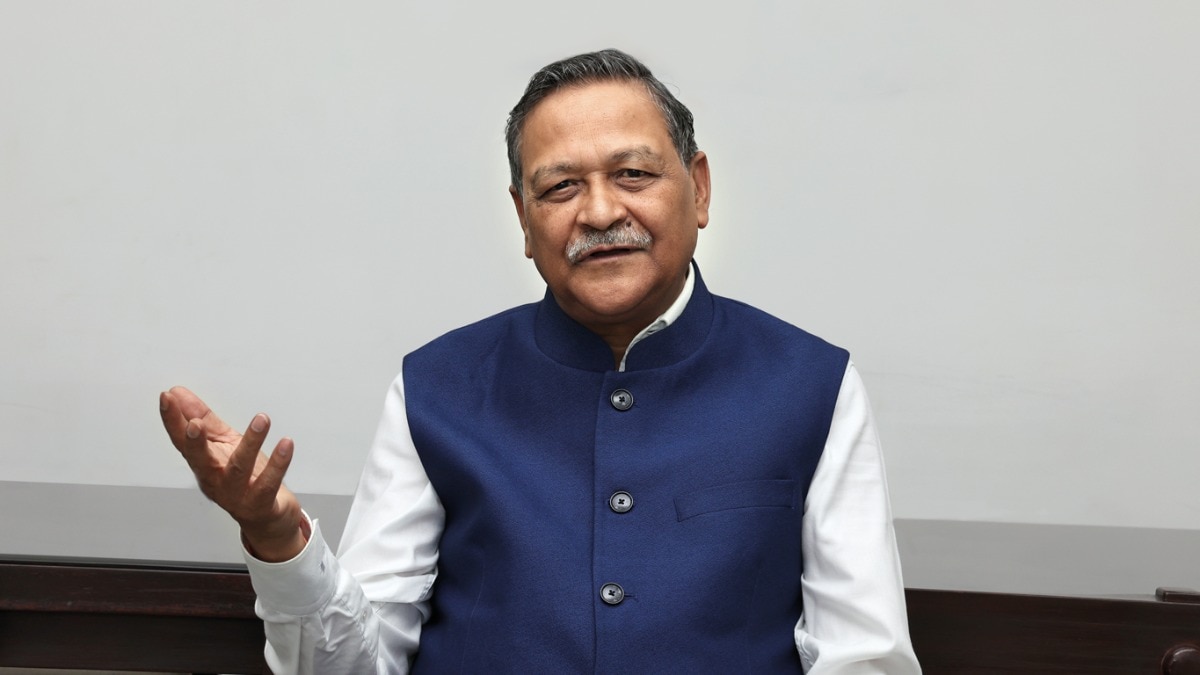
Indian Institute of Management Ahmedabad (IIMA) leads BT-MDRA’s 26th annual ranking of India’s Best B-Schools, reaffirming its status as the country’s premier management institution. For its Director, Bharat Bhasker, the real story is the race to keep management education relevant amid tectonic shifts in technology and global business. Edited excerpts from an interview with BT:
Q: How would you describe the state of management education in India?
A: Our management education ecosystem is in good shape, but the changes that are happening are quite drastic in nature. Technologies like artificial intelligence (AI), blockchain, robotics and autonomous systems will significantly impact workplaces. Management education must immediately begin to echo what is happening in the actual workplace, because ultimately, you are creating leaders for the future.
A key challenge is how quickly we can transform the current curriculum into a new one, which incorporates and reflects the changing reality. We must also prepare graduates for uncertainty in global trade practices and shifting supply chains.
Our management schools must immediately accelerate adaptation. We are in good shape and are trying to keep pace with the changing technology over time, but the pace must be accelerated to remain relevant.
Q:The syllabus of IIMA has undergone a major transformation. What has changed?
A: Our curriculum is designed to transform graduates into business leaders, reflecting industry realities. A major mechanism is the case study method, which mirrors real scenarios; adopting the latest cases brings industry reflection into the classroom.
More importantly, technology often moves faster than industry adoption. We prepare our students to become business leaders who lead the industry in technology adoption and drive change.
Over the past year, we have introduced technology-oriented courses, including AI in human resources, AI-driven fintech, and technology-driven global supply chain management.
We integrate these shifts, and our students are being prepared to absorb all that information and be ready for the future business environment. Sometimes industry leads us; sometimes we lead industry by preparing students who will take new technologies into organisations.
Q: Overall, is Indian management education well-positioned for the transition that is underway?
A: There are layers in the system. The top institutes are preparing well and transforming quickly. Others are lagging and would take longer to adapt. We are well-positioned, but the transition must include the entire ecosystem. Top institutes must help bring others along so the broader economy benefits, not only high-end industry.
Q: What is your sense of job placements this year, and how can industry and academia respond to any dips?
A: Industry engagement should not be limited to placements, as they are only an outcome. Engagement must begin during the transformation stage, ensuring students understand current industry practices. That is why our core curriculum is taught by faculty and electives by numerous industry practitioners.
Faculty must remain updated on industry practices. Research advances knowledge, but faculty must also understand how new technologies affect organisations. We engage deeply with industry through executive education and consulting. In consulting, faculty work closely with companies, understand their challenges and develop solutions—gaining practical insight on applying theory.
In executive education, I don’t think industry people come to learn from us. We do impart education to them, but at the same time, we learn a lot from industry people because in interactive discussions in classrooms, they bring out the nuances of what is happening in the industry.
Industry engagement must, therefore, be holistic—from teaching to consulting to executive education—with knowledge flowing back into the curriculum. Placements as an outcome will automatically happen if the institute is involved in an integrated fashion with industry.
Q: What will the management classroom of the future look like?
A: Even before Covid, technology made blended and online classrooms feasible. The pandemic only accelerated the adoption. Blended learning will grow for two reasons.
First, a growing economy cannot rely only on training fresh graduates. People already in the industry must be prepared for new technologies, management practices, and transitions from technical to managerial roles. Working with mid- and senior-management professionals has always been important, and technology now removes many physical-meeting constraints. Executive education increasingly uses hybrid formats where leaders spend some time on campus and learn the rest while working.
Second, blended learning is a force multiplier. A move from a $5-trillion to a $30-trillion economy would require a multiple-fold increase in managerial capacity. Residential programmes alone cannot meet this scale.
That is why we launched the Blended Post Graduate Programme in Management (BPGP), a blended MBA-equivalent programme for working professionals, which is now in its second batch.
We are also launching an MBA in Business Analytics and AI, because the modern manager must be technology-savvy.
Blended learning is essential to meet India’s scale and leadership needs.
Q: Who is an ideal student for IIM Ahmedabad? What profile, background, skills, and work experience matter most?
A: Ideal work experience is easier to define: a couple of years in industry, so students understand organisational dynamics. Fresh graduates often struggle with this.
Indian Institute of Technology (IIT) graduates are welcome; they have proven ability, but the ideal student is not limited to IIT. Today, you don’t need to go into the depths of a technological development. Technology is accessible today; what matters is one’s ability to apply it.
Our motto Vidya Viniyoga Vikasa means development through the application of knowledge. The ideal student has an open mindset, willing to engage with technology and apply knowledge for development, regardless of whether they come from commerce, science or an arts background.
Q: Does the Common Admission Test (CAT) exam help you select such students?
A: Only to an extent. The exam acts as a filter. After shortlisting, we assess the mindset through interviews, group discussions and case study writing. CAT tests analytical and verbal abilities, as the key requirement is an analytical mindset for solving business problems.
Q: How do you view the multiple-campus model now that IIMA has a Dubai campus?
A: India must show its capabilities and lead the Global South. Our philosophy emphasises collective development.
When the Global South grows, India grows. Dubai fits into a deliberate strategy: enabling the Global South to benefit from our capabilities while strengthening India through shared education and future trade. Multi-country campuses allow us to understand regional business contexts, write case studies from those markets and bring that learning back to India. We aim to prepare leaders for global business, not only in India.
Q: How do you view the entry of foreign universities in India under the new education policy?
A: I welcome them. India’s educational capacity cannot meet the scale of growth we foresee. We need far more engineering and management graduates than Indian institutions alone can produce. Foreign universities expand the pool and help prepare talent for the emerging economy.
Given the limited quality seats, many students go abroad. If foreign universities operate here, students receive comparable education at a lower cost, the currency stays in India, and parents benefit.
But quality must match that of the parent campus. Regulators must ensure only strong institutions and faculty enter. If quality is maintained, foreign universities are a win-win. 
@szarabi













