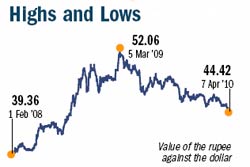
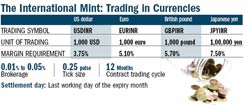
The rupee seems to be turbocharged, gaining almost 6 per cent against the dollar in the past year, from Rs 47 in April 2009 to Rs 44.4 currently. The momentum is expected to continue, with the rupee trading in the range of Rs 43.5-47.5 in the next six months. In fact, the rupee has also seen major fluctuations against other currencies such as the euro, pound and yen. As such variations make investors susceptible to major currency risks, it's important to hedge against these. You can do so by trading in currency derivatives. "Anybody who is exposed to currency-related risk, such as travellers or those studying abroad, can benefit by hedging against foreign exchange risk," says Naveen Mathur, associate director, commodities & currencies, Angel Broking.
Although India has had a currency market for some years, futures trading in dollar-rupee was introduced by the National Stock Exchange in August 2008. This year in February, the NSE commenced trading in all major currencies, such as the euro, pound and yen. Trading in currency futures is similar to that for equity and commodity futures. It allows you to buy or sell an underlying currency at a specific time in the future for a set price (see Currency Futures, 16 October 2008). However, dabbling in currencies will require you to track the International Index.