









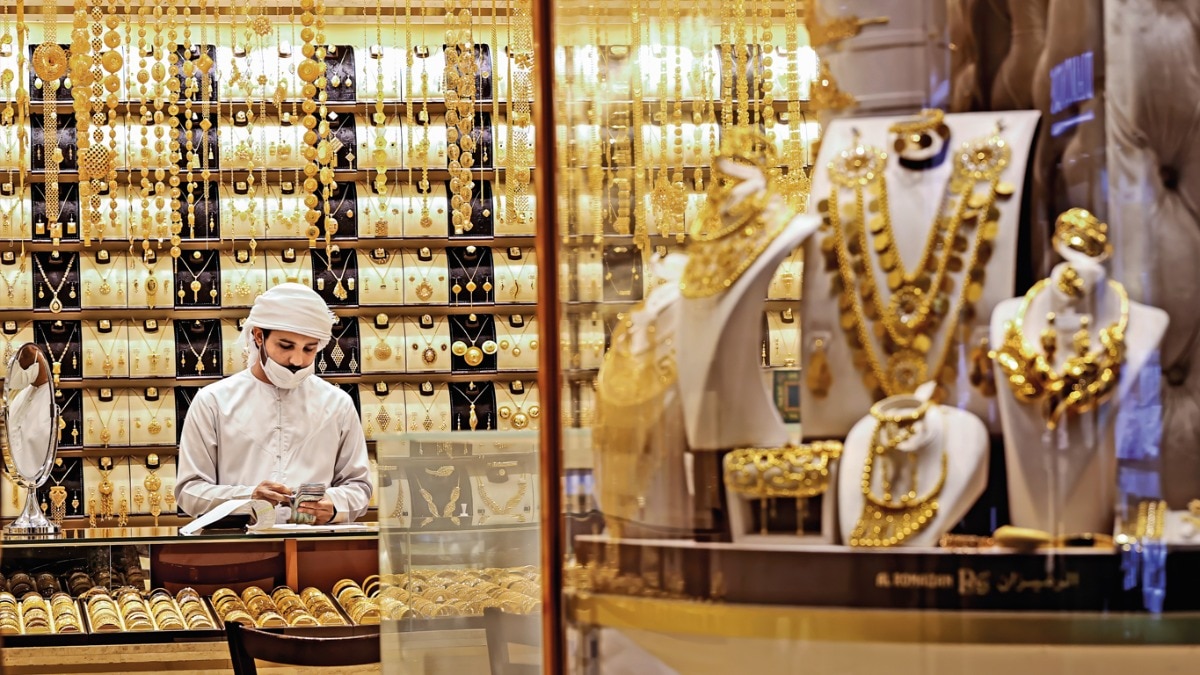
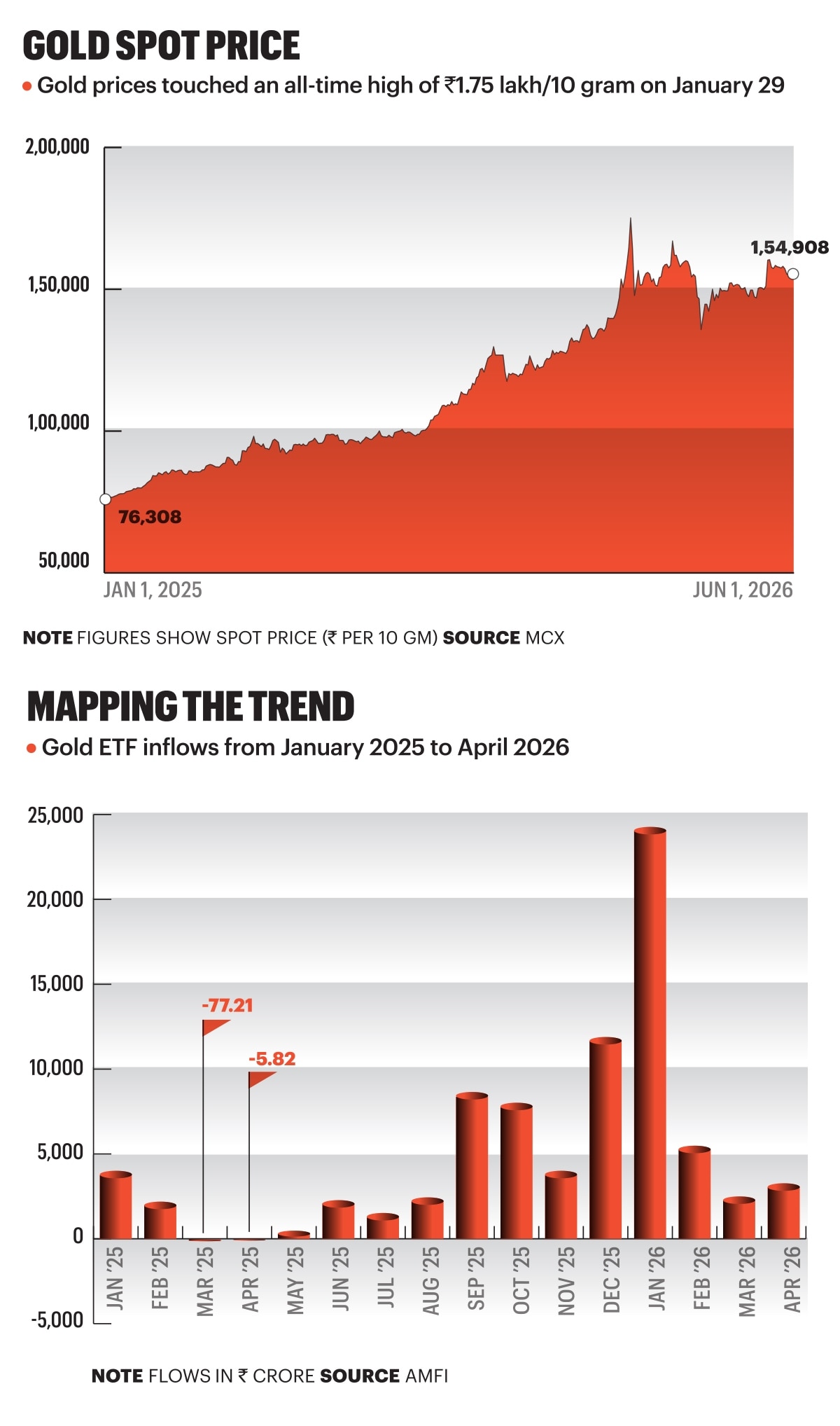
Akshaya Tritiya is considered one of the most auspicious days to buy gold and jewellery in India. Millions throng to jewellery stores and make purchases, even if small. This year, as people celebrated Akshaya Tritiya on April 19, compared with last year, gold prices had soared close to 60% from around Rs 94,000 to Rs 1.51 lakh. That had some impact on volumes, say jewellers, although in value terms sales were still higher because of heightened prices.
The Confederation of All India Traders reported business exceeding Rs 20,000 crore in gold and silver this year, compared with Rs 16,000 crore the previous year.
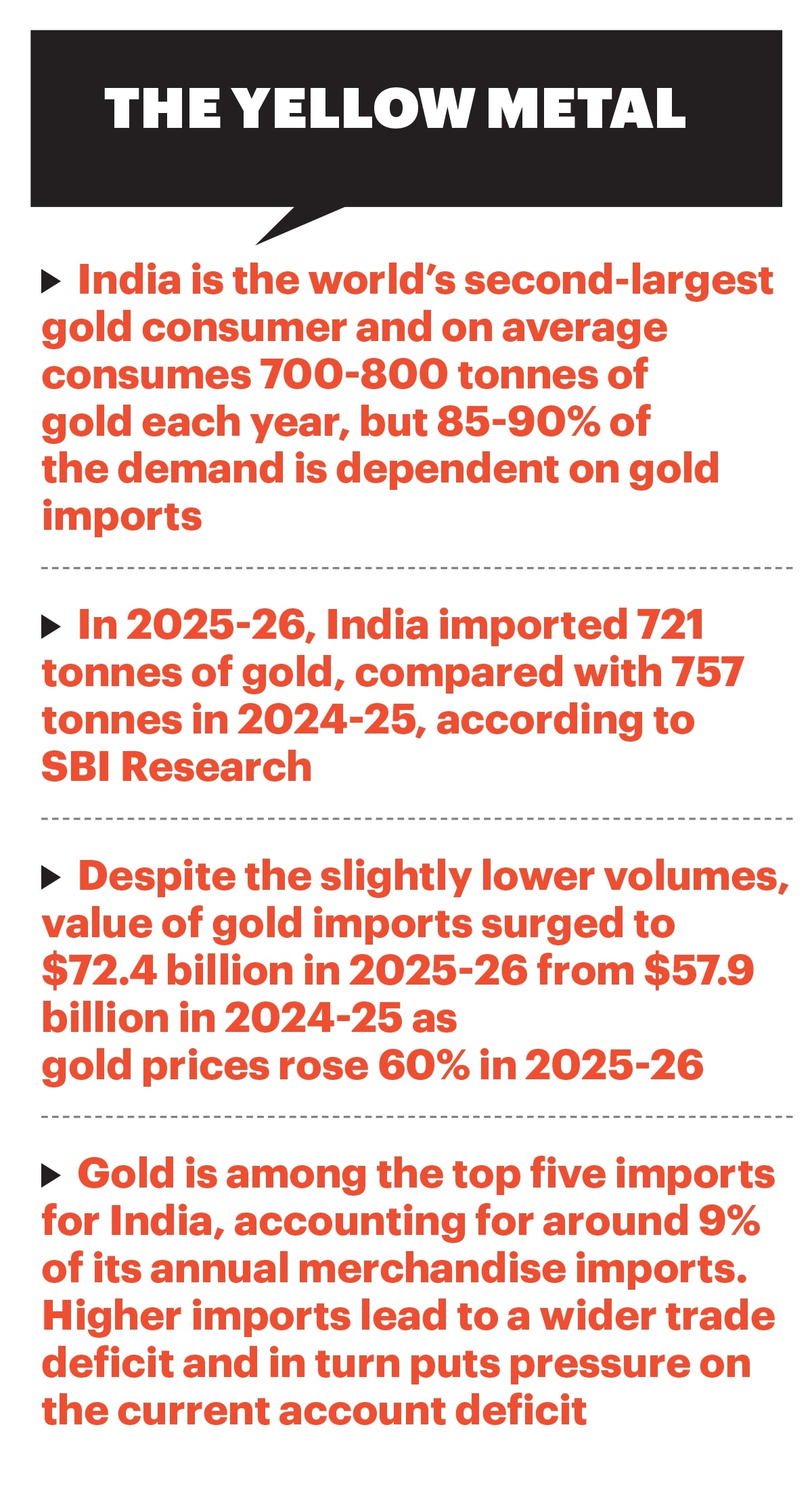
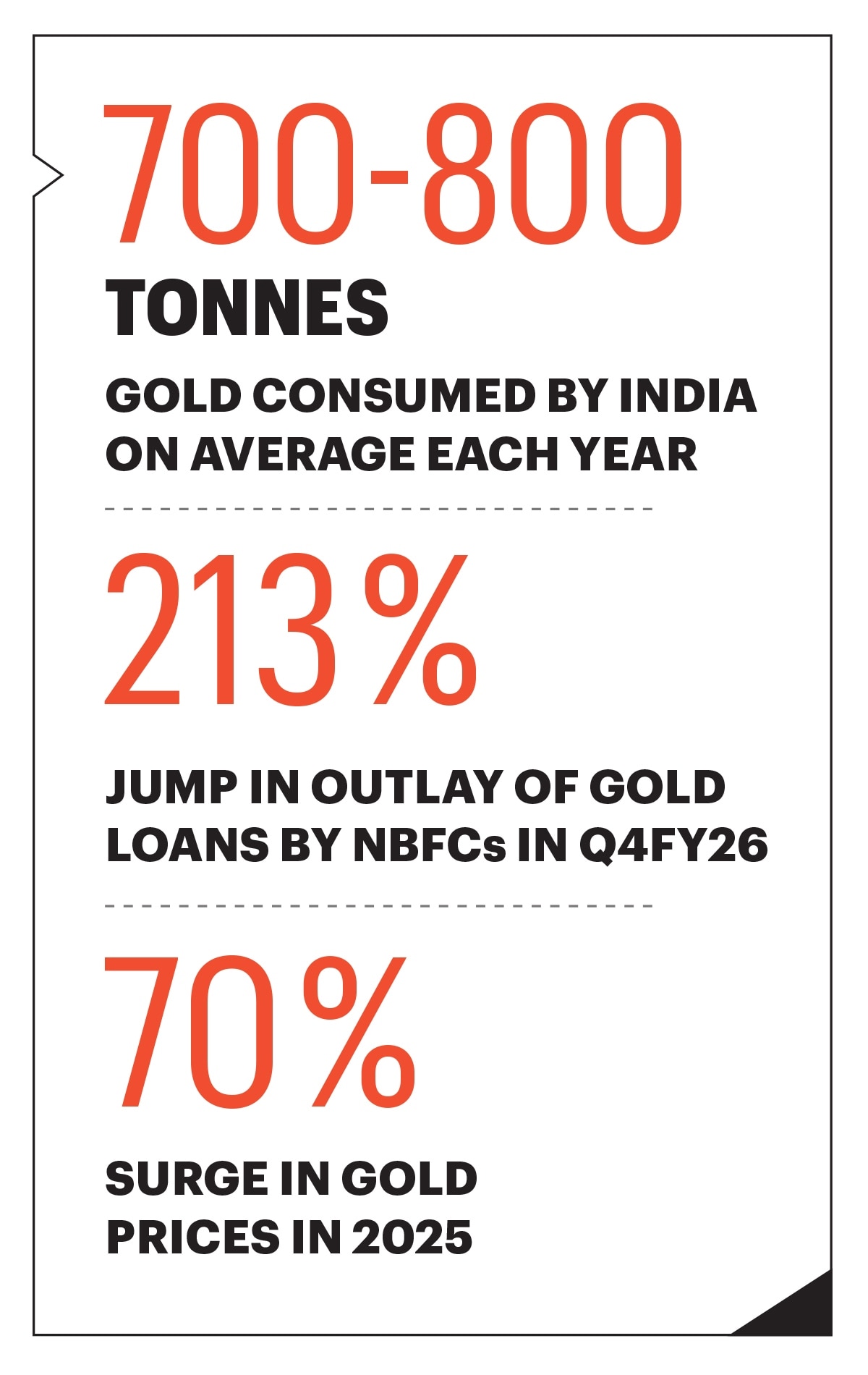
Gold has been passed down generations as a family tradition; some see it as a financial asset others see it as a store of value—an emergency backup. India on average consumes around 700-800 tonnes of gold each year. Across states and cultures, gold has a huge significance.
According to estimates, Indian households hold over 32,000 tonnes of gold. And yet each year more gold is bought. The problem is the lack of domestic gold mines. Therefore, close to 85-90% of the gold is imported. According to Statista, India imported close to Rs 5 lakh crore worth of gold in just FY25.
Such massive amounts of imports put pressure on the rupee against the US dollar. This is because when gold imports rise, demand for dollars increases.
This, in turn, leads to a wider trade deficit and depletes the foreign exchange reserves. In a year, where the rupee has already been under immense pressure amid a surge in oil prices due to the conflict in West Asia and heavy selling in the equity market by foreign portfolio investors, continued gold imports only amplify the pressures.
Not surprising that Prime Minister Narendra Modi urged Indians to not buy gold for a year. Soon after, the import duty on gold was raised to 15% from 6% in May 2026 in the hope that the resultant high prices will curb demand.
In 2025, gold prices climbed over 70% last year amid geopolitical tensions and US tariff-related uncertainties. In 2026, the West Asia crisis has only made prices more volatile.
“We are seeing a more selective buying pattern. Demand is increasingly skewed towards lower-value and everyday-wear pieces,” according to Varghese Alukkas, MD, Jos Alukkas, a Kerala-based jeweller.
Ketan Kothari, Director of precious metals management company Augmont Enterprises points that as gold prices rise, consumers may postpone purchases, but eventually they come back. Importantly, the price rise also drives up investment demand in the hope of further price increases, he notes.

Coming to gold ETFs, net assets under management topped Rs 1.78 lakh crore in April 2026, up almost three times the net AUM of Rs 61,422 crore in April 2025, according to data from Association of Mutual Funds of India.
“When gold prices rise, consumers stop buying for some time. But investors continue buying because they expect prices to rise. When prices become range-bound, consumers have no choice but to accept the price and they start buying again,” Kothari tells Business Today.
TRACKING DEMAND
A major driver of gold demand in recent years has come from global central banks, which have been stock piling gold as they look to diversify their forex reserves. According to the World Gold Council, central banks bought 863 tonnes of gold in 2025. While it was lower than the 1,092 tonnes in 2024, last year’s purchases were still significantly higher than the average 473 tonnes of gold central banks annually bought between 2010-2021. Gold’s share is now exceeding that of US treasuries, although the US dollar still has the largest share of currency reserves, according to Carsten Menke, Head—Next Generation Research, Julius Baer.
“Gold has become the number one asset in central banks reserves, thanks to a relentless rise in prices and continued buying from emerging market central banks. We still see central-bank buying as the strongest structural force in the gold market and expect Western-world investment demand to pick up again. The fundamental backdrop remains favourable even though volatility is set to stay elevated as long as the Iran war lasts,” he pointed.
The Reserve Bank of India too has been buying gold and held around 880.52 tonnes of gold, according to its recent data released on May 22, 2026.
The surge in gold prices has also fired up the gold loan industry. According to Equifax India, gold loan originations surged 103% in the quarter ended March 2026, making it the fastest growing retail credit segment in the country. The gold loan segment also saw a 37% increase in quarterly disbursements, while portfolio outstanding balances nearly doubled over the past year.
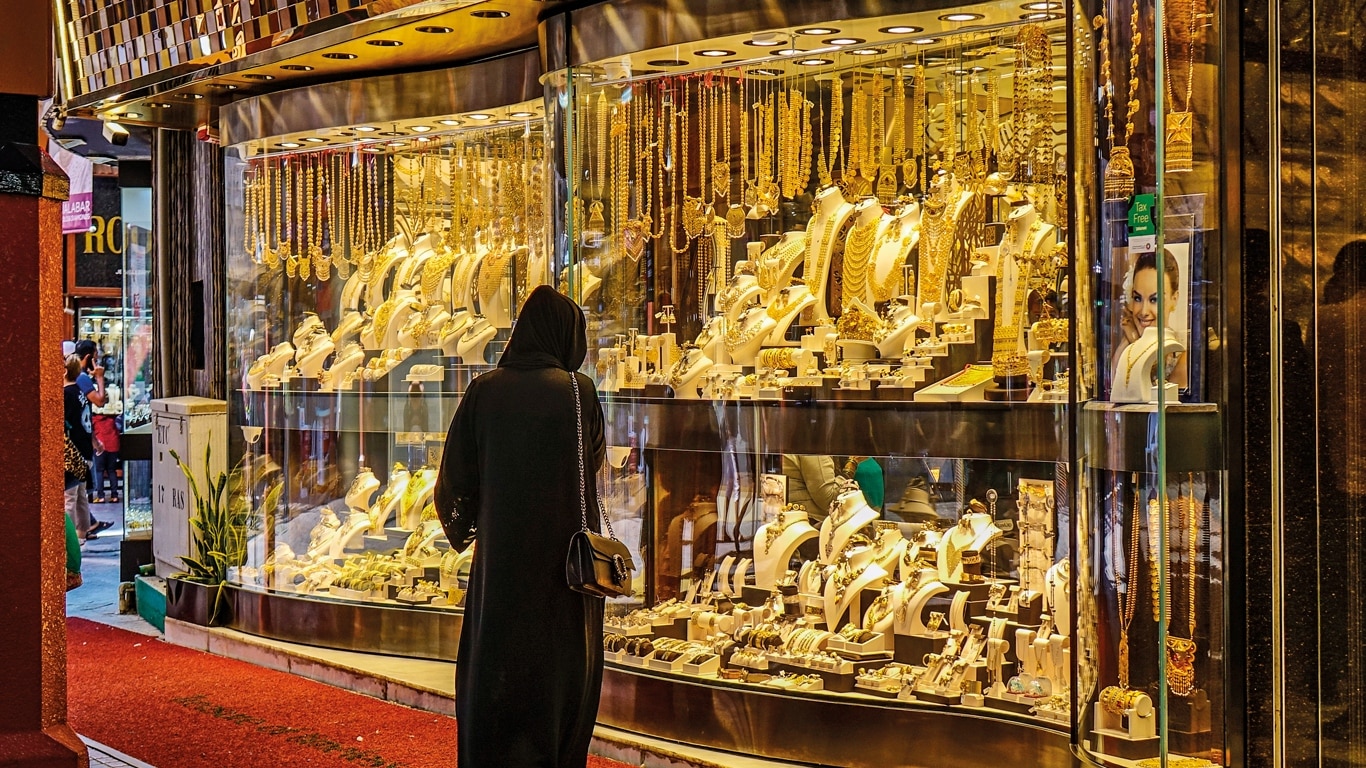
While public sector banks retained the highest share among gold loans, it was NBFCs that saw over three times increase in originations from a year ago. Gold loans are strictly backed by collateral, which is gold jewellery. When gold prices rise, the assessed value of your jewellery increases and therefore you can get a higher amount of loan against the same. Since the loan is backed by a customer’s gold jewellery, lenders also find this business very attractive.
Notably, according to George Alexander Muthoot, the MD of Muthoot Finance, smaller ticket loans have reduced and people who may have earlier opted for perhaps Rs 10,000 loan are also opting for higher ticket loans of say Rs 20,000 or Rs 50,000. He points that in the smaller accounts, the company had lost about 1.5 million customers.
“But we have added the same in the higher tickets of Rs 50,000, Rs 1 lakh, and Rs 2 lakh. So, overall, that is the churn which is happening. The money value has gone up,” he said.
However, analysts are also calling for some early caution in the gold business now. According to India Ratings and Research, while older loans still benefit from valuation cushions, loans that originated during the phase of peak gold prices have lower valuation buffers,
While there may be near-term uncertainties, gold demand is likely to sustain over time, supported by a combination of global factors including geopolitical developments, evolving monetary policies, and should strengthen in the coming months as the festive and wedding season gathers momentum, according to Samit Guha, MD and CEO of MMTC-PAMP, a refiner of precious metals and a major player in the digital gold market.
Indeed, digital gold has emerged as a huge driver for gold purchases. According to the World Gold Council, digital gold purchases via UPI remained strong in January-March, with transaction values nearly quadrupling year-on-year in January and February, with gross purchases of Rs 7,000 crore, equivalent to 3.3 tonnes.
Digital gold allows one to make even small purchases and any gold bought is backed by physical gold that is stored in vaults.
However, one key issue with digital gold is that it is unregulated. In fact, in November 2025, the Securities and Exchange Board of India also warned investors about the related risks.
However, to strengthen consumer confidence, the industry has established the Digital Precious Metals Assurance Council of India (DPMACI)—a self-regulatory body focused on enhancing transparency, accountability, and consumer protection.
Guha, whose company is a member of the council, says one initiative was also to ensure that all digital gold holdings are backed by physical precious metals on a 1:1 basis and are subject to periodic third-party audits to verify compliance.
All ABOUT ELECTRONIC GOLD RECEIPTS
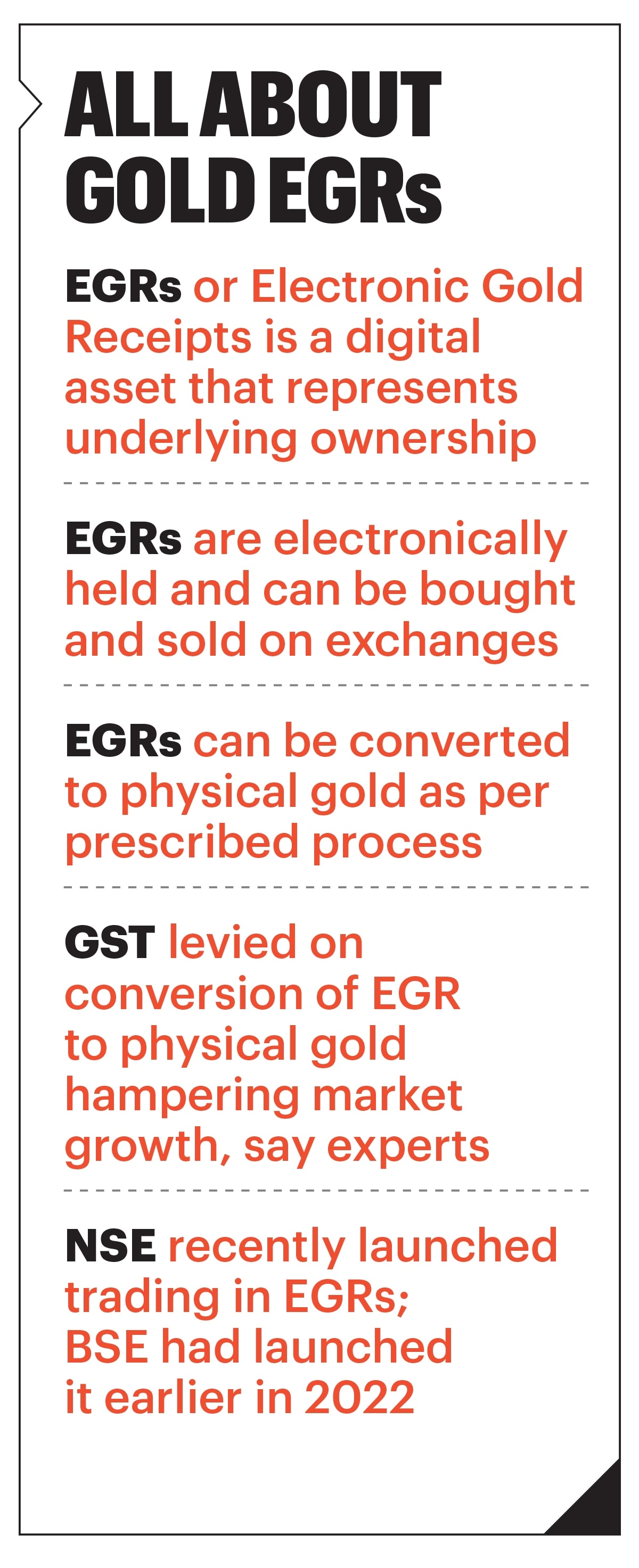
What could be a potentially game changer in this space is Electronic Gold Receipts (EGRs).
Essentially, EGRs are digital assets that represent underlying gold ownership. EGRs are exchange-traded securities; you hold them electronically, and can be traded on the exchange, thus enabling market-based price discovery. These can be converted to physical gold as per prescribed process. EGRs are a new concept in India. The BSE introduced it back in 2022, and in May 2026 the NSE began live trading in EGRs.
Sugandha Sachdeva, Founder, SS WealthStreet says there needs to be awareness about this product.
Kothari believes EGRs will be a good product for India and will change the way how India buys gold. However, there is an issue of GST (goods and services tax) that needs to be addressed if volumes pick up, he says.
Currently, trading of EGRs itself doesn’t incur any GST. However, while converting converting EGR into physical gold, there is a 3% GST that one needs to pay. Kothari says the industry is awaiting a clarification on this issue from the GST Council.
THE OUTLOOK
Despite near-term uncertainties, industry executives say the long-term story of gold as a safe haven asset and a hedge against inflation remains attractive. Sachdeva, for instance, believes gold prices could top `2 lakh per 10 gram in a few years.
If Indians continue to buy gold, one way of reducing the burden on forex and trade deficit would be to make recycling more attractive, say experts. Currently, only around 10-11% of the demand is met through recycling. People may be averse to selling or exchanging old gold, especially jewellery passed down generations. But many also hold gold coins and bullion, which could be exchanged or recycled.
Jewellers show optimism. They point there has been a noticeable increase in people exchanging old gold. At Jos Alukkas, exchange-led purchases now account for about 75% of the business and at Kolkata-based Senco Gold, it is 50%.
“We have seen a significant increase in old gold exchange activity over the past few years, and the trend has strengthened further as gold prices have risen. Consumers are increasingly looking to unlock the value of their existing gold holdings and use those proceeds to upgrade or purchase new jewellery,” said Suvankar Sen, CEO and MD of Senco Gold.
The organised recycling market is growing. For instance, Muthoot Exim, which opened 110 Gold Point outlets, is now targeting 200. These outlets are essentially collection centres, where one can walk in and sell their old gold. CEO Keyur Shah talks of the 3% GST on buying and selling gold, adding caution that this is what stops people from selling their gold, and slashing this would incentivise buying gold.
India’s appetite for gold shows little sign of fading. The question is whether the country can satisfy that appetite without worsening pressures on the rupee, trade deficit and forex reserves. Making recycling easier and alternative ownership models more attractive may prove just as valuable as the precious metal itself.
@TheNachiket


