










Ask around and there’s a good chance that at least one of your acquaintances has recently been to Spain or is planning to visit. Over the last few years, the country has emerged as a popular destination for Indian tourists. The vast majority end up travelling to Madrid or Barcelona, or to islands like Ibiza and Majorca. Few, if any, make it to Valencia—Spain’s third-largest city.
I recently found myself planning a Spanish holiday with an eight-year-old, which meant that outdoor activities and parks took precedence over museums, which the country is famous for. Valencia, located on the east coast of the Iberian Peninsula and an easy two-hour train ride from Madrid, proved to be the perfect weekend add-on to our trip to the Spanish capital.
Historically, the city was built along the banks of the Turia river, which was drained and rerouted after a devastating flood in 1957. The riverbed has since been turned into a central park—Jardine des Turia or Turia Gardens—which runs along the centre of the city, dotted with playgrounds and football fields. The most popular among these is Gulliver Park. The central attraction is a 60-metre reclining statue built in the likeness of Jonathan Swift’s popular character.
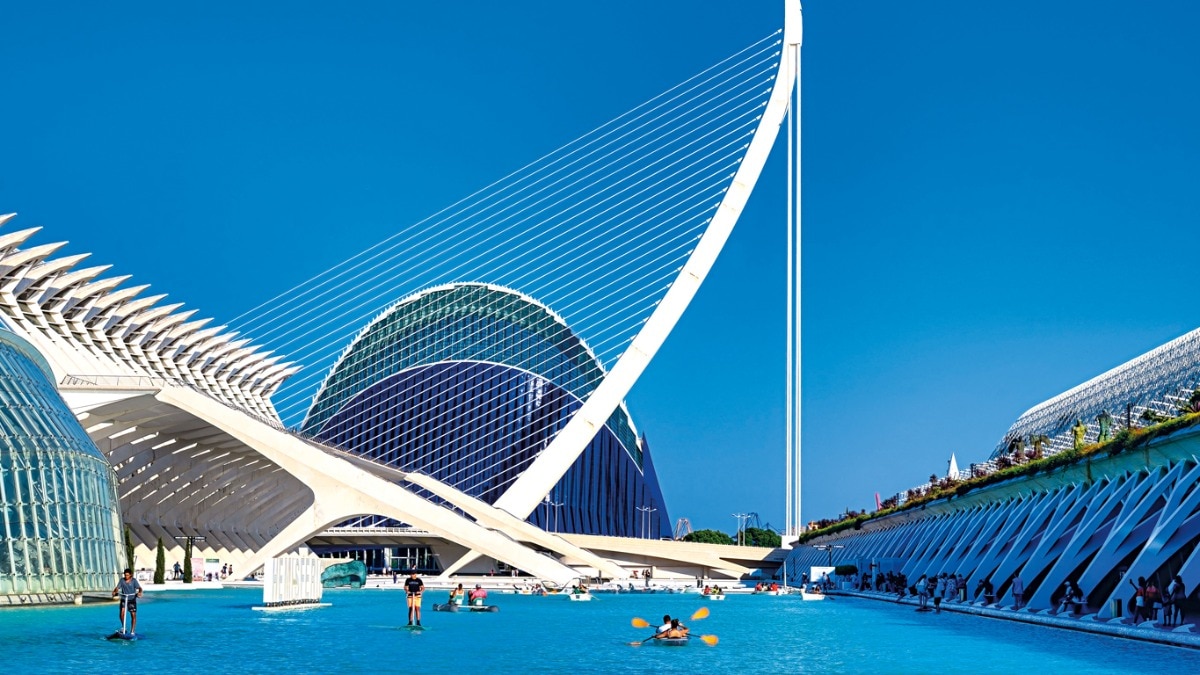
The City of Arts and Sciences (Ciudad de las Artes y las Ciencias) is located at one end of the Turia Gardens and is the primary reason that makes Valencia a child-friendly destination. Often called one of the most important modern tourist destinations in the city, it was also the only site from Valencia to feature on a recent 12 Treasures of Spain listing.
Once a Roman colony, traces of Roman architecture are spread across the city, especially around the central city area. This is interspersed with Islamic influences like the brilliant blue domes that are visible across the skyline, giving Valencia a distinct architectural style. The city is the capital of the Valencia autonomous community, with the port and manufacturing being the main drivers of the local economy. Tourism is important too, and Valencia is a popular destination for Spaniards and Europeans alike.
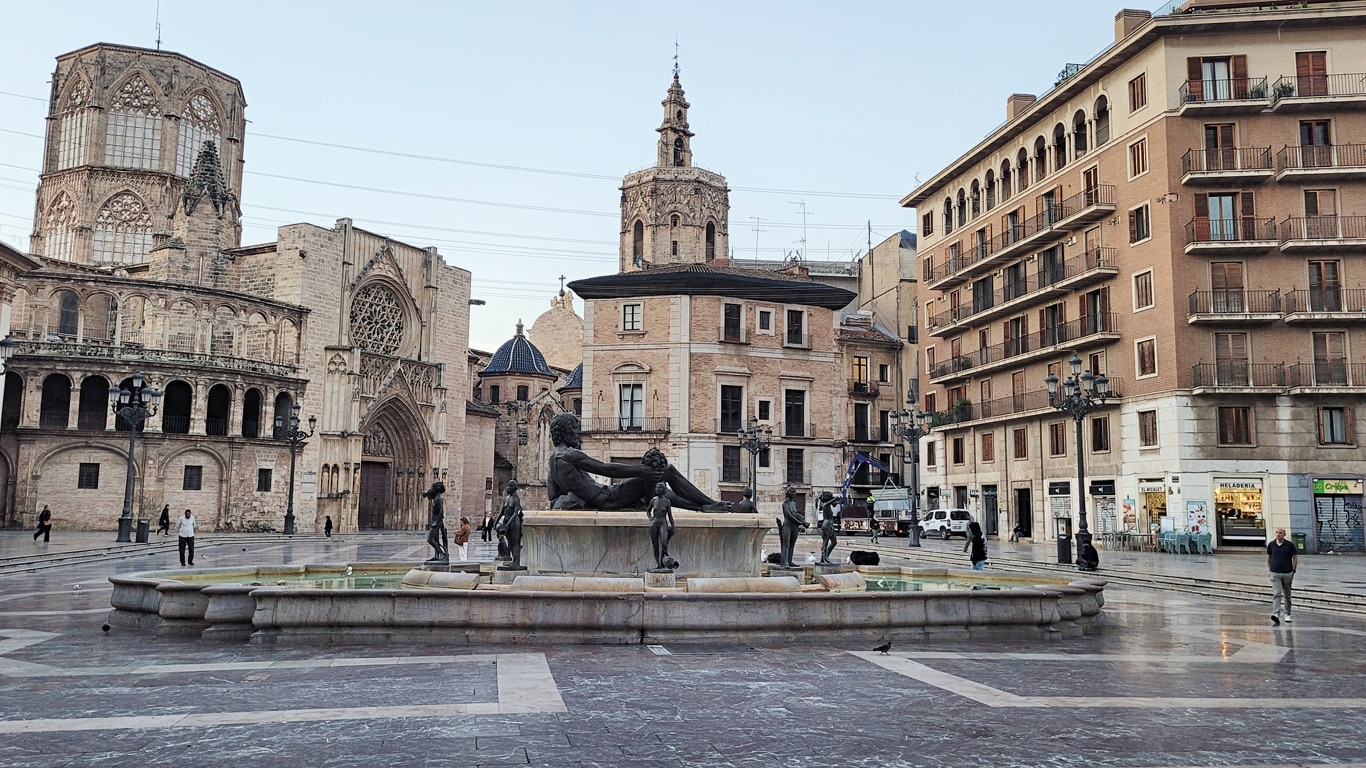
The Cathedral of Valencia, built in the 1200s, stands in the heart of the city and is an important destination on the global tourist circuit. It is home to the Holy Grail, the cup that Jesus Christ is believed to have used at the Last Supper. The chalice is housed in a separate chapel in the Cathedral and is accessible for a small fee as part of the cathedral tour. For the more adventurous ones, there’s the option of climbing just over 200 steps to the top of the Miguelete belltower for a birds’ eye view of the city.
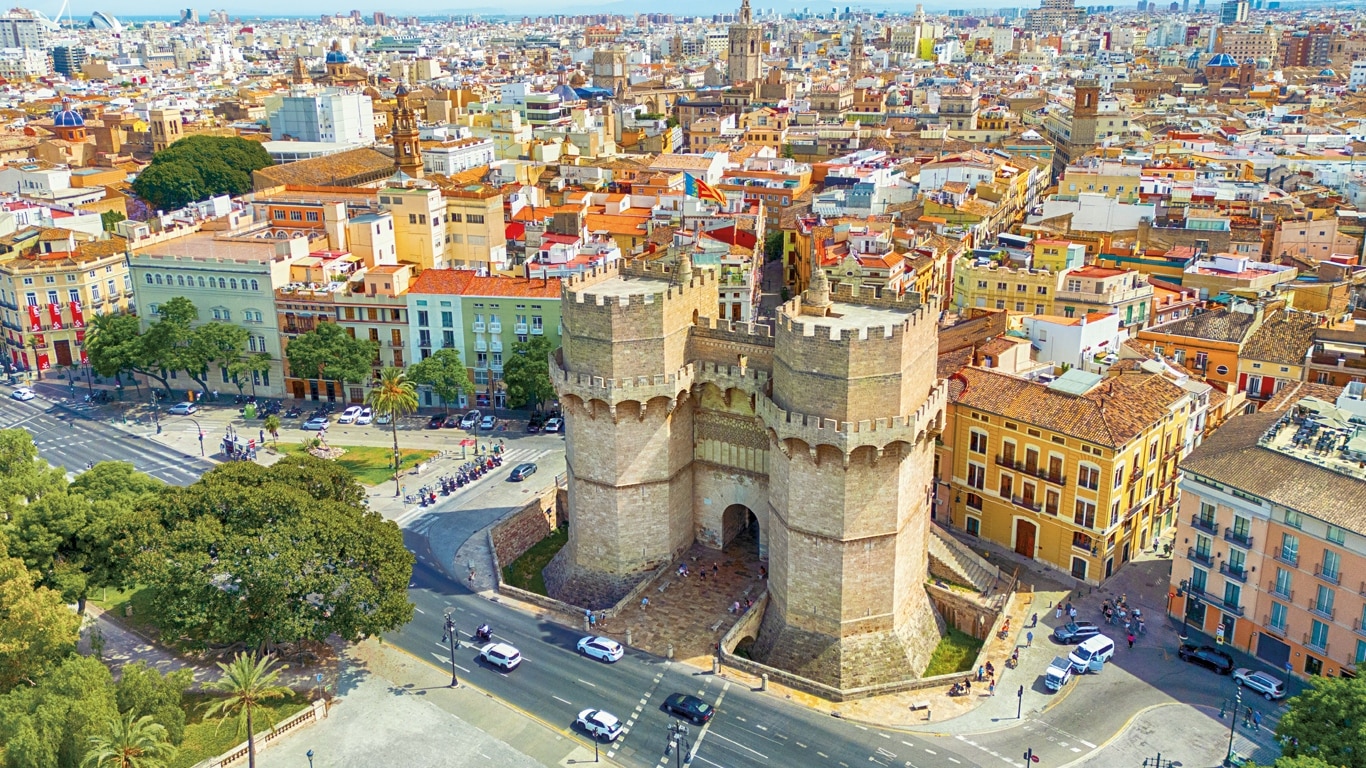
If that sounds too daunting, make your way to the Torres de Serranos or Serrano Towers, which were once a part of the ancient city wall.
The historic city centre or Ciutat Vella is a charming cobble stoned area which encourages visitors to walk around. The Cathedral and Basilica are located at Plaza del Reina, which is also dotted with cafes and souvenir stores. A short stroll gets you to Plaza del Ayuntamiento, home to the Valencia Town Hall and other historic buildings which have now been converted into government offices.
CULINARY HAVEN
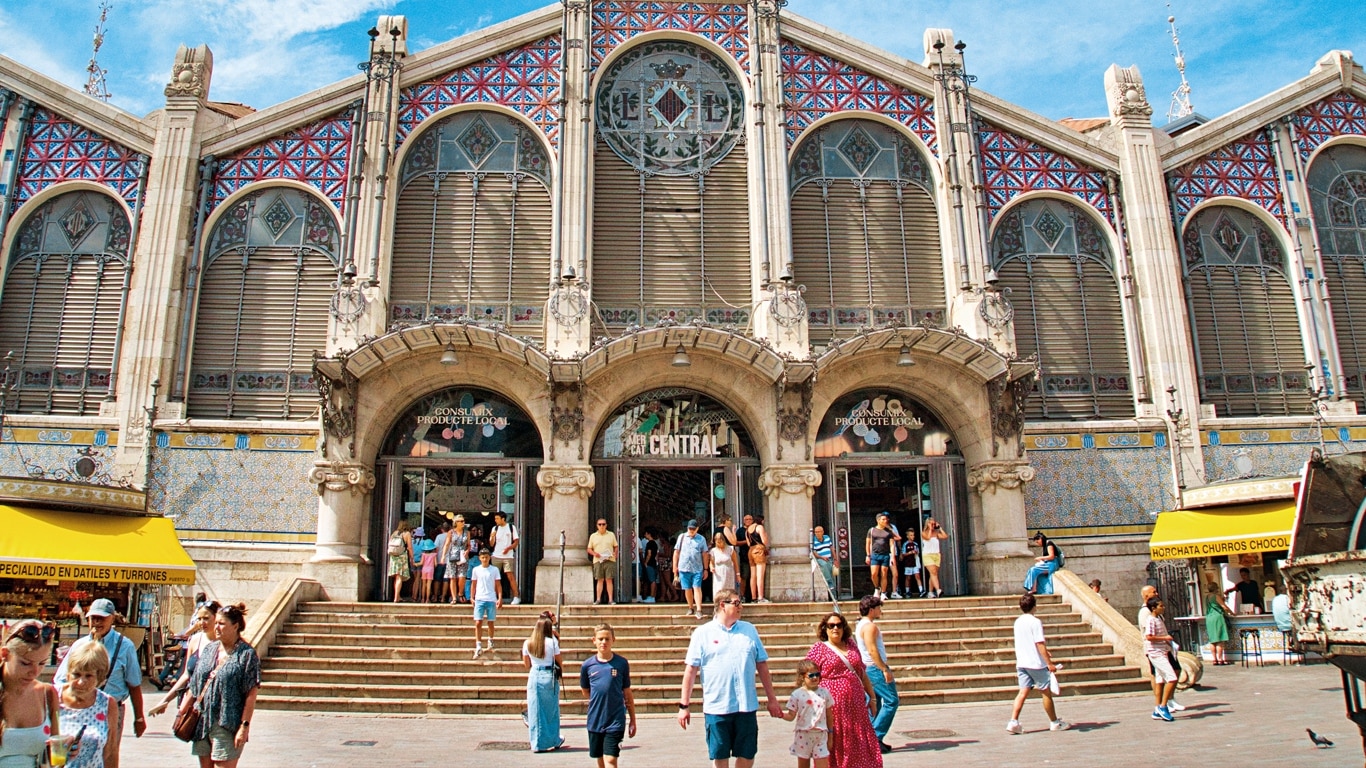
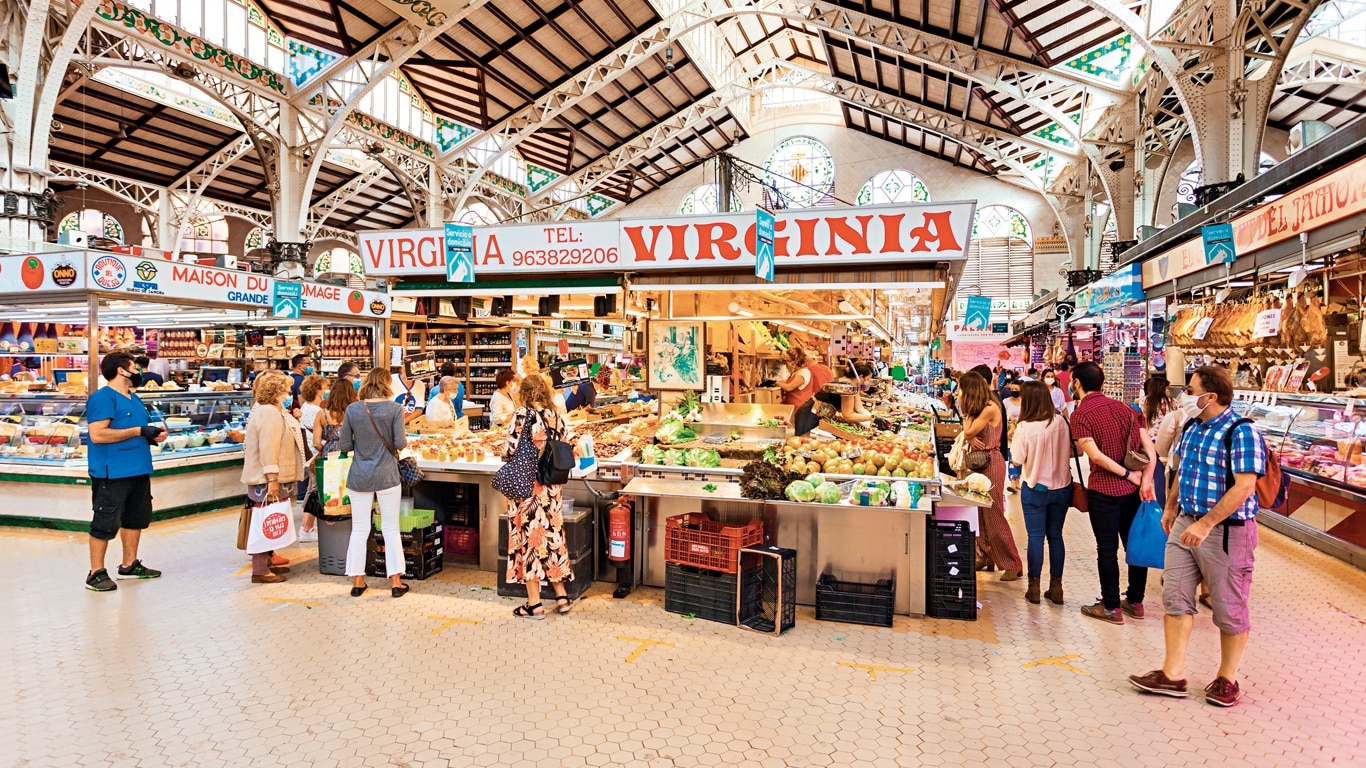
The Mercado Central, one of Europe’s largest and oldest fresh food markets, is a ten-minute walk from the Cathedral. Almost 100 years old, the market stalls sell a wide range of ingredients and local handicrafts—ranging from fresh meats and cheese to spice mixes. There are also stalls selling fruit cups and juices—the orange juice made from Valencia oranges is a must try. Further inside you’ll find food stalls selling local delicacies which are great for a quick bite.
Food is an integral part of the city’s history. Paella, one of Spain’s most popular contributions to the culinary world, was created here and every restaurant has their own version of this classic dish of rice cooked with meat or seafood. The city also has its own signature cocktail—Agua de Valencia—made from, what else, but Valencian oranges.
NATURAL WONDERS
For a change in scene, take a 20-minute tram ride to Malvarrosa beach. You can lounge on the beach or by one of the many eateries dotting the promenade or take a quick dip in the calm Mediterranean waters. You could also drive a bit further out to Albufera national park—the largest freshwater lagoon and wetlands in Spain. The best way to explore the area is to take a boat ride around the lagoon. The sunset trips tend to be popular but go earlier if you want to go birdwatching—the area attracts up to 300 different species through the year, especially waterfowl and flamingos.
Wind down over tapas back in the city or at one of the other food markets; it’s hard to go wrong with food here. Whether it’s culture, cuisine or outdoor activities, Valencia ticks all the boxes!


