










Twilight on a Garment
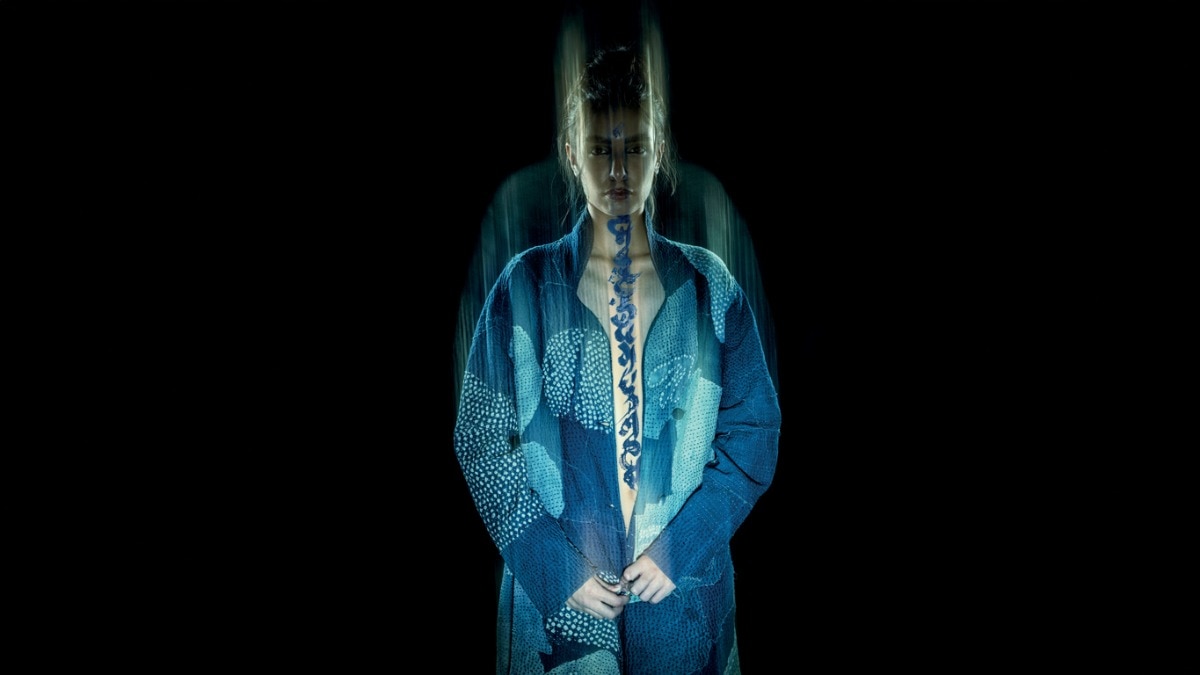
Imagine fabric created with threads that carry cultural memory. A garment that celebrates and honours several timeless craft traditions, dyed with organic, natural, indestructible colour that lives in the weave. In the age of excess, the 11.11 reversible Indigo kantha patchwork jacket created by Shani Himanshu and Mia Morikawa is fashion reimagined as meditative luxury—slow, sustainable, rooted, and deeply human. What appear as patches are fabrics that represent the best of Indian craftsmanship—handwoven khadi and spun denim made from indigenous cotton, deft and fine bandhini tie-and-dye work, and Ajrakh block prints are seamlessly fused using the kintsugi of intricate kantha stitches. Priced at Rs 1.1 lakh, the bespoke, limited-edition garment takes 120 days to create from weave to finish. It is then dyed in various shades of organic Indigo in a resurrected cold dyeing process. The blue hues broken by clouds of white bandhini patterns on a modern gender-fluid silhouette create the radiance of a deep evening sky. What you wear is an heirloom of culture and conscience.
Primordial Grace
Creativity is a thriving industry in Mumbai, like a tide incessantly rising towards commercial value and sales figures. Amidst that, design house Studio REN stands as a quiet testament to a different philosophy. For the visionary duo, Rahul and Roshni Jhaveri, who helm it, design is not an imposition but a response to a seeking of revelation.
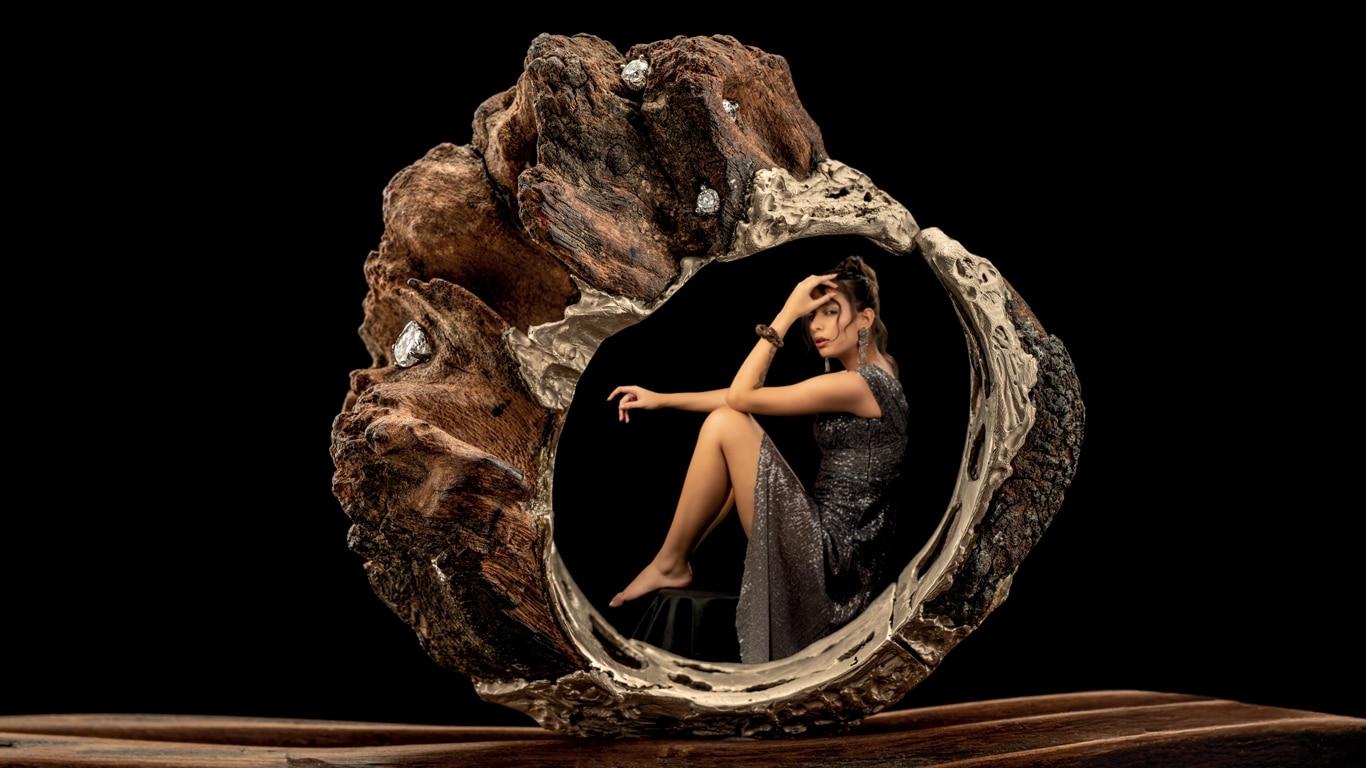
This ethos finds its purest expression in their celebrated Swayambhu range, a collection of jewellery where the final form is not entirely dictated by the designer's skill, but is created in collaboration with the elemental ‘hand’ of nature.
Swayambhu is a Sanskrit word meaning ‘self-manifested’ or ‘that which is born of itself.’ The Swayambhu bracelet, priced at Rs 18 lakh, is one among a series of wooden bracelets created with collected pieces of raw, gnarled, and antiquated wood that is melded with hand-sculpted, matte grey gold to complete the bracelet shape. The gold is not polished but burnished to an understated sheen, so that the wood remains the hero, explains Roshni. Ten freeform natural diamonds—artfully cut and polished around their original shape—are asymmetrically set in the folds of wood as an offering to its abstract grandeur. The single edition Swayambhu bracelet—each of which takes 8 to 10 weeks to finish—is beyond adornment, a meditation worn on the wrist.
The Black Pearl of Poultry
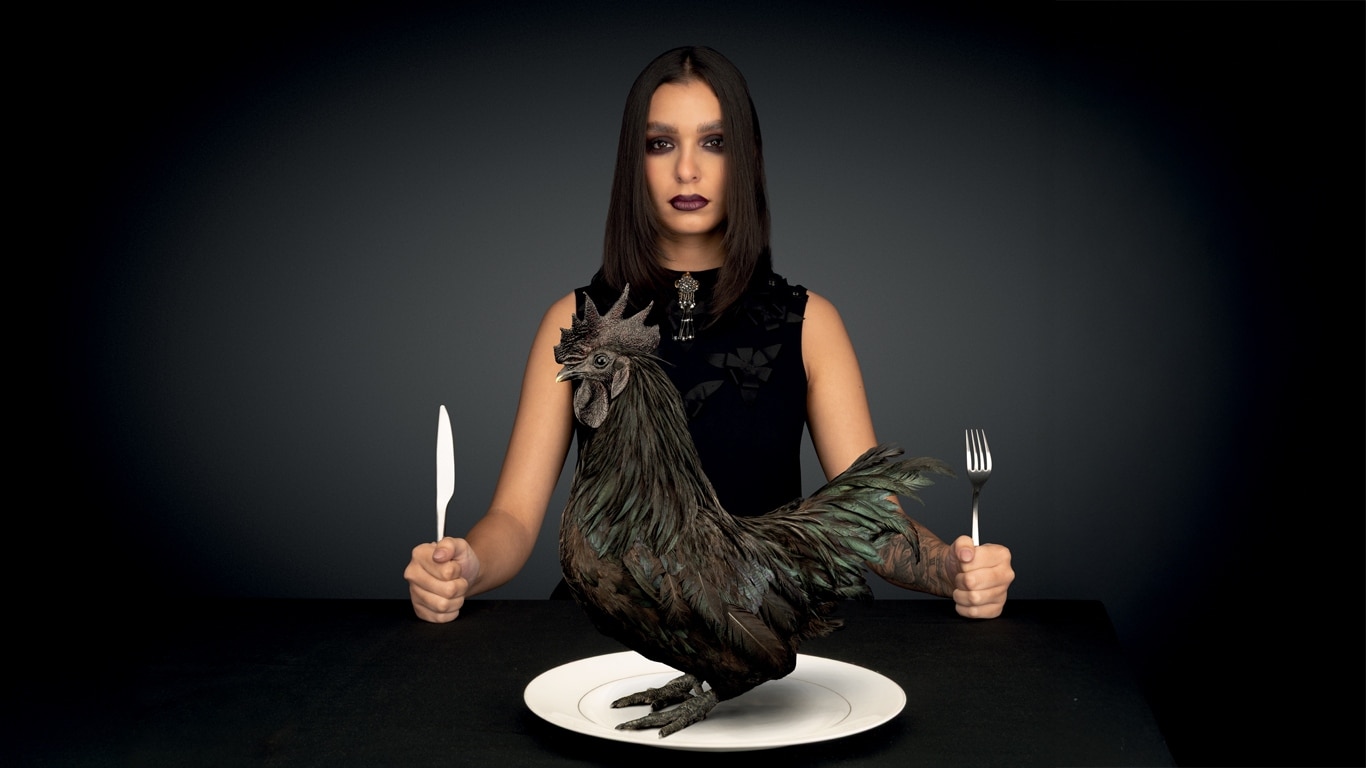
Devoted connoisseurs of non-vegetarian Indian cuisine, who scoff at the very mention of chicken, fall into a reverential awe at the mention of the Kadaknath chicken. Originally a wild fowl from the Dhar and Jhabua regions in Madhya Pradesh, the Kadaknath is a heritage breed with an enigmatic aura. Its striking appearance—jet-black feathers that gleam like obsidian and distinctly dark flesh—has earned it the local moniker kali masi, or the Black Pearl of Poultry. Its authenticity is so valued that it received the coveted geographical indication tag in 2018. A key aspect of its rarity is its resistance to industrial-scale production. “These are slow-growing birds that require large, free-range environments and a natural feed to develop their unique meat texture and nutritional profile,” explains Raja Singh of RB Farms, a Kadaknath breeder from Delhi. Available at Rs 1,200 per kg, the fowl’s real value lies in its exceptional nutrition. Its dark, lean meat is rich in protein and iron. Gourmands celebrate its complex flavour profile—“a taste at once robust and delicate, holding whispers of wild game,” describes Dhruv Oberoi, executive chef of Delhi’s Olive restaurant. This is complemented by famed medicinal qualities; it is traditionally believed to strengthen vitality, boost immunity, and aid recovery. To eat it is to partake of authentic tribal wisdom. On fine-dining menus, its presence signals discernment. A choice not just of meat, but of narrative, provenance and purity.

Mouthful of Ecstasy
A voracious bite of Manam Chocolate’s Roasted Almond Bark is the best way to savour rapture in Indian Cacao. Priced at Rs 3,120, this isn’t just a 21-inch-long chocolate slab but a manifestation of a chocolate revolution that has placed India firmly on the global Craft chocolate map. Founded by Hyderabad-based entrepreneur Chaitanya Muppala, Manam Chocolate is one of the finest single-estate chocolate makers in the country. It draws its strength from a state-of-the-art fermentation process, where the potential of beans from over 150 local farmers across 3,000 acres of West Godavari District in Andhra Pradesh is unlocked, revealing a distinct spectrum of flavour. At the heart of this constellation lies its signature: the Roasted Almond Bark. Hand-broken, irregular, and unapologetically elemental. Here, bold 60% dark chocolate mingles with creamy 45% milk and luxurious 40% white chocolate—all from West Godavari—studded with perfectly roasted almonds. A tasting of this trio unfolds like a symphony. Each chocolate’s distinct character harmonises and greets the palate with deep, rounded cocoa notes—slightly fruity, faintly smokey—before yielding to the warm, buttery crackle of toasted almond. As it lingers, citrus hints of orange and grapefruit emerge wrapped in the sweetness of jaggery and leaving behind a finish that is long, complex, and quietly intoxicating. It is chocolate you don’t simply eat, you remember.

Inner Light
Rhea mehta sculpts luminance into luxury. Mehta stands spotlit in India’s lighting landscape, creating light installations that blur the boundaries between art and illumination. Mehta’s design philosophy, shaped by her studies at ÉSAD Orléans in France, embodies what she calls “bold minimalism”—a delicate dance between controlled asymmetry and refined elegance. Her 2025 collection features the limited edition Tote lights, priced at Rs 2.95 lakh each. These feature three blown glass light spheres cradled in a delicate metal mesh tote bag, fashioned out of hand-woven steel wires. The metal weave becomes a canvas for light and shadow, while the three orbs serve as both an illumination source and an artistic statement. The true genius of this work is its responsiveness. As the orbs shift in the bag, their form and shape change, creating a fluid silhouette with no visible wires. The cadence of light shifts with the movement of the orbs, creating nuanced variations of luminosity.
Beyond its quirky design, that is a playful exploration of opacity and gravity, lies a more profound rumination on transience and permanence, the imperative to preserve and also express the inner light, the light we carry.
Dawn in Glass
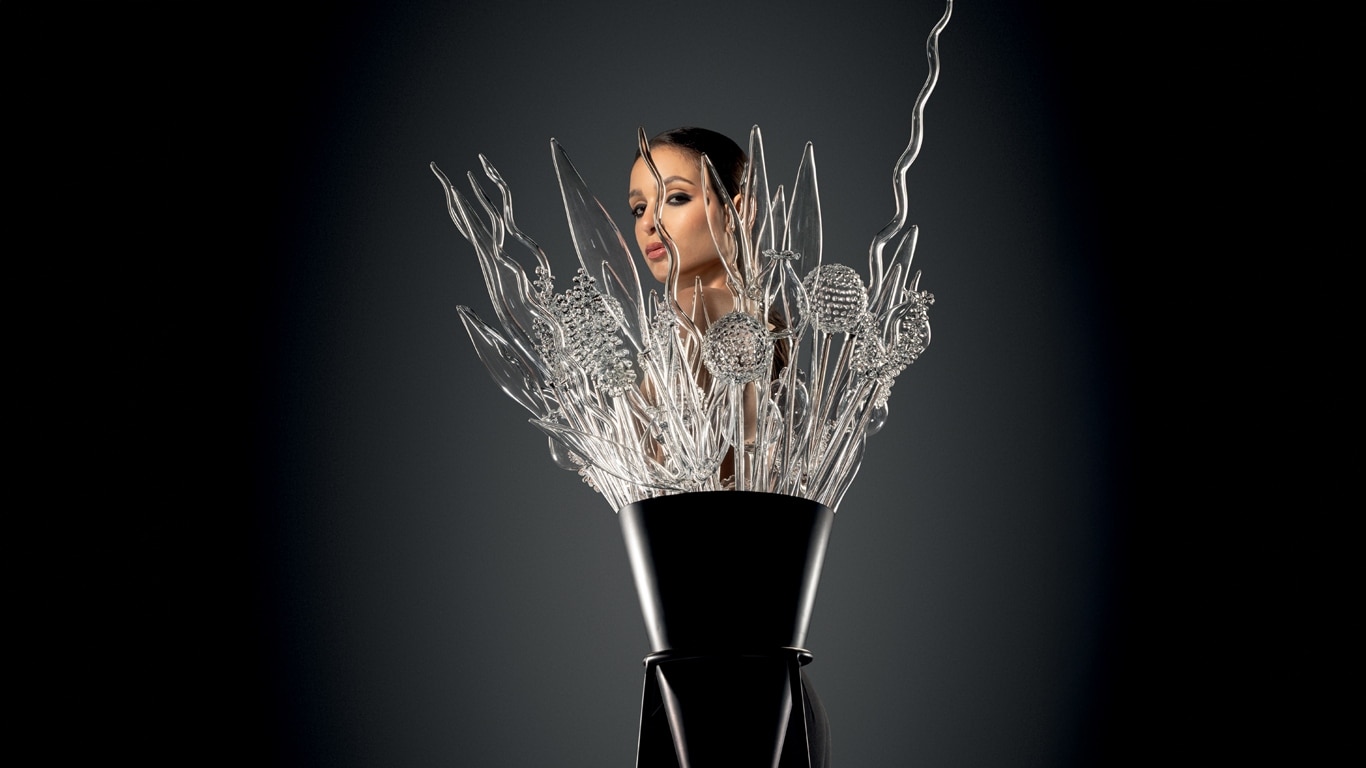
Rhea mehta’s customisable Jardin light installations transform ordinary spaces into quiet sanctuaries. Inspired by nature’s organic forms, each piece features 60 hand-blown glass tubes shaped into botanical silhouettes—delicate ferns, curved stems, and seed pods. Priced at Rs 3 lakh, these glass elements are arranged in bottom-lit sleek steel vases, creating delicately illuminated floral arrangements that evoke an arboreal calm. Light travels through each glass element differently, creating subtle variations in brightness and shadow that mimic the way sunlight filters through foliage. When illuminated, Jardin pieces create intimate strokes of light that feel both painterly and poetic.


