













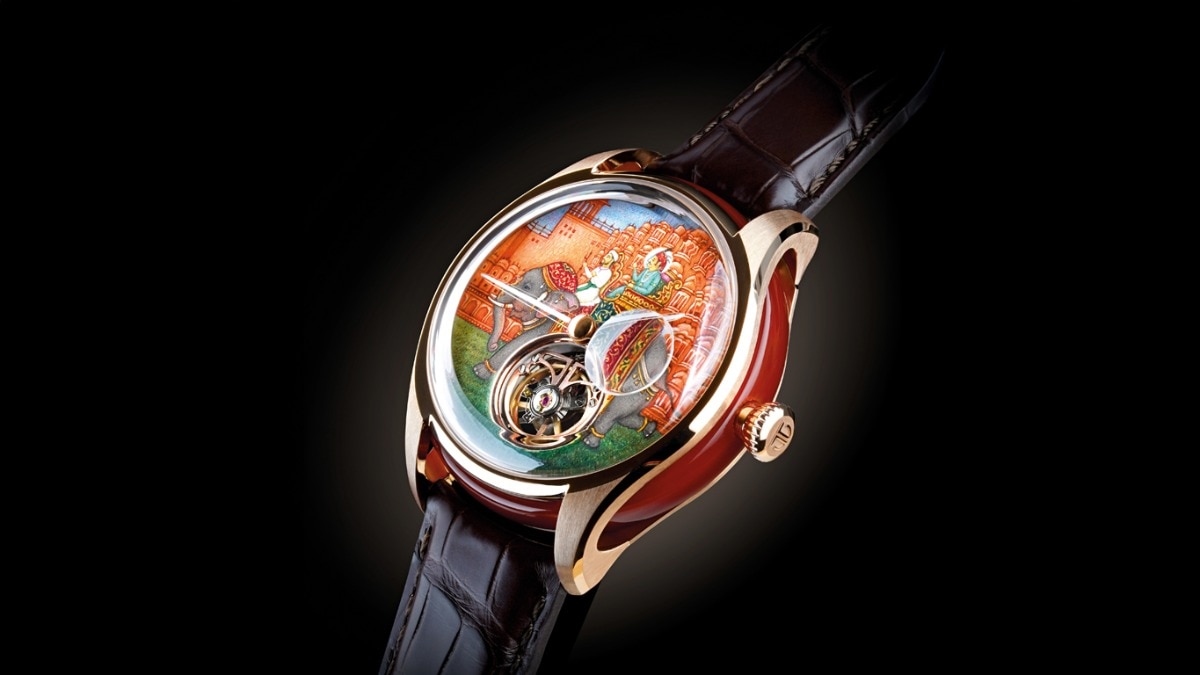
The latest entrant to the world of haute horlogerie doesn’t come from Switzerland or France but from India. What’s more, inspired by Jaipur, it did not begin with gears or gold, but with a squirrel-hair brush! It took three years, countless iterations, and the hand of Padma Shri awardee Shakir Ali—a master of traditional miniature painting—to complete the dial artwork for Jalsa, a limited-edition tourbillon watch from Nebula by Titan launched in early July this year. With only 10 pieces produced, each featuring hand-painted depictions of royal processions against Jaipur’s iconic Hawa Mahal, Jalsa marks Titan’s most ambitious foray into haute horlogerie.
At Rs 40.5 lakh (approximately $48,500), the timepiece reflects both Indian heritage and watchmaking precision—and represents Titan’s official entry into the 2025 Grand Prix d’Horlogerie de Genève (GPHG), the world’s most prestigious watchmaking competition.
The idea was seeded during a Titan delegation’s visit to the GPHG exhibition in Geneva nearly three years ago. “We collectively dreamt of this moment,” says C.K. Venkataraman, Managing Director of Titan Company. “With Jalsa, we are not just launching a watch, we are presenting a cultural artefact.”
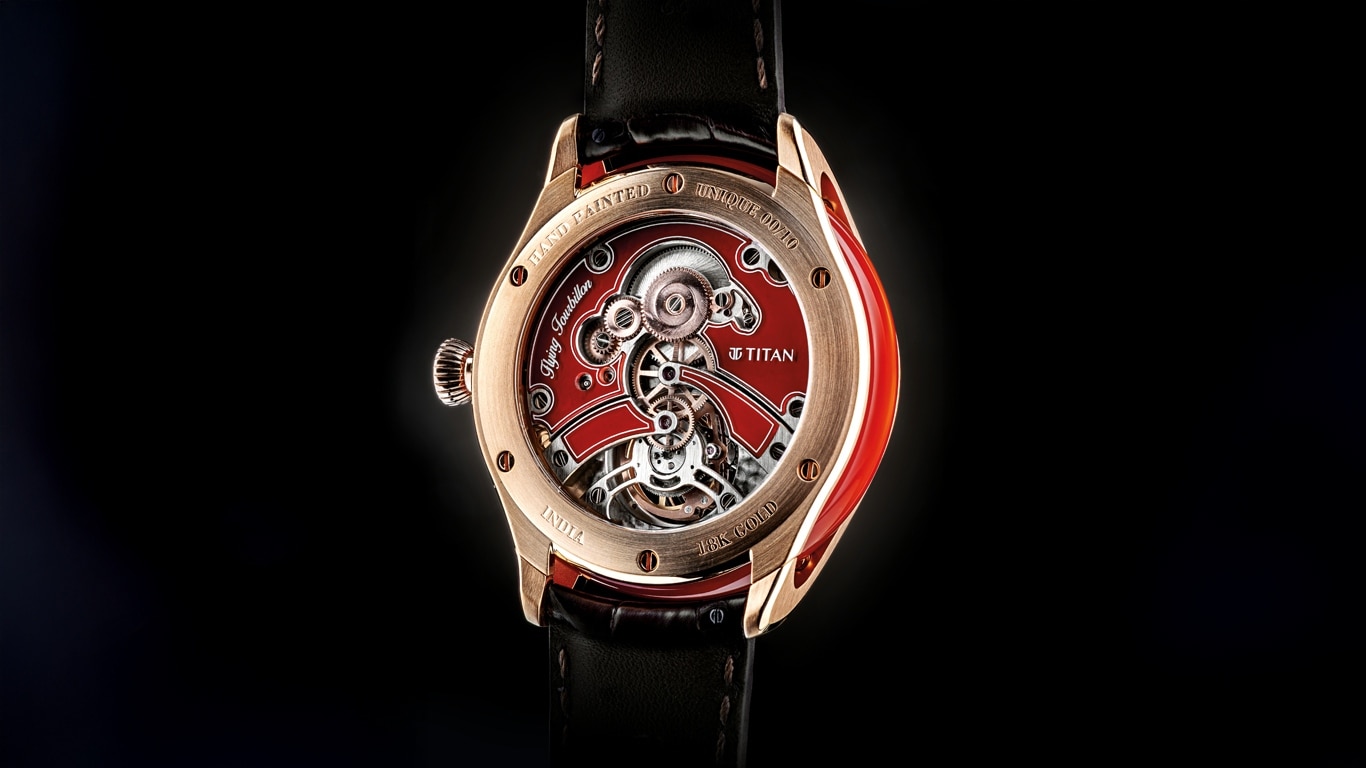
A tribute to 225 years of the Hawa Mahal, the watch’s marble dial is painted in natural gemstone pigments. The case is hewn from 18-karat rose gold, set with luminous red agate. Within, a flying tourbillon movement—engineered in-house by Titan—comprises 144 components and 14 jewels, anchored by bridges inlaid with the same crimson stone.
Design elements include a sapphire crystal exhibition caseback and a sapphire magnifier integrated into the minute hand’s counterpoise.
“Jalsa is more than design—it is conviction, legacy, and artistry woven into one extraordinary timepiece,” says Revathi Kant, Titan’s chief design officer.
While Titan’s foray is gaining attention, it’s not the only Indian brand attempting to redefine horology. Over the past decade, a number of boutique watchmakers—often working with little historical support—have sought to embed Indian history, design, and innovation into an industry that is largely European.
One of the earliest to take that leap was Gaurav Mehta, a former reinsurance professional and lifelong watch collector. In 2013, he founded the Jaipur Watch Company (JWC), the country’s first “bridge-to-luxury” boutique watch brand. “When we launched, the most expensive Indian watches were around Rs 15,000,” says Mehta. “My first model cost Rs 23,000. The retailers couldn’t understand why anyone would pay that much for an Indian brand.”
It took him two years to sell his first 300 watches. Today, JWC manufactures 3,500 watches annually and reports monthly revenues of around Rs 1.5 crore. “We’re aiming for Rs 25 crore this year,” says Mehta, “which will require production of 8,000 pieces.”
JWC has raised approximately Rs 3.5 crore in funding and is preparing for a fresh investment round to expand production.
In its early years, JWC had to import most components—cases, dials, straps, movements. Over time, the domestic supply chain has evolved, with Indian vendors now supplying high-quality stainless-steel cases, sapphire glass, leather straps, and bracelets. Movements, however, remain imported, primarily from Japan.
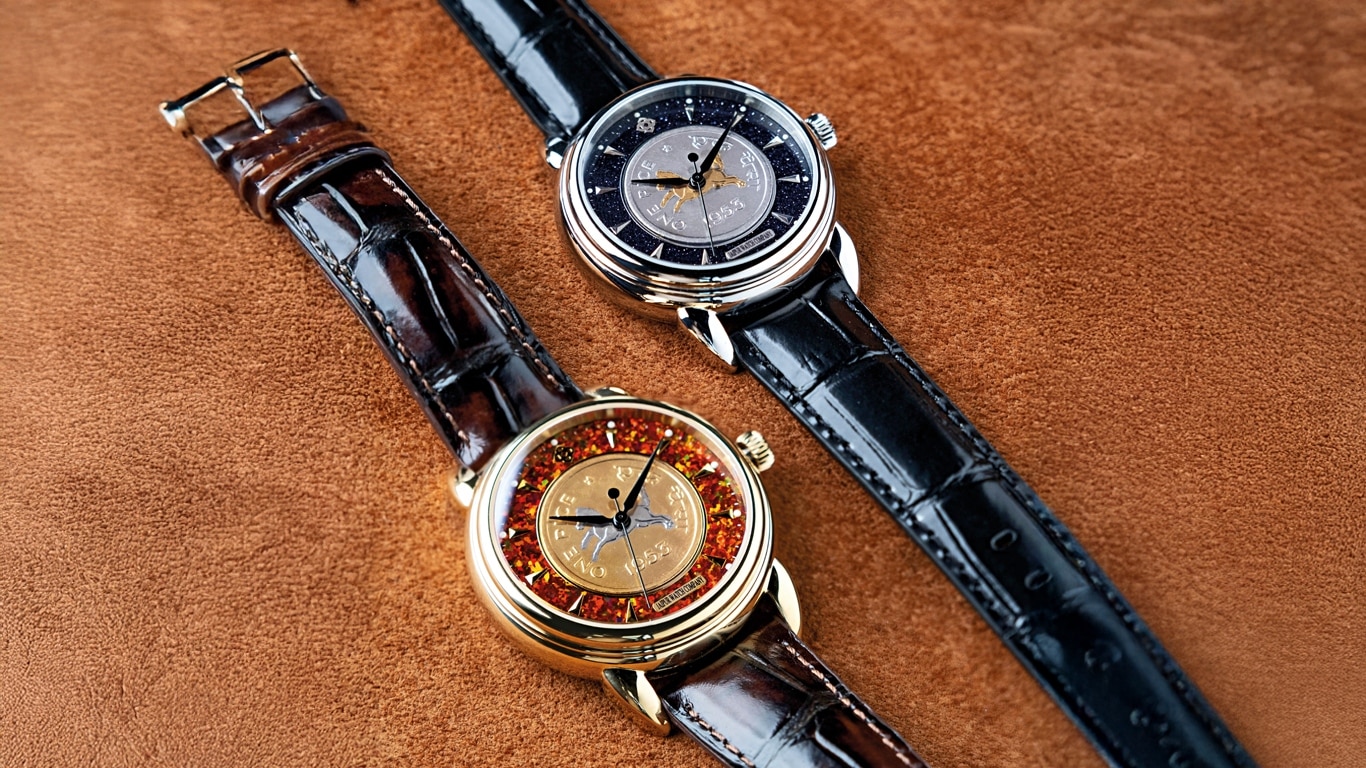
The company has carved a niche with its coin watches, incorporating historical Indian currency. One recent launch, The One, features a rare 1938–1940 Quarter Anna coin, a green dial with Devanagari numerals, and the country’s first adjustable mesh bracelet.
The design is heritage-inspired but contemporary in execution, an approach that defines the brand’s broader aesthetic. It retails for Rs 50,000.
“Our collections are like limited editions,” says Mehta. “We rarely remake designs once they’re sold out.” Among its bestsellers is the Bagh collection. The company’s pricing ranges from Rs 18,000 to Rs 2.55 lakh for diamond-studded or bespoke pieces.
In the south, another horological venture is quietly building a cult following. The Bangalore Watch Company (BWC), founded in 2018 by husband-and-wife team of Nirupesh Joshi and Mercy Amalraj, represents a different approach. Based in the same city that birthed HMT—Independent India’s first horological start-up founded in 1963—BWC draws inspiration from contemporary India: space missions, cricket, aviation, and the outdoors. “We wanted to change the grammar of Indian watch design,” says Joshi. “We pick themes that we are confident will create a cultural resonance with our audience for decades.”
With an annual production of around 1,500 pieces priced between Rs 1 lakh and Rs 2.5 lakh, BWC has kept its scale small, but ambitions focused. The brand exclusively sells online and through a private studio in Bengaluru. It imports the movements from Switzerland.
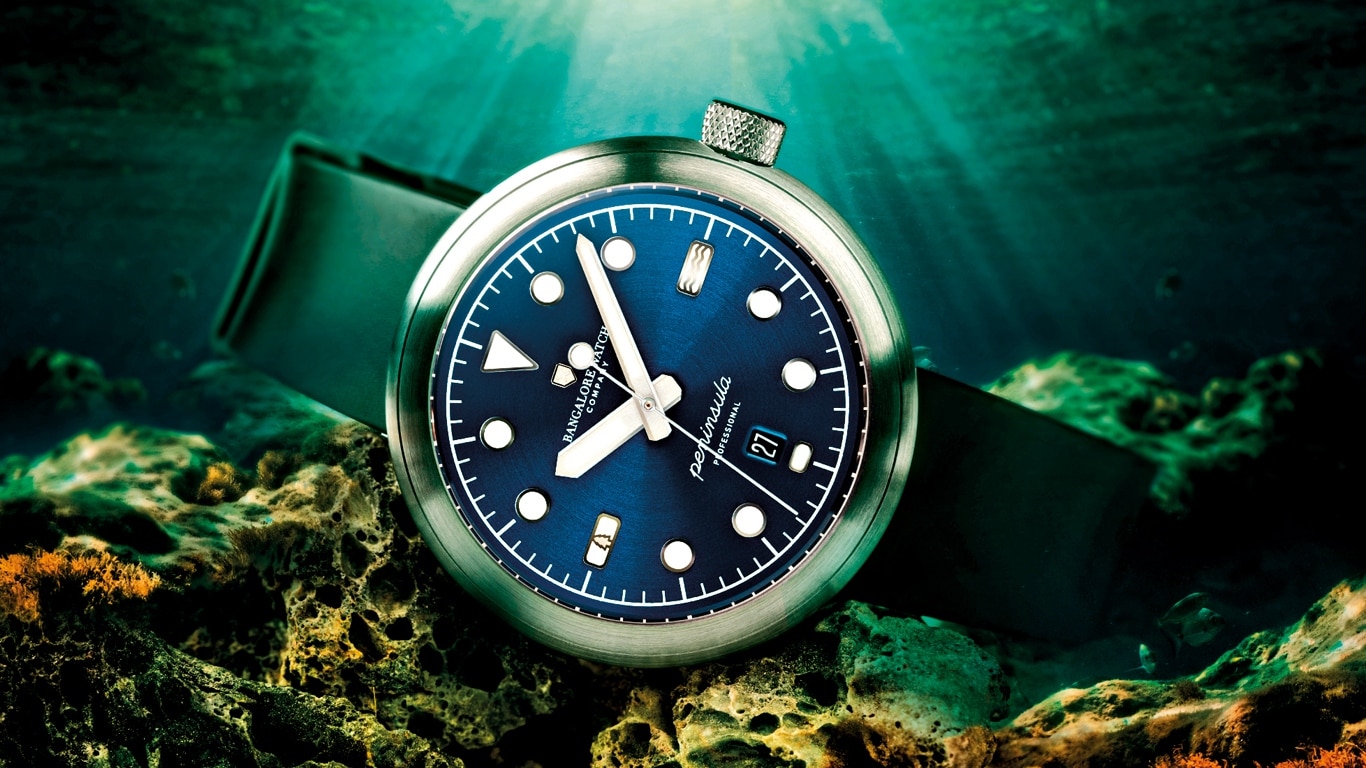
BWC’s Apogee range, launched last year, became the first Made-in-India timepiece qualified for space flight, with prices ranging from Rs 92,000 to Rs 2.4 lakh. Another collection incorporated recycled metal from aircraft carrier INS Vikrant into its casebacks. This year, the brand will showcase two watches from its Peninsula collection at the GPHG—marking its debut at the event.
Nearly 35% of BWC’s sales come from international buyers, and while the company remains self-funded, Joshi says they are now preparing for a formal fundraising round.
As these independent watchmakers gain traction — from Jaipur to Bengaluru—a new chapter is being written in Indian horology that blends heritage with innovation.
@smitabw


