


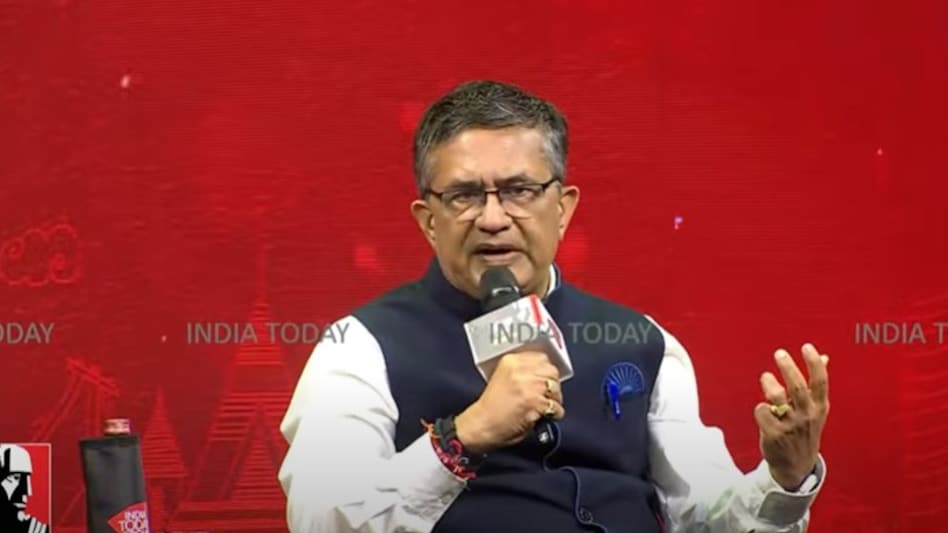
 Ashish Chauhan remarked on the way Indian markets are anchored in trust. Retail participation has exploded in the last decade, rising from just 1.67 crore investors in 2014 to over 12 crore unique investors toda
India’s markets are entering a self-reliant new era, driven by a record 12 crore investors, rising domestic savings, and a young, tech-savvy population. Despite global volatility and shifting foreign investment flows, the country’s growth story remains structurally strong, anchored in trust and domestic participation. According to Ashish Chauhan, MD and CEO of the National Stock Exchange (NSE), this combination of factors makes India uniquely positioned for long-term wealth creation, even as speculative behavior requires careful vigilance.
Speaking at the India Today Conclave in Mumbai, Chauhan said that for India, it will only be up amid volatility and global shocks. He added that Indian investors are entering a new era of opportunity and volatility. The global order is shifting, foreign money is no longer the dominant force in local markets, and India has firmly taken its seat at the front table. With 12 crore investors, rising domestic savings, and a young, tech-savvy population, India’s markets are entering a self-reliant new era, he adds.

 Brief pause ends: US hits Iran again after ballistic missile attack on American troops in Jordan
 Iran wants to bulk up its defence amid war with the US, Israel. China lends a helping hand
 Top stocks in news: Indo-MIM, Eicher Motors, Xtranet, PNB, Dabur, MTAR, Waaree, Lohia Corp
 Waaree, Kalyan Jewellers, Welspun Corp: Stocks to trade— Price targets, stop loss & more
 These two countries consume 70% of the world’s coal…and it’s who you think it is
 How To Build The Perfect Mutual Fund Portfolio | Active Vs Passive Strategy Explained
 Why Ajay Bagga Is Bullish On EMS Stocks | PLI, Semiconductors & India's Growth Story
 Why Term Insurance Is Better For Family Protection Than Traditional Life Insurance
 "RSS Controls Education, Dharmendra Pradhan Is Just A Symbol!": Rahul Gandhi’s Scathing Attack
 KOSPI Crash Explained | ₹152 Lakh Crore Gone, AI Stocks Under Massive Pressure
 Juniper Green Energy IPO opens today: Should you subscribe? Check price band, GMP & review
 KPIT Tech share price at Rs 470 or Rs 815: What JPMorgan, Investec, others say
 KPIT Technologies: Subdued expectations but brokerages expect up to 17% upside in stock
  MTAR Technologies share price under pressure, can stellar Q1 earnings lift sentiment?
  Vedanta Aluminium dividend, Q1 results today: Net profit to rise 3x? Share price targets
 Air India AI-171 crash: 'No abnormality found in fuel switch,' says Aviation MinistryJuniper Green Energy IPO opens today: Should you subscribe? Check price band, GMP & review
 Ram Temple donation theft row: Temple project manager, engineer Jagdish Aphale picked as secretary by trustKPIT Tech share price at Rs 470 or Rs 815: What JPMorgan, Investec, others sayKPIT Technologies: Subdued expectations but brokerages expect up to 17% upside in stock










