


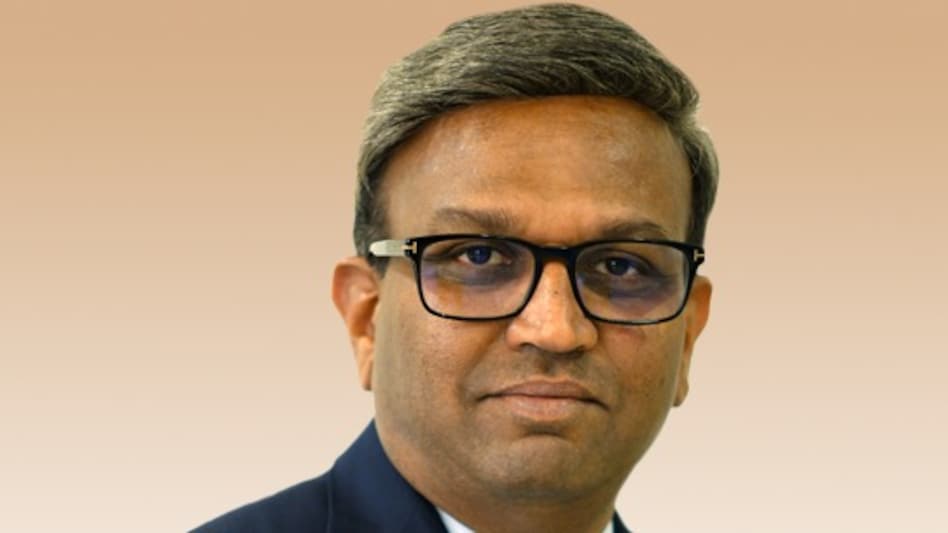
 NSE will emerge as a very important institution in the commodity derivatives space in the years to come, Chief Business Development Officer Sriram Krishnan said.
Electricity futures are already traded in Europe, the US, Australia, and China. As the third-largest producer of electricity in the world, India must have these products too, NSE Chief Business Development Officer Sriram Krishnan said, following the recent launch of electricity futures. In an interview with Business Today, he said the product is expected to grow significantly over time and become a key offering for NSE. Edited excerpts:
What is the case for introducing electricity futures in India? How will they help manage price risk effectively?
To understand the need, one must first understand how the spot electricity market works. In India, we have a framework called the Day-Ahead Market (DAM), offered by three exchanges: the Indian Energy Exchange, Power Exchange of India, and Hindustan Power Exchange. These exchanges operate with 96 time slots—15-minute blocks spread across 24 hours.
If you want to buy electricity for a specific 15-minute slot tomorrow, you have to place your order today. For instance, if you are a distribution company anticipating higher demand tomorrow morning between 8:15 AM and 8:30 AM, you need to place that order today. This means your power procurement cost fluctuates daily.
It is like going to a movie theatre and watching the same movie at the same time on two different days—but paying a different ticket price each time. That shouldn’t happen. To deal with such price volatility, we need a tool to manage the risk.
This is the gap NSE is trying to address by launching electricity derivatives. Electricity futures will allow participants to manage price fluctuation risks effectively.
Futures provide a way to plan better by locking in prices. Otherwise, costs can spiral unpredictably. And with so many new entities in India that are power-hungry such as data centers, shopping malls, and manufacturing units, this becomes even more crucial.
That is why electricity futures are a very important instrument today.
Who is the primary target for this new product?
Power producers are one of the key targets. So are distribution companies. Then there are industrial consumers, open access consumers, and aggregators. The sellers include not only traditional generators but also hydro, renewable energy producers, and captive power plants.
A company with a captive plant, say a cement manufacturer, can sell surplus electricity if they anticipate lower demand next month. There are many reasons why different players would want to use electricity futures.
Given that electricity futures are a new offering and liquidity may be limited initially, what steps is NSE taking to boost market participation?
As with any new product, we are allowed to have market makers. NSE already has a market maker for electricity futures who provides two-way quotes, making it easier for participants to buy and sell in the initial stages.
As liquidity builds, the role of the market maker will naturally reduce, and the market will become self-sustaining. This is an important step NSE has already taken—and that is why we are already seeing good two-way quotes with decent spreads on the platform.
With India aiming for 50 per cent of its installed power capacity to come from solar and wind by 2030, how will NSE’s new initiative support this energy transition?
As India transitions, renewable energy producers will also need avenues to sell their power effectively. The spot market remains driven by demand-supply dynamics and seasonal fluctuations, making it even more important to have electricity futures.
This is not a new product globally. Electricity futures are already traded in Europe, the US, Australia, and China. As the third-largest producer of electricity in the world, India must have these products too.
Tell us more about this new offering?
This is a small beginning for NSE, similar to when we launched equity derivatives over two decades ago. Back then, people questioned the need for such products, and we had to explain why portfolio hedging was important.
Fast forward to today, and the equity derivatives market has grown so much that we are talking about introducing curbs to manage its size. Electricity futures too will become a large product over time.
In Europe, power derivatives trade at volumes 3–4 times higher than actual physical consumption. Do you expect a similar trend in India?
Absolutely. That is what we believe will happen in India as well.
What kind of contribution do you expect this segment to make to NSE’s revenue mix over the next five years? Is there an aspirational goal or target you’re working towards?
In commodities, NSE has been a bit behind. For many years, we did not focus on commodity derivatives. But over the last two years, we have ramped up significantly. Since October 2023, we have nearly all the products available on MCX, including crude oil and natural gas futures, which now see a good number of trades on NSE.
While crude oil and natural gas are crucial, we also want to focus on what the country needs. And for that, feedback from market participants is essential. Electricity futures is one such product where we received very strong feedback—it solves a real, burning issue.
NSE ranks second globally in the equity segment by number of trades. Do you see a similar leadership position in electricity derivatives, given your early-mover advantage?
Yes. In electricity derivatives and commodities, the way we are building the market and focusing our efforts, I believe NSE will emerge as a very important institution in the commodity derivatives space in the years to come.

 Resignation of part-time chairman a challenging event; raised questions on lender's governance standards: HDFC Bank MD and CEO Jagdishan
 '1,000 missiles are locked, loaded': Trump's latest threat to Iran could hit fuel prices worldwide
 Akasa Air pauses Noida–Navi Mumbai route weeks after launch amid network review: Report
 Apple sues OpenAI over alleged trade secret theft: What happened and why it matters
 HDFC Bank bets big on AI with in-house GenAI platform 'Neev'; plans to transform customer service, lending, operations
 FM Sitharaman Targets 5,000 GCCs By 2030 As Global Giants Like Air Liquide Expand Into India!
 The Tech Gear Show #10 | Tech News, ALT Buds Open Review, Nothing Phone (4b), Noise Rep Hands-on
 #Podcast Ep15: BMW India President Hardeep Singh Brar On EVs, Luxury Cars, Ethanol & Mobility Future
 Banks, Techs Rally On Dalal Street As Nifty Jumps
 PM Modi Arrives in Auckland For First State Visit To New Zealand In 40 Years; Focus On Trade & Ties
 4 Nifty FMCG stocks to buy after 32% selloff: What past 4 big falls since 2004 hint at
 Persistent Systems fixes record date for Rs 18 final dividend; check details
 DMart Q1 earnings preview: Net profit, EBITDA may grow in double digits; demand outlook among key things to track
  Sensex, Nifty extend gains; Rs 5.8 lakh crore investor wealth added; what's ahead?
 Swiggy says FSSAI prohibition order on Toing was linked to licence update; stock slips 3%









