


 Crisil estimates revenues of traditional players fell about 15% in the second half of FY25 from the first, due to lower trading activity and streamlined brokerage charges.
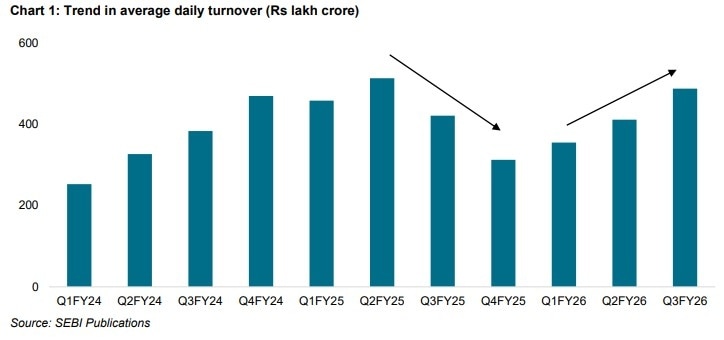
A series of SEBI measures to curb speculative activity, followed by the proposed increase in securities transaction tax (STT) on derivatives in the Union Budget 2026-27, have reduced market activity. Average daily turnover (ADTO) fell about 25% in the second half of the last fiscal, contributing to a 6% year-on-year decline in the broking industry’s revenue in the first half of FY26, according to a recent analysis by Crisil Ratings.
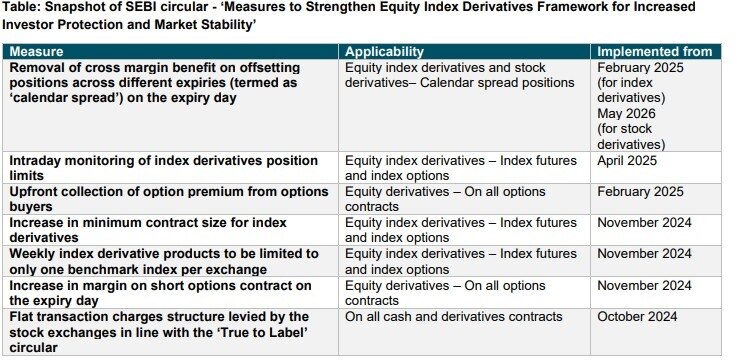
The rating agency noted that the regulatory tightening over the past few quarters has materially altered the operating environment for broking firms. Measures introduced by the Securities and Exchange Board of India (SEBI) — including curbs on weekly expiry products, higher margins on short options, upfront collection of option premiums and limits on index derivatives — were aimed at protecting retail investors and improving market stability. However, these changes have also led to a sustained moderation in trading volumes across cash and derivatives segments.

 'Kolkata has become a city of old age pensioners': FM Swapan Dasgupta on Bengal's decline and skill shortage
 Trump made 1,000-plus trades in June: Here's what he bought and sold
 Escalating Hormuz crisis: Boris Johnson sees India as key to US exit strategy in Iran
 Gold jewellery to property: Radhika Gupta on what actually counts as an investment
 Delhi H1N1 outbreak: No cause for panic, currently circulating strain not a new one, says ICMR
 Commuted Vs Uncommuted Pension: Know The Difference And How Each Is Taxed After Retirement
 Motor Insurance Add-Ons You Actually Need Explained: Zero Depreciation, RSA & Return-To-Invoice
 No Claim Bonus Explained: When Should You Claim Or Pay For Repairs Yourself?
 Motor Insurance Premium: What Factors Determine How Much You Pay?
 How Is Retirement Income Taxed For Senior Citizens? Key Rules Explained
 Hold YES Bank, Federal Bank; buy HDFC Bank, Kotak Mahindra, Axis: ICICI SecuritiesTrump made 1,000-plus trades in June: Here's what he bought and sold
 ABH Healthcare IPO: Check key dates, price band, issue size, latest GMP, listing details & more
 India stocks lag global markets in 2026: BofA data shows 9.1% decline in USD terms
 'FOMO, fixed return': SEBI proposes revamped ad code for bond portals from misleading investorsDelhi H1N1 outbreak: No cause for panic, currently circulating strain not a new one, says ICMRGold jewellery to property: Radhika Gupta on what actually counts as an investment
 He left Bihar with ₹1,000. Six years later, he won a ₹3.5 crore Georgetown scholarship
 Landmark hit: Iranian hackers pull off historic cyber attack to paralyze British power plant Commuted Vs Uncommuted Pension: Know The Difference And How Each Is Taxed After Retirement