


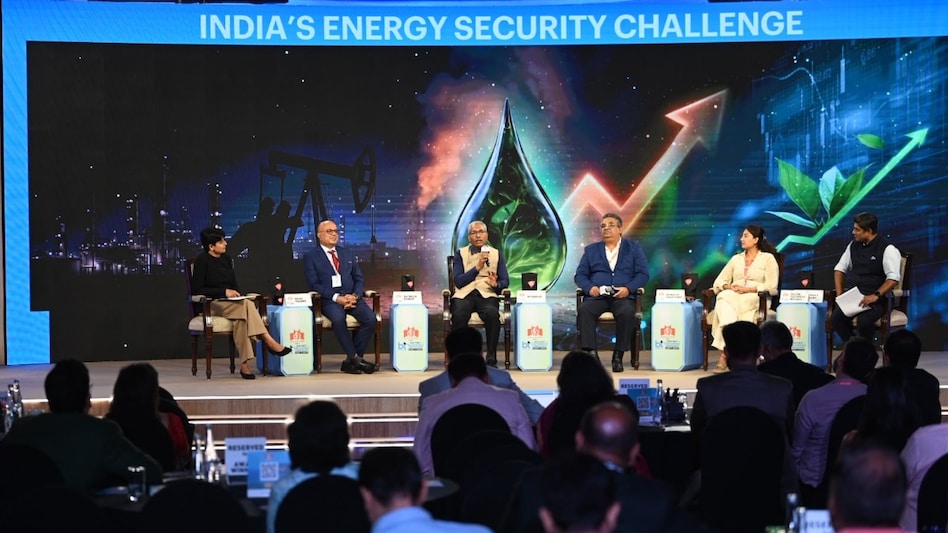
 Experts said India’s energy future will depend on a balanced strategy that combines traditional energy sources, renewable power, technological innovation, and stronger supply chains.
India’s growing economy requires a reliable and secure energy supply. At the BT India’s Most Sustainable Companies Summit and Awards, industry experts discussed the country’s energy security challenges and the steps needed to meet future energy demands while moving towards sustainability.
Speaking at the summit, Ratnesh Kumar, Executive Director of ONGC, highlighted that India remains heavily dependent on energy imports, with nearly 90% of its oil requirements coming from overseas. He noted that the era of easy and cheap oil is over, making deep-water exploration increasingly important.
FAQs
Why is energy security a major concern for India’s growing economy?
Energy security is crucial for India because the country’s fast-growing economy needs a steady, reliable and affordable supply of energy. With nearly 90% of its oil needs met through imports, India remains vulnerable to global price shocks and supply disruptions.
What role do domestic oil and gas exploration projects play in India’s energy future?
Domestic exploration is important because it can reduce India’s dependence on imported fuel. Experts at the summit said regions such as the Andaman area and the east coast have strong potential for oil and gas production, making deep-water exploration increasingly significant.
How is renewable energy contributing to India’s energy mix and sustainability goals?
Renewable energy is becoming a key part of India’s long-term energy strategy. Although fossil fuels still dominate the energy mix, government support has helped India cross 50% renewable energy capacity, with solar power emerging as a major contributor.
What did experts say about India’s strategy for achieving long-term energy security?
Experts recommended a balanced and multi-pronged approach. This includes expanding domestic oil and gas production, investing in renewable energy, improving infrastructure, and developing future-ready sources such as compressed biogas, hydrogen, wind and solar power.
What new challenges could affect India’s clean energy transition?
One major challenge is dependence on imported critical minerals such as lithium, cobalt and nickel, which are essential for clean energy technologies. Experts said India must strengthen its mineral supply chains to secure long-term energy security and support the shift towards electrification.

 'Do what India needs': Noel Tata charts new institution-building plan for Tata Trusts
 EU's AI Act goes live: Landmark law hits chatbots, deepfakes & high-risk algorithms with tough rules
 Why India’s Great Nicobar port faces fierce competition from Asian megaports
 Did customs delays sink India's 2005 AMD semiconductor project? Vaishnaw says: 'Learnt from past attempts'
 $100,000-a-month: Trump Media unveils Truth API for investors, draws calls for SEC probe
 Why Are I.T. Stocks Returning To PMS Portfolios? Expert Explains The Value Opportunity
 Buying Term Insurance? Never Hide These Health Details Or Risk Your Claim Being Rejected
 India’s Logistics Game Is Changing: The Big Infra Push Explained
 Active Vs Passive Mutual Funds: Which Gives Better Returns For SIP Investors?
 IRFC CMD Manoj Kumar Dubey Reveals Top Funding Priorities Beyond Railways & IRFC 2.0 Vision
 Astra Microwave shares: Analyst on what should investors do post rally in defence stock
  Oswal Pumps shares to test Rs 290? Expert flags damaged chart structure, advises exit
 Mazagon Dock shares: Brokerages see up to 37% upside after Q1 FY27 results; check latest target prices
 Mukul Agrawal signals exit this multibagger stock after nearly 9x rall; is it still a buy?
 HUL shares: Why analyst prefers Marico, Nestle to the FMCG sector leader in short term'Do what India needs': Noel Tata charts new institution-building plan for Tata Trusts
 Indian Army rolls out indigenous XWG diesel to keep tanks moving at -42°C. Why it matters
 Future of 6th gen fighter jets starts with the engine: Why Variable Cycle tech is the next big leap
 Europe's heatwave exposing history: Nazi ships, mammoth bones & a 1937 shipwreck emerge as water levels fallEU's AI Act goes live: Landmark law hits chatbots, deepfakes & high-risk algorithms with tough rules










