









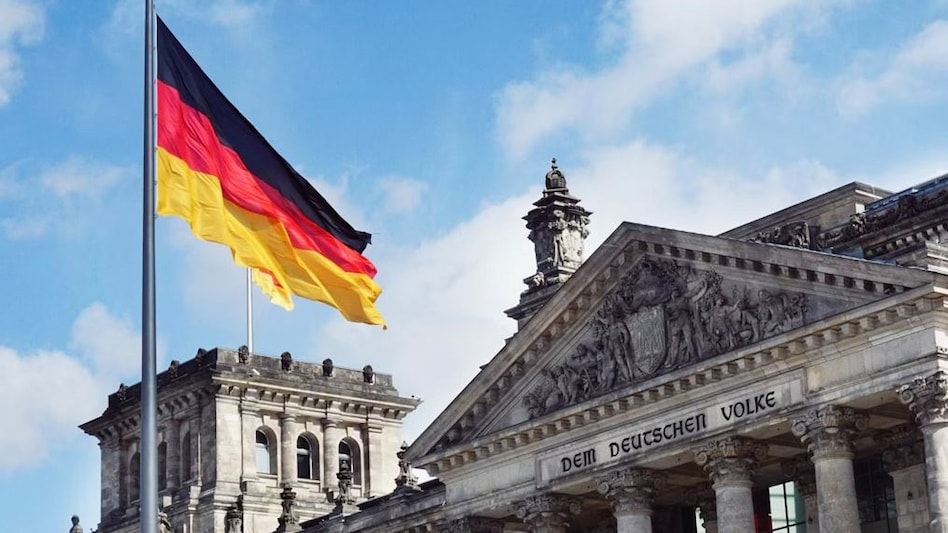
 Education counsellors say the tightening of rules is already influencing student choices.

 Education counsellors say the tightening of rules is already influencing student choices.
Germany has begun strictly enforcing student visa and residence rules that were relaxed during the Covid-19 pandemic, a move that is increasingly affecting Indian students — one of the largest international student groups in the country.
India Today had earlier reported on the trend, citing data from the German Academic Exchange Service (DAAD) and advisories issued by authorities linked to the German Embassy. According to DAAD’s Wissenschaft Weltoffen data, more than 49,000 Indian students were enrolled in German universities in 2023, placing India among the top two source countries for international students in Germany.
Most Indian students in Germany pursue engineering, computer science, and natural sciences, primarily at public universities that charge little or no tuition fees, such as the Technical University of Munich (TUM) and RWTH Aachen University.
However, recent reports of visa cancellations, residence permit denials, and exit notices have raised concerns among students and parents about Germany’s reputation as a “low-risk” study destination.
What Has Changed?
German authorities are now strictly enforcing rules that were temporarily relaxed during the pandemic. These checks include:
Enrolment in recognised, full-time, in-person degree programmes
Demonstrating adequate academic progress
Compliance with permitted work-hour limits
Proof of sufficient funds through blocked accounts
Valid and updated residence documentation
While social media and European media outlets have reported instances of Indian students receiving deportation or exit orders, there is no official data from either the German government or India’s Ministry of External Affairs on the number of Indian students deported.
What exists instead are individual cases, often linked to programme eligibility issues, distance-learning enrolments, insufficient academic progress, or non-compliance with residence conditions. Experts stress that this distinction is crucial — Germany is not conducting a nationwide deportation drive, but local immigration offices are enforcing long-standing rules more rigorously.
Administrative Risks Come Into Focus
Several structural factors have added to student uncertainty:
APS Certification, made mandatory in 2022 to verify Indian academic credentials, has caused delays and complications for some applicants.
While many master’s programmes are taught in English, limited German-language skills can hinder internships, part-time jobs, and interactions with local authorities.
The blocked account requirement, meant to prove financial self-sufficiency, is now being scrutinised more closely by immigration offices.
These factors have exposed what students describe as “administrative risk” — where low tuition costs do not necessarily translate into an easier study experience.
Students Look Beyond Germany
Education counsellors say the tightening of rules is already influencing student choices. Indian students are increasingly exploring alternatives:
France, due to its centralised admissions and visa process through Campus France
Ireland, for its one-year master’s programmes and clearly defined post-study work options, despite higher tuition fees
The Netherlands, which offers English-taught STEM degrees, strong industry links, and comparatively smoother compliance systems
Australia, following visa reforms and clearer student work rights
Some students are also choosing to transfer to private universities in India to avoid restarting their education abroad.
Still a STEM Powerhouse — But With Caveats
Germany remains a leading destination for STEM education, research infrastructure, and industry exposure. However, the experience of Indian students over the past year highlights a critical shift: low tuition does not mean low administrative scrutiny.
For Indian students planning the 2025–26 intake, decision-making is increasingly driven by visa predictability, regulatory clarity, and transparent admissions systems, rather than cost alone.
Germany’s post-pandemic enforcement push is prompting students and families to weigh not just academic outcomes, but also the stability and consistency of immigration processes — a factor now central to choosing a study destination.
 'Never seen so many tankers': India's Russian crude imports may hit record high in June
 Delhi EV policy approved: Road tax exempted for cars up to ₹30 lakh; ₹50,000 subsidies for EV buyers
 9 shares may enter AMFI largecap list: BSE, Vodafone Idea, Groww, BHEL among probables
 Qatar Emir’s $500 million superyacht Al Lusail returns after luxury refit worth $35 million
 GIFT Nifty logs record open interest, contracts on June 25
 Delhi Unveils ₹15,000 Crore EV Policy: What It Means For Auto Companies And Consumers
 Gold, Silver Or Crude? Where Should Investors Bet Now? | Vandana Bharti
 How India Strategically Managed LPG & Crude Oil Supplies During West Asia War | K. Surana Explains
 Delhi’s Green Revolution: CM Rekha Gupta Unveils Massive ₹15,000 Crore EV Policy To Combat Pollution
 Why Crude Oil Prices Could Stay Under Pressure As China's Demand Weakens And Supply Improves
 Why Jio BlackRock feels hybrid long-short is the perfect fund to launch now as it enters the SIF space
 Where should investors put their money? PL Wealth CEO has some tips
  Axis Bank CFO Puneet Sharma steps down; stock likely in focus on Tuesday
 Apollo Hospitals, Medanta, Healthcare Global, Max Healthcare, Artemis Medicare: Check target prices, outlook
 Polycab: Amid record FII buying, shares at all-time high but brokerages expect more upside