

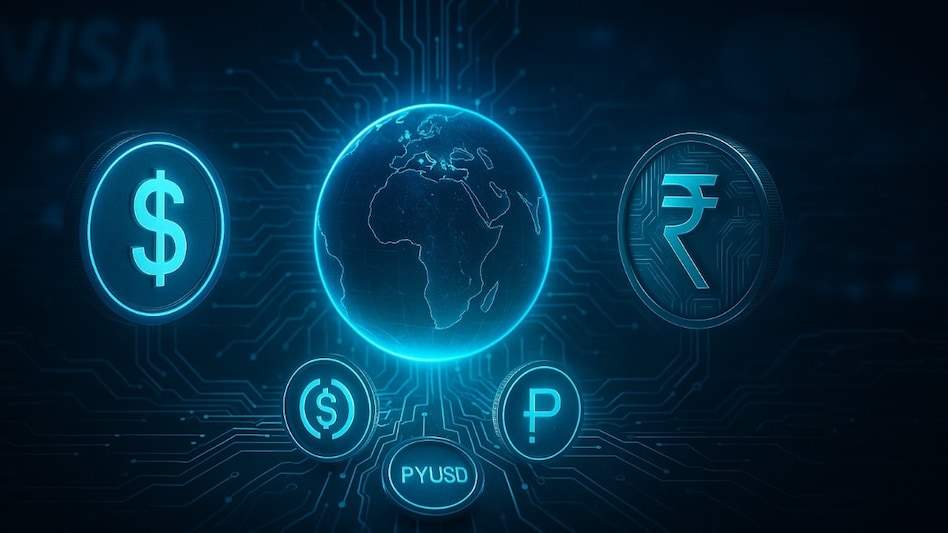
 India receives over $125 billion in remittances yearly, yet relies on outdated, costly systems—stablecoins could change that.
In the 20th century, oil reshaped geopolitics and global commerce. In the 21st century, data took the crown. But in the coming decade, stablecoins—the blockchain-based digital equivalents of fiat currencies—are emerging as the new oil: powering a decentralised economy, lubricating global finance, and redefining value transfer across borders.
At its core, a stablecoin is simple: a digital token pegged to a real-world currency like the US dollar or rupee. But its implications are transformative. Stablecoins settle instantly, work 24/7, and slash cross-border transaction costs by up to 90%. No wonder global giants like PayPal, Visa, and Stripe are integrating stablecoins into their payment rails. In fact, the transaction volume of stablecoins now rivals Visa’s annual volume, crossing over $10 trillion in 2023 alone.
 Sensex volatility spikes during CAS on F&O expiry day; here's what happened
 Nifty IT surges 3%: TCS, Infosys, LTM, HCLTech shares climb after Nvidia's strong results
 'Nothing’s Too Far': Tata Motors unifies all passenger vehicles under new TATA.CARS identity
 Big victory for Anthropic: US court strikes down Pentagon blacklist over 'illegal retaliation'
 179-year wait: Green Card backlog traps nearly 1 million Indians, making up 79% of total queue
 EV Insurance Explained: Battery Damage, Repairs & Insurance Coverage | Personal Finance
 Radhika Gupta On The Money Gap: Why Women Must Manage What They Earn
 IDV Explained: How It Impacts Your Motor Insurance Premium & Claim
 Nepal Flood Crisis: Massive Floods Leave Trail Of Destruction Across Rasuwa, Nuwakot And Chitwan
 Oseltamivir Shortage Explained: Why H1N1 Cases Are Driving Demand & Prices Are Varying Sharply
 Mid-cap IT stock jumps 15%; brokerage sees turnaround potential, here's what it said
 Ola shares rise 6% on S1Z launch with indigenous cell tech, claims 301 km per charge
 TTML shares soar 11% on strategic tie-up with Tata Comm to accelerate AI adoptionSensex volatility spikes during CAS on F&O expiry day; here's what happened
 Just Dial share price surged 10% today; here's why Mid-cap IT stock jumps 15%; brokerage sees turnaround potential, here's what it saidOla shares rise 6% on S1Z launch with indigenous cell tech, claims 301 km per charge
 Luxury stay ends in FIR: Delhi family allegedly flees Oberoi Udaivilas without paying ₹5.74 lakh bill. Know what happened next
 Strait of Hormuz: Tehran drafts conditions for reopening as Trump says US blockade holds TTML shares soar 11% on strategic tie-up with Tata Comm to accelerate AI adoption












