In fact, the Ram Mandir in Ayodhya has emerged as the top spiritual place visited by devotees in India. According to the UP government, nearly 23 crore people visited Ayodhya between January and June this year -- four to five times higher than earlier tourist volumes. According to govt estimates, the count is expected to reach 50 crore by the end of this year with large numbers of tourists from the United States, Europe, Russia and several Asian countries.
In Vrindavan, the enthusiasm for Lord Krishna is no different.
According to a Liases Foras report, visitor numbers are set to rise nearly 4.5 times to about 11 crore annually over the next decade. Festivals such as Holi, Janmashtami, and Kartik Purnima fill the city with colour and devotion, drawing crowds from across India and abroad.
Coming to real estate, Vrindavan's land values have surged over three times in prime areas like behind Prem Mandir and along Radha Kund Road in five years. The property boom is driven by major projects such as the Banke Bihari Corridor, the towering Vrindavan Chandrodaya Mandir, the new bypass, and the Yamuna Jal Marg.
On similar lines, Ayodhya, the birthplace of Lord Ram has seen an exponential rise in real estate prices since 2019 when the Supreme court announced verdict in favour of the construction of Ram Temple. In fact, property prices near the temple zone have risen by 5 to 10 times and gained four to eight times on the outskirts of the city. However, real estate prices have seen a mild correction since the Pran Pratistha of Ram Lala by PM Modi on January 22, 2024.
The growth in realty prices is driven by the consecration of the Ram Mandir and other developments, positioning Ayodhya as a major religious tourism destination in Uttar Pradesh.
LOCATION AND CONNECTIVITY
In terms of location, Ayodhya is strategically located near the state's capital Lucknow making it easily accessible by air and land routes. Now, the Ayodhya district boasts of a well developed airport and railway station making the commute to the religious site a lot more easier than earlier. However, Ayodhya is located over 700 km from the national capital Delhi, consuming a minimum 8 hours by train route and 10-12 hours by road for pilgrims.
On the other hand, Vrindavan is located just 180 kms from Delhi, making it easily accessible for pilgrims via rail and road, It does not have an airport. One can commute to the pilgrimage via Agra Airport which is 60 km away, the upcoming Jewar airport 90 km away or the IGI Airport located 150 km from the ancient city.
REAL ESTATE RETURNS
Ashish Narain Agarwal, Founder & MD, PropertyPistol said, "The Ayodhya property market is experiencing substantial growth, with land values appreciating, huge infrastructure investment through the Ayodhya Master Plan 2031, the presence and plan of larger hospitality brands, Ayodhya International Airport, upgradation of the existing railway station, and the booming of residential real estate, as several big developers have been investing in Ayodhya. Vrindavan has been Lord Krishna’s childhood abode, making it a spiritually inclined tourist spot for many years. However, its renewed infrastructure, like Banke Bihari Temple Corridor, Vraj Vikas Yojana, smart city plans, newly developed areas, and connectivity to the NH44 and Yamuna Expressway, provides favourable opportunities for a flourishing real estate market. However, Ayodhya’s growth has been prospering with faster price appreciation due to the inauguration of the Lord Ram temple, and Vrindavan’s development has been consistent with solid price appreciation over the years."
Parveen Jain, President, NAREDCO said, "In Ayodhya, the scale of planned development is remarkable. Projects under the Ayodhya Master Plan 2031, including the New Ayodhya Greenfield Township, are setting the stage for organised residential and commercial growth. Vrindavan, meanwhile, has a stable, tourism-led market where demand continues to come from people seeking second homes and rental investments tied to faith and lifestyle. Both cities are good examples of how heritage and modern infrastructure can coexist to create new real estate opportunities."
Abhishek Raj, Founder & CEO of Jenika Ventures said, "The pattern of development observed in both cities differs.
Ayodhya, at present, is witnessing rapid development along with structured growth because of considerable government investments planned for the development of roads, airports, railways, riverfront areas, and the provision of public facilities. Ayodhya provides better visibility for capital appreciation.
Vrindavan, on the other hand, has an established real estate market and steady market trends. Here, the concentration remains on preservation, tourism, expansion of roads, and development initiatives of the state and central governments.
Between the two, Ayodhya offers a relatively better investment opportunity in terms of growth for now because of the extent of infrastructural development and planning activities being undertaken there, whereas Vrindavan remains attractive for low-risk investments for its religious tourism potential."
Mohit Mittal, CEO of MORES, a proptech consultancy firm said, "Ayodhya has moved beyond the identity of a pilgrimage town to emerge as a city of national relevance. Large-scale infrastructure programs are transforming its connectivity, urban form, and long-term economic potential, In contrast, Vrindavan’s real estate growth remains measured and heritage-led, anchored in sustained pilgrim footfalls and regional development rather than rapid urban expansion. For investors, the focus should remain on execution quality and long-term demand sustainability, rather than short-term speculative gains.
Ayodhya is currently witnessing accelerated valuation growth, with residential land and apartment prices near major infrastructure zones ranging between Rs 8,000 and Rs 20,000 per square foot. Cumulatively, government initiatives envision investments exceeding Rs 85,000 crore by 2031, positioning Ayodhya as an integrated urban and tourism economy.
Vrindavan, by comparison, sees residential plot prices typically ranging from Rs 40,000 to Rs 70,000 per square yard, largely influenced by proximity to major temples and pilgrimage corridors. Infrastructure development is progressing under the broader Mathura–Vrindavan–Braj master plan, with an estimated outlay of around Rs 30,000 crore."
As per Magicbricks Research, Ayodhya and Vrindavan are benefitting from renewed real estate momentum. Ayodhya is currently emerging as a higher-growth investment market, reflected in stronger price appreciation and rising demand. As per recent data, average residential prices in Ayodhya increased from around Rs 5,772 per sq. ft in JAS 2024 to Rs 6,531 per sq. ft in JAS 2025, marking a year-on-year appreciation of over 13 percent.
Vrindavan, by comparison, has recorded steadier growth, with prices rising by about 8.2 percent year-on-year to nearly Rs 7,407 per sq. ft. While Vrindavan remains attractive for stable, long-term investment, Ayodhya presently stands out as the better real estate investment destination due to its stronger price appreciation, infrastructure-led momentum, and greater headroom for capital growth."



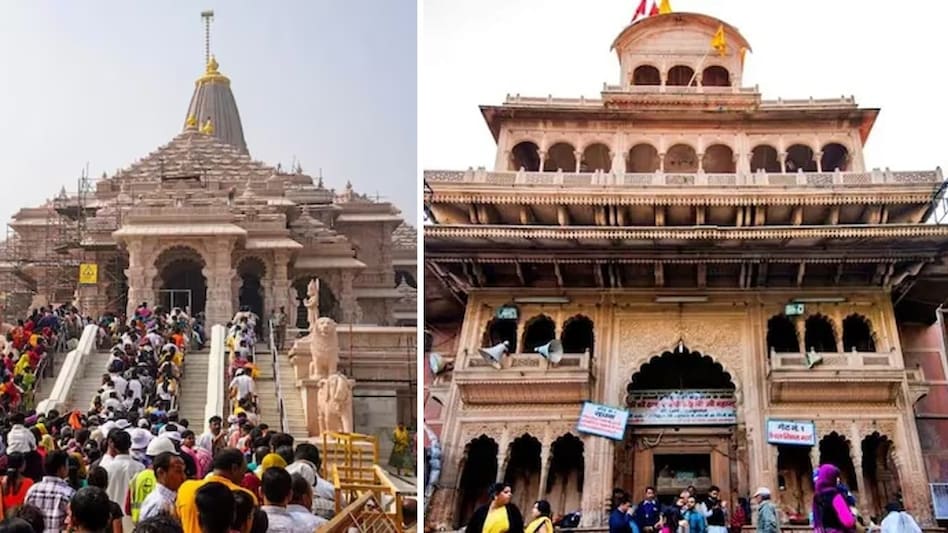 Ayodhya and Vrindavan- the two spiritual places celebrating the reincarnation of Lord Vishnu as Shri Ram and Shri Krishna-have emerged as key hotspots for real estate growth in Uttar Pradesh.
 'Kolkata has become a city of old age pensioners': FM Swapan Dasgupta on Bengal's decline and skill shortage
 Trump made 1,000-plus trades in June: Here's what he bought and sold
 Escalating Hormuz crisis: Boris Johnson sees India as key to US exit strategy in Iran
 Gold jewellery to property: Radhika Gupta on what actually counts as an investment
 Delhi H1N1 outbreak: No cause for panic, currently circulating strain not a new one, says ICMR
 Commuted Vs Uncommuted Pension: Know The Difference And How Each Is Taxed After Retirement
 Motor Insurance Add-Ons You Actually Need Explained: Zero Depreciation, RSA & Return-To-Invoice
 No Claim Bonus Explained: When Should You Claim Or Pay For Repairs Yourself?
 Motor Insurance Premium: What Factors Determine How Much You Pay?
 How Is Retirement Income Taxed For Senior Citizens? Key Rules Explained
 Hold YES Bank, Federal Bank; buy HDFC Bank, Kotak Mahindra, Axis: ICICI Securities
 ABH Healthcare IPO: Check key dates, price band, issue size, latest GMP, listing details & more
 India stocks lag global markets in 2026: BofA data shows 9.1% decline in USD terms
 'FOMO, fixed return': SEBI proposes revamped ad code for bond portals from misleading investors
 Private banks vs PSU banks: Goldman Sachs sees a major shift in the next two years
 EPF vs stock market: EPFO explains why they should not be viewed as substitutes
 Greenland is losing ice at a rapid pace. Could its meltwater be supercharging Europe’s heatwaves?
 UP factory test-fires first 100% indigenised AK-203 rifle, Army trials set for September
 Tariff, technology & FDI: India Inc flags key concerns in draft nuclear rules












