















 Developers responded in tandem: luxury homes priced above Rs 1.5 crore accounted for the largest share of all new launches at 38%, reinforcing the sector’s premium tilt.
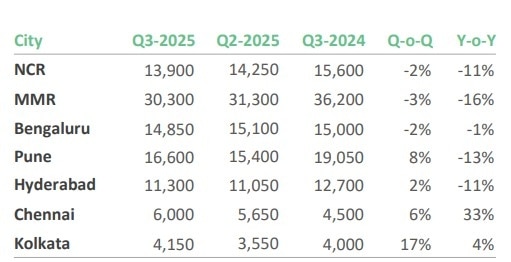
India’s residential real estate market entered a new phase in the third quarter of 2025, marked by a sharp divergence between volumes and values. Even as overall home sales dipped, the appetite for premium and luxury housing surged. According to ANAROCK’s PAN-India Residential Market Viewpoints report for Q3 2025, sales across the top seven cities slipped 9% year-on-year to around 97,100 units, but the total sales value jumped 14% to nearly Rs 1.52 lakh crore. This clear value–volume gap signals the sector’s ongoing structural shift toward high-ticket housing driven by affluent end-users and wealthier households.
Developers too mirrored this sentiment in their launch strategies. Luxury homes priced above Rs 1.5 crore accounted for 38% of all new launches, the highest share across categories. Overall new supply rose 3% year-on-year to 96,700 units, led primarily by the Mumbai Metropolitan Region (31%) and Pune (20%), underscoring the continued dominance of western markets in premium launches.

 'RBI letter does not mention listing': Noel Tata seeks full briefing on Tata Sons-RBI talks
 Tata Trusts asks Tata Sons to explore options other than listing, says ‘Tata Model has to be saved’
 Tata Trusts proposes ₹25,000 crore plan for SP Group, says Tata Sons listing is not an option
 Chandrasekaran had assured all necessary steps were being taken to remain private: Noel Tata
 'We cannot put the cart before...': Noel Tata's argument against N Chandrasekaran's reappointment
 How India Changed In 12 Years: PM Modi’s Journey From Economic Reforms To Viksit Bharat
 Modi @76: From Twitter To Instagram, How His Digital Outreach Has Evolved
 Stock Picks To Watch: Shibani Kurian Reveals Kotak AMC’s Market Bets
 Gold ETF vs Physical Gold: Know the Tax Rules, Charges and Key Differences
  PPF vs NPS: Tax Benefits, Returns and Lock-in Period Explained for Retirement Planning
 Hero Motors IPO subscribed 3.37 times on Day 2; retail portion subscribed over 5 times
 NSE IPO: India's largest exchange gets 43% subscription on Day 1; NIIs, retail see strong demand
 Rentomojo shares settle maiden trade nearly 32% above IPO price; what should investors do now?
 Sensex slips, Nifty settles higher; Tata stocks gain after N Chandrasekaran reappointment
 Cochin Shipyard, KRBL, RITES, Ramky Infrastructure among stocks to turn ex-dividend on September 18
 Noida Airport commuters can drive through toll plaza without stopping, here’s how it will work
 OTT releases this week (Sept 14- Sept 20): 'Irumudi', 'Thudakkam', 'Lee Cronin's The Mummy' and more to watch this weekend
 NMDC's Panna mine unearths 27.29-carat diamond, second-largest discovery so far
 Flexicap funds: 90.6% large caps vs 55.2% small caps — 10 biggest portfolio differences
 Who is Sethuraman Panchanathan? Chennai-born scientist honoured with NAE’s prestigious Bueche Award


