The measures span equity investment norms, tax collection on foreign remittances and spending, property-related transactions, and targeted compliance relief for overseas income and asset disclosures.
At the core of the proposals is a simple idea: honest mistakes should be corrected, not criminalised. The Government believes that proportionate enforcement will strengthen, not weaken, tax compliance by reducing anxiety among taxpayers while allowing authorities to focus on high-risk behaviour.
Narrowing criminal liability
One of the most consequential changes lies in income tax enforcement. Several procedural and technical defaults—such as reporting delays and documentation lapses—are being decriminalised or shifted into a civil compliance framework. Penalties for these defaults are increasingly being converted into fixed fees, offering certainty and eliminating the risk of disproportionate punishment.
Criminal provisions are also being rationalised. Rigorous imprisonment is being replaced with simple imprisonment, maximum jail terms are capped at two years, and offences with lower tax impact will attract only monetary fines. The intent is to ensure that prosecution remains a deterrent for wilful evasion, not a response to inadvertent error.
For small businesses and MSMEs, the change is significant. A missed disclosure or incorrect expense classification can now be corrected through updated returns or settlement mechanisms, without triggering prosecution or prolonged litigation.
Voluntary compliance
The trust-based approach extends to salaried taxpayers and households. Reporting errors—such as incorrect disclosure of interest income—can be rectified through updated returns without fear of prosecution. Simplification of Form 15G/15H filing through depositories reduces procedural errors, especially for senior citizens.
Families making overseas remittances for education or medical treatment benefit from rationalised Tax Collected at Source (TCS) provisions, lowering cash-flow stress and compliance anxiety. The emphasis is on nudging taxpayers to correct mistakes early, rather than penalising them later.
GST reforms
GST Next Gen Reforms implemented in September 2025 reinforce this philosophy. Faster and simpler registration, system-based verification, and an automated refund framework aim to reduce working-capital stress, particularly for MSMEs and exporters.
By limiting manual intervention and relying more on data-driven checks, the GST system is designed to make compliance easier than non-compliance—encouraging formalisation without coercion.
Customs moves
Customs reforms mirror the broader shift toward trust-based governance. The Authorised Economic Operator (AEO) framework is being strengthened to reward compliant importers and exporters with faster clearances, extended duty payment timelines, and reduced physical intervention.
Manual processes such as Cargo Arrival Registration are being replaced with automated goods registration. Low-risk consignments will be cleared without individual officer approval, while enforcement efforts will focus on high-risk activity.
Export procedures are also being streamlined. Factory-stuffed cargo will move to online registration and automated clearances, reducing port dwell time. Digital integration with terminals, custodians and shipping lines aims to ensure seamless container movement.
Reducing litigation
A major objective of the reforms is to reduce litigation arising from technical disputes. In customs, the existing 15% penalty under section 28(5) is being converted into an additional amount in lieu of penalty, softening the adversarial tone and encouraging early settlement.
Tariff clarity is being improved through the creation of new tariff entries and rationalisation of duty rates, addressing one of the most common sources of classification disputes. The validity of Advance Rulings is being extended to five years, providing long-term certainty for businesses.
In direct taxes, expanded Safe Harbour rules, a streamlined Advance Pricing Agreement (APA) framework, and clearer procedural timelines aim to prevent disputes before they arise—particularly in transfer pricing and cross-border taxation.
One system, one philosophy
Across tax systems, three principles now guide enforcement: intent matters, correction is encouraged, and punishment is proportionate. Fees replace penalties for procedural lapses, civil remedies replace criminal action for unintentional defaults, and litigation is no longer the default outcome.
For MSMEs, this reduces existential compliance risk. For exporters, it improves speed and predictability. For ordinary citizens, it removes fear from routine compliance.
Global business and investment hub
Taken together, the reforms seek to position India as a competitive global business and investment hub, not through isolated incentives, but through clarity, consistency and confidence in tax administration. By shifting from “penalise first, explain later” to “facilitate first, enforce when necessary”, Budget 2026 signals a maturing fiscal system aligned with the needs of a large, modern economy.



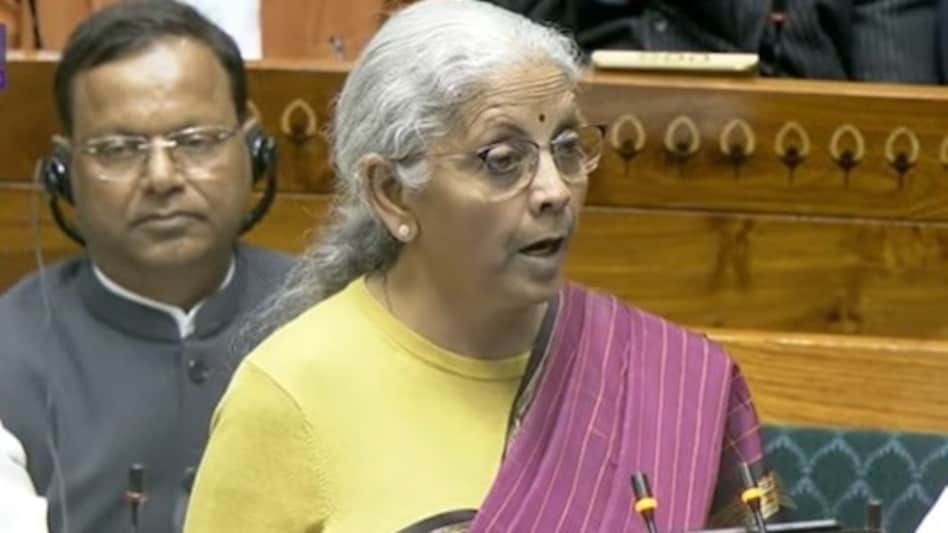 Several procedural and technical defaults, such as reporting delays and documentation lapses, are being decriminalised.
 Trump made 1,000-plus trades in June: Here's what he bought and sold
 ‘F&O trading is bad for almost 99% of retail traders’: Nikhil Kamath draws ITC parallel, says brokers need to diversify
 NDA explores holding joint polls in 22 states, UTs in 2029: Report
 'IAF is not against theaterisation': Air Force chief AP Singh cautions against copying foreign models
 ABH Healthcare IPO: Check key dates, price band, issue size, latest GMP, listing details & more
 Motor Insurance Add-Ons You Actually Need Explained: Zero Depreciation, RSA & Return-To-Invoice
 No Claim Bonus Explained: When Should You Claim Or Pay For Repairs Yourself?
 Motor Insurance Premium: What Factors Determine How Much You Pay?
 How Is Retirement Income Taxed For Senior Citizens? Key Rules Explained
 Rental Income Tax: 3 Key Deductions Every Senior Citizen and Property Owner Should Know
 Hold YES Bank, Federal Bank; buy HDFC Bank, Kotak Mahindra, Axis: ICICI Securities
 India stocks lag global markets in 2026: BofA data shows 9.1% decline in USD terms
 'FOMO, fixed return': SEBI proposes revamped ad code for bond portals from misleading investors
 Escalating Hormuz crisis: Boris Johnson sees India as key to US exit strategy in Iran
 'Why should IAS, IFS, OBC MPs get reservations?' Mohandas Pai asks Akhilesh Yadav
 Office politics getting messy? 5 pieces of advice from entrepreneur Ankur Warikoo to stay out of trouble
 12,000 students, 80 seats: IIM Bangalore’s first UG programmes see huge demand; check courses, campus & what students get












