


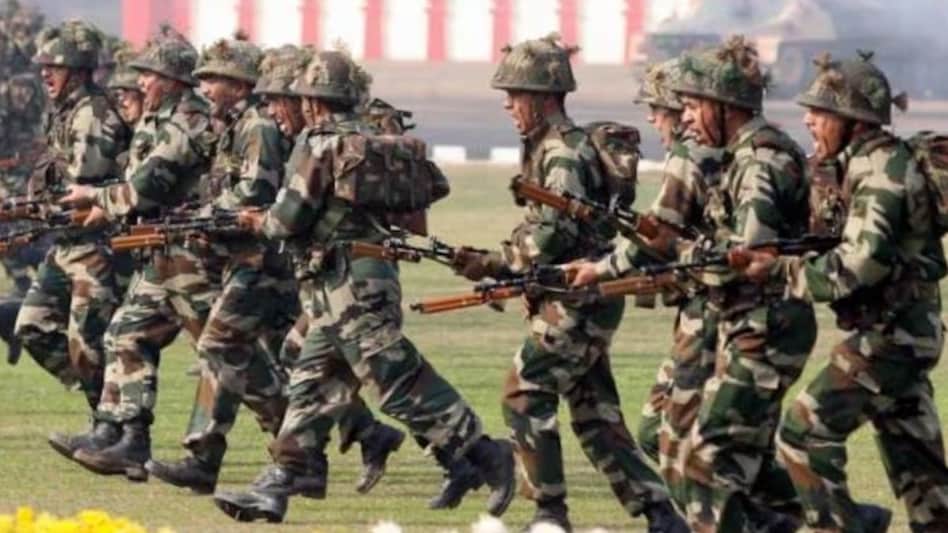
 While many tax benefits apply to all, certain exemptions—like pension and gratuity—are exclusive to defence personnel.
Serving and retired personnel from the Defence Forces, CAPF, paramilitary forces, and other security agencies are eligible for a range of tax exemptions and deductions under the Income Tax Act, 1961—some of which are exclusive to them.
While most tax benefits available to defence personnel also apply to general taxpayers, there are specific provisions in the Act that are uniquely tailored for individuals who serve or have served in these forces. These include exemptions on pension, gratuity, and income from welfare funds, among others.
“It is relevant to state that the provisions mentioned in the above table are generally applicable to taxpayers at large, while certain specific benefits are extended exclusively to serving and retired personnel of the aforementioned forces, subject to the conditions prescribed therein,” Union Minister of State for Finance, Pankaj Chaudhary said in a written reply in the Rajya Sabha on July 29, 2025.
Key tax benefits
Some of the key tax benefits available exclusively to serving and retired defence personnel include exemptions under Section 10(10) for gratuity or death-cum-retirement gratuity, and under Section 10(10A) for commuted pension, both subject to prescribed conditions. Section 10(18) offers full exemption on pension received by individuals awarded gallantry medals such as the Param Vir Chakra, Maha Vir Chakra, or Vir Chakra, as well as family pensions received by their dependents. Additionally, Section 10(19) exempts family pension received by the widow, children, or nominated heirs of armed forces personnel (including paramilitary forces) who died during operational duties.
Other benefits include income exemptions under Section 10(23AA) for amounts received on behalf of Regimental or Non-Public Funds set up by the armed forces for the welfare of their members and dependents, and under Section 10(26BBB) for corporations established specifically for the welfare and economic upliftment of ex-servicemen.
A newer provision under Section 80CCH allows deductions for contributions to the Agnipath Scheme and Agniveer Corpus Fund for those enrolled on or after November 1, 2022. Defence personnel can also claim deductions available to all individual taxpayers under Chapter VIA, such as Sections 80C (investments), 80D (medical insurance), 80E (education loan interest), 80G (donations), and 80TTA (savings account interest)—if they opt for the Old Tax Regime.
ITR forms
However, current Income Tax Return (ITR) forms do not track the specific force or agency a taxpayer belongs to. According to Chaudhary, the ITR data only categorises employment as Central Government, State Government, PSU, pensioners across these categories, others, or ‘Not Applicable’.
“Details with regard to classification of Employer into Defence forces, CAPFs, Paramilitary forces, other security agencies are not captured in the Income Tax Return. Hence, the requisite details are not available,” he clarified.
While these benefits offer some financial relief, the lack of granular data in tax filings makes it difficult to quantify how many personnel are availing them.

 'Will discharge my responsibilities with complete humility': Pralhad Joshi after being appointed Education Minister
 From NEET protests to politics? What CJP's Saurav Das and Ashutosh Ranka have now revealed
 From a BA graduate to a five-time MP and Cabinet veteran: What did new Education Minister Pralhad Joshi study?
 Large office spaces remain in demand as India's leasing touches 48 million sq ft in H1 2026, says report
 'You don't perform, you don't exist': TV Mohandas Pai recalls working under Narayana Murthy, calls him the best boss he ever had
 FDs vs Markets: Where Should You Keep Your Short-Term Money?
 Why Term Insurance Is Essential for Every Earning Member | Sum Assured & Coverage Explained
 Pakistan's Alleged Terror-Politics Nexus: Lashkar Links Spark Questions Over Fazlur Rehman
 Think Life Insurance Is Optional? Here's Why Every Indian Family Needs It Today
 FD Vs Arbitrage Fund: Which Is Better For High Taxpayers?
 TRIL shares: Should you average the falling stock? Here's 'fixed and final' stop loss
 Adani Power: 45 GW target, Rs 2 lakh crore capex plan among conference call highlights
  ITC Hotels, Chalet, Ventive, IHCL, SAMHI: Hotel stocks to buy despite travel disruptions
 ITC shares: Rs 307 a key short-term level to watch; here's target price
 Mphasis shares: FY27 guidance maintained; brokerages keep 'Buy' after Q1; check target price'You don't perform, you don't exist': TV Mohandas Pai recalls working under Narayana Murthy, calls him the best boss he ever hadTRIL shares: Should you average the falling stock? Here's 'fixed and final' stop loss
 'Jana Nayagan' box office collection day 3: Vijay's last film nears ₹200 crore worldwide, tops 'Theri'From a BA graduate to a five-time MP and Cabinet veteran: What did new Education Minister Pralhad Joshi study?From NEET protests to politics? What CJP's Saurav Das and Ashutosh Ranka have now revealed









