












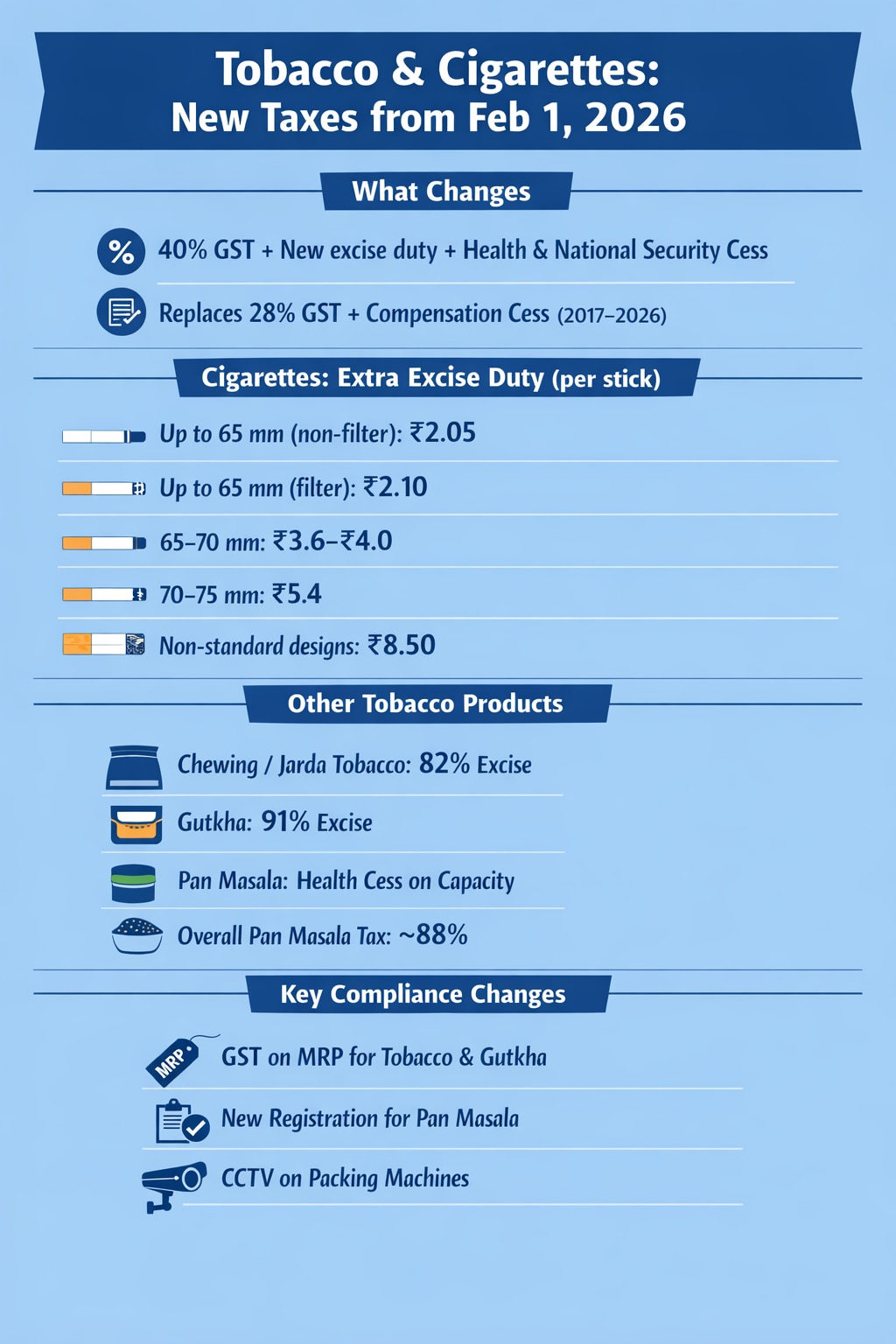



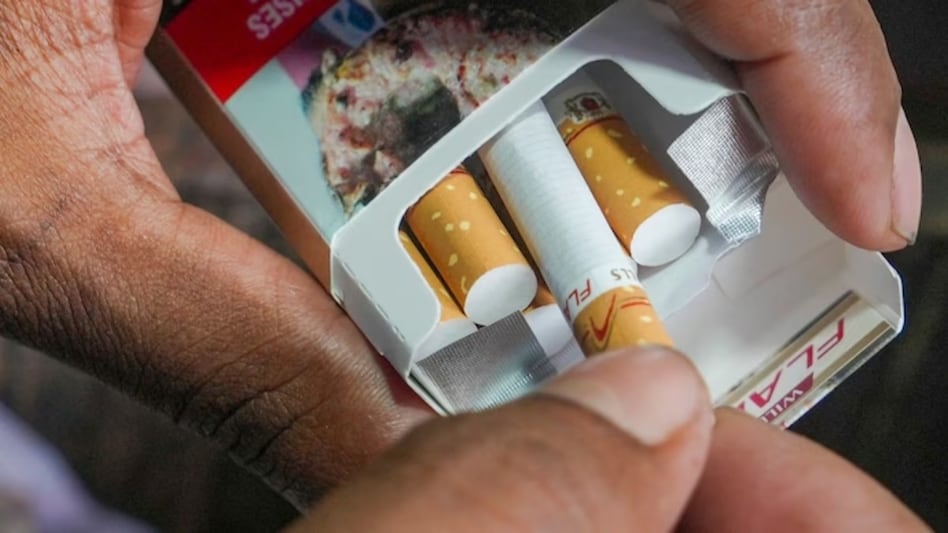
 Under the revised framework, excise duty will be charged per 1,000 cigarettes, with rates linked to whether the product is filtered and its length.
From February 1, cigarettes, pan masala and other tobacco products will come under a new, tougher tax regime, with the Centre introducing additional excise duties and a health and national security cess over and above the highest 40% GST slab. The move marks the most significant overhaul of taxation on so-called “sin goods” since the rollout of the Goods and Services Tax (GST) in July 2017.
The new levies will replace the existing structure of 28% GST plus compensation cess that has applied to cigarettes and tobacco products for nearly nine years. With the GST compensation cess set to end after repayment of Covid-era loans to states, the Centre has opted for a fresh framework that relies on excise duties and a dedicated cess to maintain revenue flows while aligning taxation more closely with public health objectives.

 Jio Platforms IPO: GMP hits new high; what could drive next phase of growth for telecom major
 Brent oil futures hit $110 a barrel! These stocks to watch next week
 ‘Much Appreciated’: Elon Musk responds to Reliance’s statement on Starlink’s India entry
 Trump pauses Russia-linked tariffs threatening India and China: What it means for India
 Rupee gains 1.9% in a week, closes at 94.71: Is RBI’s currency defence finally working?
 Redmi Note 17 Pro Max Review , Vivo V80, Vivo Vision | Tech Gear EP 20 | Business Today
 Mahindra XUV 3XO ZNG Review: Turbo Power Meets CNG Mileage
 Gold, Silver Prices: Limited Upside Ahead Of Diwali? Expert Sees Gold At ₹1.5 Lakh, Silver At ₹2.3
 Expert Names REITs And INVITs To Watch For Quarterly Payouts And Potential Investment Returns
 Jio IPO: Mukesh Ambani's Big ₹30,213 Crore Bet, Reliance Employees Asked To Invest?
 Brent oil futures hit $110 a barrel! These stocks to watch next week
 LTM shares down 28% in 2026: Buy amid pivot towards short-term AI deals? Target prices
 Punjab National Bank: Buy, hold or sell post Q2 results? MOFSL shares target
 Brent hits $110 as Hormuz ship attacks, Houthi strikes on Saudi trigger oil rally
 CCL Products shares fall 9% on Q2 results; brokerages see up to 30% upsideRedmi Note 17 Pro Max Review , Vivo V80, Vivo Vision | Tech Gear EP 20 | Business Today‘Much Appreciated’: Elon Musk responds to Reliance’s statement on Starlink’s India entryBrent oil futures hit $110 a barrel! These stocks to watch next week
 Election Commission transfers around 20 CEOs in 20 months amid SIR, changes seen in Nirwachan Sadan, Delhi EC: ReportMahindra XUV 3XO ZNG Review: Turbo Power Meets CNG Mileage


