This is a 16-year-old dispute between DoT and telcos.
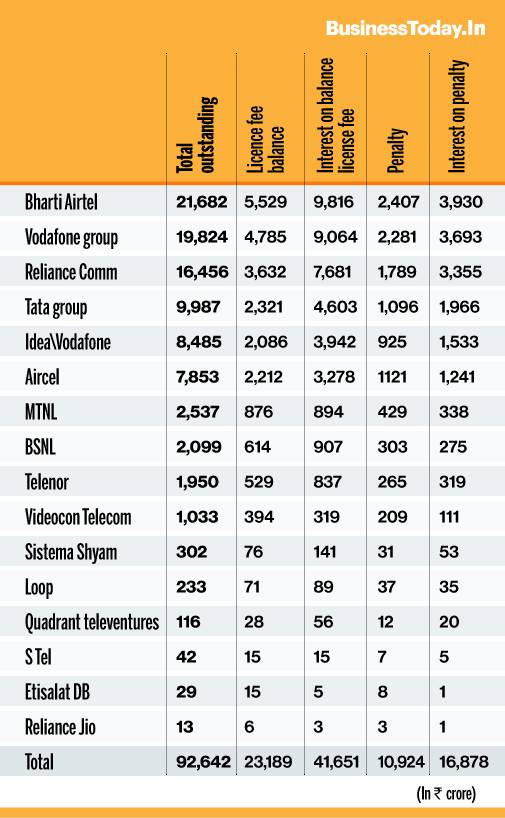
The Supreme Court's decision on October 24 in favour of DoT (department of telecommunications) could be a death knell for the telecom sector. The apex court has upheld most items that the DoT wanted to be included in the AGR (adjusted gross revenues) definition. AGR is the basis on which telcos share their revenues with the government (DoT) in the form of spectrum usage charges (SUC) and license fees. The total amount claimed by DoT from telcos is Rs 92,641 crore, which includes Rs 23,189 crore as the disputed amount, Rs 41,650 crore of the levy of interest, Rs 10,923 crore as penalty and Rs 16,878 crore as interest on penalty. Just about three years ago, the total dues were just Rs 29,474 crore.
The AGR has been a long-standing dispute between DoT and the telcos, primarily Bharti Airtel and Vodafone Idea who will now have to shell out about 54 per cent of the pending amount - Rs 21,682 crore for Airtel and Rs 28,308 crore for Vodafone Idea. Although 46 per cent of the amount is due towards Reliance Communications, Tata Teleservices, Aircel and others but these telcos don't exist anymore.
 Bank strike next week: Five-day disruption may hit your salary credits
 NSE IPO: India's largest exchange gets 5.69x subscription on Day 3; all categories fully booked
 Indian Oil, HPCL, BPCL shares rise as brent crude prices fall for fourth day
  Tata Sons power struggle: Who will pay for the next legal battle?
 'We know his character': IIT Bombay students, alumni back professor facing probe in suicide case
 Burqa Ban In Italy? Meloni Pushes New Rules On Face Coverings
 Tata Trusts-Tata Sons Row: Harish Salve Explains RBI Rules, Singhvi Flags Shareholder Rights
 Top Legal Eagles Flock To Tata Sons & Tata Trusts As Boardroom Clash Heads To Court
 Over Next Three Years Company Expects To Invest ₹15,000 Cr For Deepwater Exploration
 Tata Sons Listing Row: Shapoor Mistry Backs IPO As Noel Tata Pushes ₹25,000-Crore Plan
 Brokerage sees 96% upside potential in this smallcap stock
 Dr. Reddy’s, Lupin shares among buzzing stocks as pharma sector back in focus
  3 Warren Buffett quotes for Indian stock market investors today
 Sensex jumps 564 points, Nifty tops 23,400; will this upmove sustain?
 Warren Buffett's message to shareholders: Full text of the farewell letter
  Australia Tightens Student Visa Rules: Indian Students May No Longer Bring Family Members
 India Examining Details Of New US Tariffs On Russian Oil Buyers: Piyush Goyal
 Digital Gold May Come Under RBI-SEBI Oversight; Physical Gold Backing Proposed
 Starbucks picks Chennai for first India tech hub, brings 800 tech jobs paying up to ₹35 lakhBurqa Ban In Italy? Meloni Pushes New Rules On Face Coverings