








 Apple Watch Series 11
 Apple Watch Series 11
For the last two years, my wrist has been occupied by the Apple Watch Ultra 2. It came with me on flights, workouts, late nights, early mornings, and everything in between. It was big, unapologetic, and reassuring in a way only an overbuilt gadget can be.
Switching from that to the Apple Watch Series 11 felt like a downgrade on paper. Smaller battery. Less dramatic design. No titanium flex. But after wearing the Series 11 every day, something unexpected happened. I stopped thinking about my watch altogether, and that might be Apple’s biggest win this year.
Lighter, slimmer, and immediately more wearable
The first thing you notice after living with an Ultra is how thin the Series 11 feels. At under 10mm thick, it disappears under shirt cuffs and doesn’t dig into your wrist when you sleep. After two years of sleeping with what is essentially a small metal slab strapped to my arm, this felt like relief.
The design hasn’t changed much, and that is intentional. Apple has clearly decided this shape is done. The Series 11 looks like a modern Apple Watch, full stop. The difference is refinement. The case feels tighter, the edges cleaner, and the new glass coating holds up better to daily abuse than older aluminium models.
If the Ultra feels like a tool, the Series 11 feels like a wearable again.
The display is still excellent, just less dramatic
Coming from the Ultra’s massive, attention-grabbing screen, the Series 11 initially feels modest. Then you step outside.
The OLED panel gets bright enough to cut through harsh daylight, and the viewing angles make quick glances genuinely quick. Notifications are readable without wrist gymnastics, and complications stay crisp even when you’re mid-movement.
Apple’s tougher glass claim matters more than it sounds. Over weeks of use, it shrugs off the kind of micro scratches that used to show up frighteningly fast on older models. It’s not indestructible, but it’s less precious, which encourages actually wearing it.
Battery life: not Ultra-level, but finally comfortable
This is where expectations matter. If you are coming from an Ultra, the Series 11 will not give you that multi-day, no-thought charging buffer. What it does give you is something arguably more important: predictability.
With sleep tracking on and workouts off, the Series 11 reliably gets through two days. Add a workout, and you’re still not scrambling for a charger by evening. Charging is fast enough that a short top-up while showering covers most scenarios.
After two years of rarely thinking about battery life on the Ultra, I expected this to feel like a regression. Instead, it feels like Apple finally hitting the baseline most people actually want.
Wrist flick is small, then suddenly essential
Apple’s new wrist-flick gesture sounds gimmicky until you use it. Flick to dismiss alarms. Flick to clear notifications. Flick and move on.
It works reliably, doesn’t require staring at the screen, and feels oddly satisfying. Once muscle memory kicks in, tapping the display starts to feel slow. This is one of those interaction changes that quietly reshapes how you use the device without announcing itself.
It’s also the kind of feature that makes older Apple Watches feel instantly dated.
Software polish over feature overload
watchOS 26 leans into translucency and layered visuals, but the bigger story is how calm it feels. The new design adds depth without visual noise, and animations remain smooth even during heavy use.
The new watch faces are more expressive than practical, but Apple’s strength has never been novelty faces. Where the software shines is in consistency. Everything behaves exactly as you expect, and nothing feels experimental.
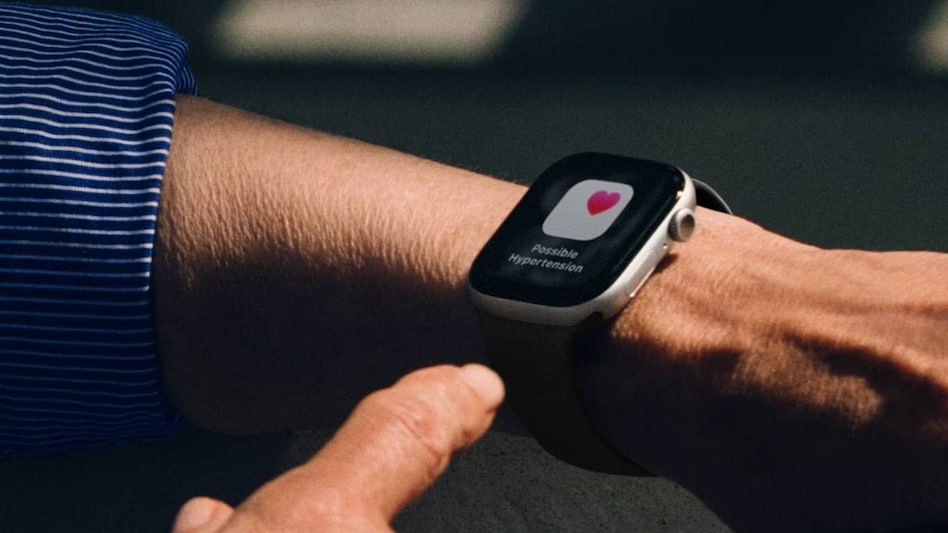
Health features continue Apple’s trend of subtle nudges rather than panic alerts. Hypertension warnings focus on long-term patterns, not single readings. Sleep scoring distills complex data into something understandable without turning rest into a competitive sport.
Life after the Ultra
This is the surprising part. I expected to miss the Ultra’s size, its battery, its sense of invincibility. I don’t.
What I gained is comfort, subtlety, and a watch that fits into more parts of my life instead of dominating them. The Series 11 feels designed for people who wear their watch all the time, not just when they are being active.
If your lifestyle genuinely demands extreme battery life or ruggedness, the Ultra still makes sense. But for everyday living, the Series 11 feels closer to the ideal Apple Watch than the Ultra ever did.
Verdict
In India, the Apple Watch Series 11 starts at ₹46,900 for the aluminium GPS model, with cellular variants costing more depending on size and configuration. That places it squarely in the “premium but not absurd” category, especially compared to the Ultra line.
The Apple Watch Series 11 doesn’t try to impress you with headline-grabbing changes. Instead, it smooths out friction you didn’t realise you were tolerating.
Coming from two years with the Ultra 2, I expected compromise. What I got was clarity. The Series 11 is lighter, more comfortable, lasts long enough, and stays out of the way. The wrist-flick gesture is genuinely great, the battery life finally feels sufficient, and the overall experience is calmer and more refined.
This isn’t the Apple Watch that shouts the loudest. It’s the one most people will be happiest wearing every single day.
For Unparalleled coverage of India's Businesses and Economy – Subscribe to Business Today Magazine
 Historic move amid Hormuz closure: IEA approves emergency release of 400 million barrels of oil
 'Get ready for $200 oil': Iran warns tankers bound for US, Israel will be targeted
 West Asia conflict: ‘Practically nothing left to target in Iran’, Donald Trump says war could end anytime
 India diversifies crude supply routes: 75% now coming from outside Strait of Hormuz
 Parliamentary Committee bats for subsidy on electric cars under PM E-DRIVE Scheme
 US Supports India’s Russian Oil Imports Amid Strait Of Hormuz Disruptions
 Railways Modernisation In Full Swing | Govt Spends 97% Of FY26 Allocation
 Iran War Hits Airlines: Air India Fuel Surcharge, Flight Cancellations & Fare Surge
 LPG Crisis Boosts Appliance Stocks | Electric Appliance Stocks Surge On Alternate Fuel Buzz
 “Fishermen Are Key To Blue Economy”: PM Modi Announces ₹1,400 Crore Boost For Kerala
 IndiGo shares rebound nearly 8% from 52-week low; what lies ahead for India's largest airline?
 Sensex, Nifty outlook as oil weighs, FPI March selloff hits Rs 34,000 crore
 Suzlon shares rebound 10% from 52-week low; What's next after 44% fall in 10 months?
 Adani Total zooms 20%; flags supply cuts to industrial customers amid West Asia tensions; analysts share outlook
 Butterfly Gandhimathi, TTK Prestige, Stove Kraft shares rally up to 17% today; here's why